






Internal Medicine
Latest News
Advertisement
Latest Videos

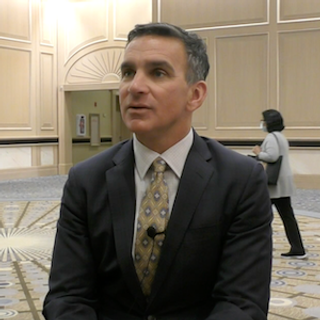







CME Content




























































Advertisement
More News
With several newly approved therapies hitting the market and an overflowing pipeline, the FDA has stepped in to help keep the burgeoning world of biotech on track.

Previous studies aimed at understanding the association between intermittent hypoxia and impaired vigilance in patients with OSA provided conflicting results.
This year saw 4 new FDA approvals for the chronic condition. But dermatologists are still not satisfied.

New phase 2 interim data show rates of the erectile condition were halved after 26 weeks of treatment.

Beginning next year, the content, staff and experts from Practical Cardiology, Endocrinology Network and Rheumatology Network will be joining HCPLive.

"Acute myeloid leukemia (AML) remains the most deadly disease among adults, with a five year overall survival of less than 30%," lead investigator Dr. Molly Tokaz says in an interview.

According to data presented at the ASH 2022 Annual Meeting, this is the first suggestion of a hydroxyurea-related impact on mito activity in patients with sickle cell disease.
In 2021, the USPSTF changed guidance on colorectal cancer screenings, reducing the recommended age of a colonoscopy from 50 to 45 years.
As the treatment paradigm for neurologic diseases rapidly progresses, the need for more thorough biomarker tools to measure disease progression and severity has increased. In recent years, GFAP has emerged as a valuable candidate to add to the existing panel.

The results from the artificial intelligence deep learning model indicated alterations in the SD-OCT imaging regions attributed to the retinal nerve fiber and choroid layers.

By combining specific severity-associated serum biomarkers, investigators were able to predict atopic dermatitis severity in children.
As we begin our annual health care recap series this month, let's take a look back at the stories our readers liked most.

An analysis of survey data from more than 1400 adults in the UK provides insight into potential risk factors for developing long COVID symptoms, with results indicating both female sex and increased body mass index as potential risk factors.

An analysis of data from patients admitted to emergency departments from 7 hospitals in Sweden provide insight into the potential of blood glucose at admission for use as a biomarker to predict all-cause mortality and cardiovascular risk in patients without a history of diabetes.

The shared genetic structure and pleiotropic mechanisms in ocular diseases interprets their clinical associations to some extent, according to study authors.

Despite its frequent use as a rescue therapy for patients with interstitial lung disease associated with connective tissue disorder, the effectiveness of rituximab hasn't been evaluated in many clinical trials.

Patients with sarcoidosis who practiced online mindfulness-based cognitive therapy (eMBCT) showed improvements in fatigue, anxiety, depression, and health status.

The BLA was supported by positive data from 54 patients with hemophilia B in the pivotal phase 3 HOPE-B trial.

Long-term, real-world data show the IL-23 inhibitor benefits patient-reported measures of psychological wellbeing.

Post hoc analysis data from JADE REGIMEN show continuous and reduced-dose regimens provided similar efficacy and safety outcomes in the 2 age groups.

Therapeutic candidate Sparsentan could expand treatment options for 2 rare kidney diseases. Dr. Jula Inrig expands on the potential for the FSGs patient population.

Patients with psoriasis in high-impact areas may benefit from either of 2 available dosing regimens of the biologic.

The pair of pulmonology and microbiology experts join the podcast to discuss what clinicians should look out for in indoor pollutant exposure risks, and how to manage their impact.

Sleep Medicine Expert Daniel Gottlieb, MD, MPH, details a response to the USPSTF screening recommendations for obstructive sleep apnea in a primary care setting.
US Prevention Services Task Force (USPSTF) announces that after reviewing the clinical utility of obstructive sleep apnea screening tools in a primary care setting, there's insufficient evidence to determine the balance between benefit and harm.
Advertisement
Advertisement
Trending on HCPLive
1
The Case for Routine Kidney Screening, With Pranav Garimella, MBBS, MPH
2
FDA Approves Obinutuzumab (Gazyva) for Idiopathic Nephrotic Syndrome
3
What The FDA Psychedelic Hearing Means for Psychiatrists
4
The HCPFive: Top News for Healthcare Providers from the Week of 09/20
5