






Nephrology
Latest News
Advertisement
Latest Videos






CME Content






















































Advertisement
More News

Findings from the retrospective cohort study suggest an increased prevalence of advanced kidney disease among individuals with Crohn disease and ulcerative colitis.

Geovanni Faddoul, MD, discusses findings from his recent study examining the impact of induction and maintenance therapy on IgAN recurrence, graft survival, and mortality in kidney transplantation.

Patients on maintenance hemodialysis classified as having a high erythropoietin resistance index had a greater risk of all-cause mortality.

Evidence from the Look AHEAD study suggests achieving remission in type 2 diabetes is associated with risk reductions in chronic kidney disease and cardiovascular disease.
Patients with IgAN and urine protein levels of 0.75–3.5 g/d treated with corticosteroids exhibited significantly greater overall and complete remission rates compared to those who received supportive care.

Investigators observed no change in Insomnia Severity Index scores from baseline to weeks 7 and 25 with CBT-1, trazodone, or placebo, suggesting these insomnia treatment options are not effective for patients undergoing hemodialysis.
Renal failure risk group classification based on pathological findings from patients’ kidney biopsy, eGFR, and proteinuria was significantly associated with a composite 50% increase in serum creatinine.
Findings suggest serum C3 may be a viable biomarker for the occurrence and prognosis of IgAN, highlighting the role of the complement system in the disease’s pathogenesis.

Results of the retrospective study suggested blood pressure, serum IgA, potassium, and segmental glomerulosclerosis may be predictive of the rapid progression of renal endpoints in patients with concurrent IgAN and membranous nephropathy.

Results suggested bottled alkaline water had no added benefit over tap water for providing alkali content and alkalinizing urine pH.

Adult patients with IgAV required dialysis sooner and had shorter survival time compared to patients with IgAN.
Younger age at the time of kidney transplantation, faster progression to end-stage renal disease, a history of kidney transplantation, and no induction therapy were associated with IgAN recurrence, which was linked to poorer graft survival.

We sat down with Katja Gist, DO, for further insight into the use of continuous renal replacement therapy in children and young adults, spotlighting the importance of timing to therapy initiation.

Compared to nonusers, patients with type 2 diabetes and acute kidney disease administered SGLT-2is had a significantly lower risk of mortality, major adverse kidney events, and major adverse cardiovascular events.
Each 1-day delay in continuous renal replacement therapy initiation was associated with 3% greater odds of major adverse kidney events at 90 days, including mortality, dialysis dependence, and persistent kidney dysfunction.
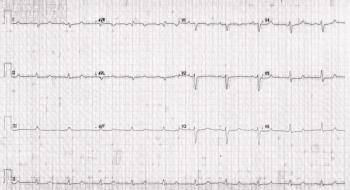
This cardiology case report from Brady Pregerson, MD, features a man in his mid-30s brought by ambulance after 3-4 days of peripheral edema and generalized weakness after a missed dialysis appointment. Can you determine the correct diagnosis?

Budesonide is the first treatment to receive approval from the FDA for reducing the loss of kidney function in adults with primary IgAN.

Jonathan Barratt, PhD, FRCP, and Brad Rovin, MD, discuss the future of IgAN treatment, highlighting the BlyS/APRIL axis.
Drs Jonathan Barratt and Brad Rovin comment on clinical trial data regarding the use of povetacicept for the treatment of IgAN.

Thyroid dysfunction was greater among patients with more severe CKD coupled with a high urine protein level.

Microbiota-based interventions may be a novel strategy to benefit the mitigation of chronic kidney disease advancement.

Patients who reported almost daily fresh vegetable consumption had higher eGFR compared to those with occasional consumption and those who consumed salt-preserved vegetables.

Continuous glucose monitoring metrics showed that patients with burnt-out diabetes and end-stage kidney disease experience significant undiagnosed hyperglycemia.

A new study demonstrated hemoglobin levels significantly increased with ziltivekimab, showing the monoclonal antibody has the potential to serve as a new treatment method for anemia.

The new model outperformed existing measures of CKD progression based on longitudinal eGFR data alone and saw further improvements in AUROC with the inclusion of additional clinical variables.
Advertisement
Advertisement
Trending on HCPLive
1
Tilrekimig Meets EASI-75 Goal in Atopic Dermatitis, With Eric Simpson, MD
2
Tips on Optimizing HS Biologics, Combinations, and Surgery
3
FDA Approves Once-Monthly Subcutaneous Olanzapine for Schizophrenia
4
Why "Normal" Ferritin Can Miss Iron Deficiency, With Jacquelyn Powers, MD, MS
5