




Pulmonology
Latest News
Advertisement
Latest Videos


CME Content




























































Advertisement
More News

Findings suggest patients with AATD with liver and/or lung disease face greater all-cause costs and healthcare resource utilization than those with AATD alone.

The FDA provided 510(k) clearance for the COR-12 wireless ECG device, which was now integrated with the SpiroSphere.

Strnad explains key findings from research presented at the EASL Congress regarding noninvasive testing and biomarkers in AATD-LD based on phase 2 fazirsiran clinical trials.

These data indicate the benefits of implementing individual protective measures in winter by patients with COPD.
File joins Lungcast to review the ATS-IDSA 2019 guideline updates for community-acquired pneumonia, and advances to diagnostics and care.
This review of May 2024 covered several notable topics in the pulmonary health field, including research into vaping, lung abnormalities, and treatment of COPD.

Using available literature, the review assesses our current understanding of AATD, emerging biomarkers, and the future of drug development.
The FDA moved the target date for their decision on the dupilumab application by 3 months, citing a need for more efficacy data from its pivotal phase 3 trials.

Patients with AATD-associated lung disease on augmentation therapy participating in a health management program experienced negligible changes in self-perceived health status.

Patients with AATD had increased cardiovascular risk compared to non-AATD COPD and healthy controls, with results suggesting physiological tests may assess risk more accurately.

Sisson discusses the adoption of 2021 ATS / ERS guidelines, as well as the need for complementary testing and imagine to contextualize the full pulmonary patient.

Toby Maher, MD, PhD: Improving Lung Function with ENV-101 Treatment of Idiopathic Pulmonary Fibrosis
These late-breaking data on drug candidate ENV-101 were presented at ATS 2024 and resulted from a new study on the drug’s effect on individuals with IPF.
Use of dupilumab reduced exacerbations and improved lung function in COPD patients with type 2 inflammation.

In this interview segment, Rigotti discussed the way in which cytisinicline can help adults to quit e-cigarettes and the future of her team’s research on this product.
This discussion covered the topic of e-cigarette use and its potential treatment with cytisinicline, a plant-based medication which may aid vapers in quitting.

A Veterans Affairs study finds low alpha-1 antitrypsin phenotyping rates, indicating the need for improved healthcare provider education on AATD.
Lovinsky-Desir joins Lungcast on World Asthma Day to discuss community-specific burdens of disease, and emerging strategies to manage it.
In this Lungcast episode segment, Balmes spoke about advocating for air pollution improvements, inequities in air quality, and more.

Data from the ORCA-V trial suggests cytisinicline, a plant-based medication, aids adults in quitting e-cigarettes.

This analysis indicates that quantitative interstitial abnormalities may indicate alterations in lung tissue processes that can result in short- and long-term consequences as far as symptoms.
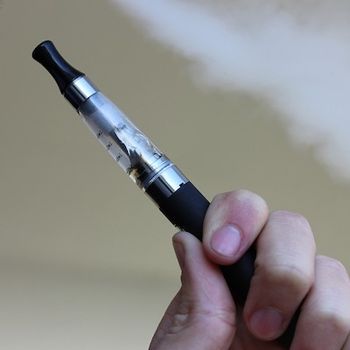
These data suggest vaping poses potential threats to the development of the brain and organs, with teenagers being a predominant target due to surges in use.

This segment of the latest Lungcast episode featured a discussion over the ALA’s State of the Air Report and the impacts of particle pollution.

A retrospective study challenges preoperative withholding of GLP-1 RAs in diabetes patients undergoing surgery, citing no increased risk of postoperative respiratory complications.
Balmes discusses the latest annual State of the Air Report, which shows that 131 million Americans are living in areas with failing air quality grades.

In this Q&A, Kathuria explains the current state of smoking cessation programs and how health care providers can help patients combat their tobacco dependence.
Advertisement
Advertisement
Trending on HCPLive
1
FDA Approves Obinutuzumab (Gazyva) for Idiopathic Nephrotic Syndrome
2
The Case for Routine Kidney Screening, With Pranav Garimella, MBBS, MPH
3
Hereditary Angioedema Triggers, Prodromes Mapped in US HAEA Registry
4
What The FDA Psychedelic Hearing Means for Psychiatrists
5