



























































Ulcerative Colitis
Latest News
Advertisement
CME Content
Advertisement
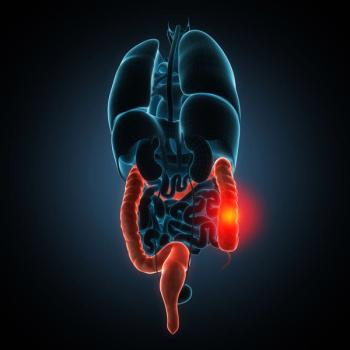
The IB-Stim device uses electrical pulses to stimulate cranial nerves and reduce pain associated with irritable bowel syndrome.

Preston Klassen, MD, executive vice president of Arena Pharmaceuticals, discusses potential uses for etrasimod outside of inflammatory bowel disease
Preston Klassen, MD, head of research and development at Arena Pharmaceuticals, discusses olorinab's efficacy and safety for the treatment of abdominal pain in Crohn's disease.
Preston Klassen, MD, head of research and development at Arena Pharmaceuticals, discusses a post hoc analysis of biomarkers and clinical outcomes in patients with ulcerative colitis receving etrasimod.
Preston Klassen, MD, head of research and development at Arena Pharamaceuticals, discusses mucosal healing and histologic remission in patients with ulcerative colitis receiving etrasimod.
Investigators presented information on the 9-month interim results of the ABX464-102 phase 2a examining efficacy in UC patients at DDW 2019.

Study from DDW 2019 found that rates of nonalcoholic fatty liver disease, nonalcoholic steatohepatitis, and nonalcoholic cirrhosis was more than double in patients with UC.

Study presented at DDW 2019 found that transplantation of gut microbes from lean donor could aid weight loss in obese, metabolically healthy recipients.

Overconfidence, anchoring errors, biases, and other factors have all led to misdiagnoses at points in my internal medicine career.
Originally approved in 2002, tegaserod (Zelnorm) was withdrawn in 2007 due to potential safety concerns.

The new guideline centers on the overall diagnosis, management, and clinical treatment of the chronic inflammatory disease.

Hilary Baldwin, MD, debunks the myths behind the nodular acne therapy she claims is a miracle drug.

For patients with inflammatory bowel disease (IBD) and C difficile, immunosuppressive therapy escalation for IBD, after treatment for the infection, was not associated with adverse outcomes.
Positive phase 2b data from AbbVie’s upadacitinib demonstrated an induction for clinical remission in patients with ulcerative colitis.

Antibiotic use is believed to be a C difficile infection risk factor for inflammatory bowel disease patients.

Mount Sinai investigators have found that anti-A4B7 therapy—specifically, vedolizumab—may represent a new therapeutic approach, prompting a couple of phase 1 clinical trials.

Clinical trials consistently demonstrate that fecal microbiota treatment is an effective treatment strategy for recurrent CDI, yet standardization practices vary.

The double-blind, placebo-controlled, parallel-group study that aims to observe linaclotide 290 mcg in 600 adult patients with IBS-C in the US.
Tofacitinib was evaluated for the expansion of its indication based on data from 3 clinical trials.

This morning, Protagonist Therapeutics announced that the Phase 2b PROPEL study of PTG-100 in patients with ulcerative colitis has been discontinued.

Takeda released new real-world data evaluating the comparative effectiveness of Entyvio (vedolizumab) and TNFα-antagonist in patients with moderately to severely active ulcerative colitis or Crohn’s disease.
Advertisement
Advertisement
Trending on HCPLive
1
FDA Clears Beta Bionics' Mint Insulin Patch Pump for Diabetes
2
Evolocumab Prevents Recurrent Cardiovascular Events Following MI or Stroke
3
FDA Priority Review Granted to Zasocitinib for Moderate to Severe Psoriasis
4
Ameluz Treatment Becomes First FDA-Approved PDT for Skin Cancer
5