

New phase 2 data from the SCRATCH-AD trial found that ruxolitinib 1.5% showed strong results for rapidly reducing itch in eczema patients, an improvement that continued over 28 days.
New phase 2 data from the SCRATCH-AD trial found that ruxolitinib 1.5% showed strong results for rapidly reducing itch in eczema patients, an improvement that continued over 28 days.

David Rosmarin, MD, reviews a quintet of promising agents advancing in late stages while at RAD 2023.

In this interview segment, Siegfried discussed the major points she hopes clinicians take away from her Revolutionizing Atopic Dermatitis conference talk regarding eczema in infants.
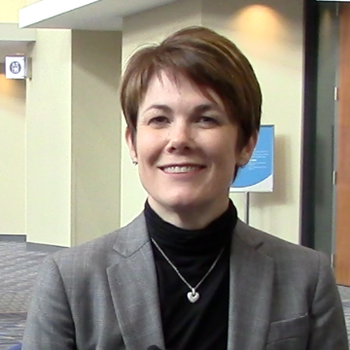
Late-breaking survey data from RAD 2023 show patients who achieve significant and quick response to itchy symptoms and lesion clearance are happier with their treatment regimen.
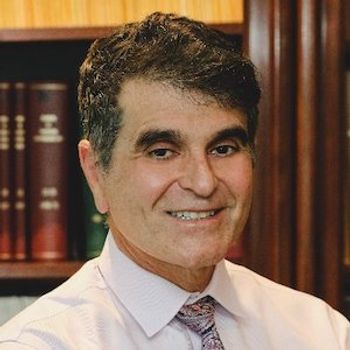
A retrospective study of nearly 19,000 eyes presented at ARVO 2023 found patients with GA lost 2 lines of vision at year 3 and are at meaningful risk of nAMD.

Contrary to short-term phase 3 research, the JAK-1 inhibitor was not dose-dependent nor less effective in older adult patients over nearly 2 years.
Siegfried spoke on the subjects covered in her presentation at the Revolutionizing Atopic Dermatitis conference, specifically the different conditions that can mirror eczema in infancy.
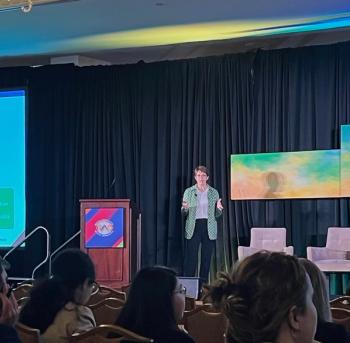
In her presentation at the Revolutionizing Atopic Dermatitis conference, Melinda Gooderham spoke about 4 specific upcoming therapies set to arrive this year for patients with eczema, including 2 nonsteroidal topicals.
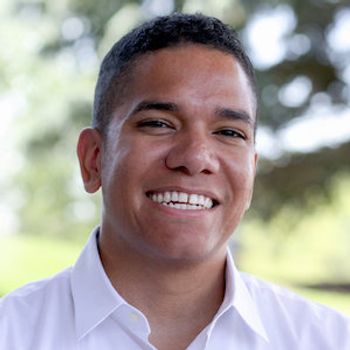
At ARVO 2023, David Tabano, PhD, discussed the analysis of the largest real-world evaluation of treatment patterns and outcomes in DME patients treated with faricimab.

In this interview, King discussed his Revolutionizing Atopic Dermatitis presentation on his views about the safety of JAK inhibitors in otherwise healthy eczema patients.
Diamant Thaci, MD, reviewed the state of real-world biologic therapy use for moderate to severe atopic dermatitis during a session at RAD 2023.

During another interview segment, Silverberg highlighted some new insights into oral JAK-inhibitors from his presentation at the Revolutionizing Atopic Dermatitis conference.

In this interview segment, Silverberg discussed some of the major takeaways from his Revolutionizing Atopic Dermatitis presentation on eligibility for systemic treatments.

An open-label extension trial shows dupilumab provides similar skin clearance and itch benefit at 5 years as it had at 1 year of treatment.

Interim analysis suggest the JAK inhibitor may become a breakthrough treatment for chronic hand dermatitis—a condition currently without a marketed drug.
Post-hoc data from the phase 3 ADhere trial shows a lebrikizumab regimen may help patients with atopic dermatitis achieve skin clearance they could not with dupilumab.

Eichenfield discussed the major takeaways from his Revolutionizing Atopic Dermatology conference presentation regarding recent data on PDE4 and JAK inhibitors for eczema patients.

During this interview segment, Singh spoke on the ways in which dermatologists may help infants manage atopic dermatitis, as well as her outlook on the future of treatment.
In this interview, Singh described the major takeaways from her presentation on allergy testing for infants which she gave at the Revolutionizing Atopic Dermatitis conference.

A Brazil cross-sectional analysis suggests chronic pruritus is even more common—and burdensome—in atopic dermatitis patients than previously believed.

Eichenfield discussed his first presentation at the Revolutionizing Atopic Dermatitis conference, with his discussion covering systemic atopic dermatitis treatment for infants.

A new qualitative study of adults with atopic dermatitis shows preference for skin clearance, reduced risk of severe adverse events and a less frequent dosage.

New data show the novel investigative drug from Amytrx was associated with 37% improvement in atopic dermatitis body surface area.
Updated analysis of more than a dozen clinical trials assessing monotherapy systemic treatment of atopic dermatitis shows upadacitinib's highly prevalent efficacy in clearing skin.

At ARVO 2023, 24-month data suggests the change from baseline in GA lesion growth consistently favored pegcetacoplan vs. sham across subgroups in DERBY and OAKS trials.

At ARVO 2023, Goldberg discusses how dual Ang-2/VEGF inhibition can provide greater vascular stability, which may contribute to faster fluid resolution and extended durability with faricimab treatment.

A personalized treat-and-extend–based regimen presented at ARVO 2023 suggested the long-term potential of faricimab to reduce the treatment burden for patients with DME.

An analysis of the TENAYA/LUCERNE presented at ARVO 2023 suggests faricimab more rapidly improved anatomic outcomes in patients with nAMD compared to aflibercept.

An analysis of the phase 2/3 PHOTON trial suggested the majority of patients with DME who received aflibercept 8 mg maintained 12- or 16-week dosing intervals.

A posthoc analysis of the phase 2 CANDELA study presented at ARVO 2023 suggests aflibercept 8 mg improved visual and anatomical outcomes compared with aflibercept 2 mg in eyes with nAMD.