
Vogelmeier, of Philipps-University of Marburg discusses pooled data showing reduced COPD exacerbations, though most effectively in former smokers.
Vogelmeier, of Philipps-University of Marburg discusses pooled data showing reduced COPD exacerbations, though most effectively in former smokers.

Manju Dawkins, MD, discusses Skin Angels, why clinicians belong in dermatology innovation, and her work to reduce injection pain and needle anxiety.

This preview of EADV 2026 provides a teaser of new data and interviews being highlighted at this Vienna dermatology conference.

Kazem Rahimi, MD, discusses his recent IPD analysis highlighting the consistent relative risk reduction of first cardiovascular event with BP-lowering drugs.
van Ingen, of Radboud University Medical Center, discusses the ENCORE trial's patient-reported endpoint for ALIS in MAC lung disease.
van Ingen, of Radboud University Medical Center discusses data showing add-on ALIS improved durable culture conversion in newly diagnosed MAC lung disease.

Selvanayagam shares his thoughts on whether ICDs’ improvements in sudden cardiac death are worth the reduced quality of life.
Joseph Selvanayagam, MBBS, discusses the potential of implantable cardioverter-defibrillators to reduce sudden cardiac death among younger patients.

Read 6 late-breaking updates from ERS Congress 2026 that clinicians managing respiratory disease should know.
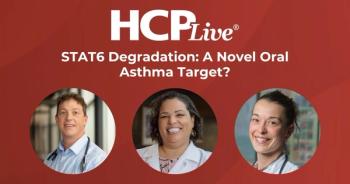
At ERS 2026, pulmonologists framed oral STAT6 degradation—led by Kymera's KT-621—as a potential biologic-like, access-expanding approach.

Astrid Paul Nordin, MD, PhD, discusses the results of the IDEAL-AF trial, highlighting the efficacy of including LVZ on top of PVI.

Anjali Owens, MD, discusses the long-term extension of the EXPLORER-HCM trial, demonstrating mavacamten’s safety and efficacy up to 5 years after initiation.

Sten Rubertsson, MD, PhD, discusses the results of the DISCO study, which compared immediate to deferred angiography in patients without ST-elevation following cardiac arrest.
George, of Royal Brompton Hospital discusses a phase 2a post hoc analysis showing increases in lung volume and reduced ILD.

John Ostrominski, MD, discusses his analysis of the FINEARTS-HF trial, which showed finerenone’s improvements despite CKD, ASCVD, and/or metabolic disease.

In this Q&A, Leon Kircik, MD, discusses challenging watch-and-wait for molluscum contagiosum with berdazimer gel, 10.3%, at LEADderm 2026.
Bhatt also discusses how these findings inform the choice between dupilumab and mepolizumab under GOLD 2026.
Wuyts, of University Hospitals Leuven discusses interim FIBRONEER-ON open-label extension data showing nerandomilast's favorable safety profile.

Jonathan Piccini, MD, discusses his presentation at ESC 2026 discussing the potential benefits of catheter ablation in concomitant HFpEF and AF.
Marlies Wijsenbeek, MD, PhD, of Erasmus MC discusses BI 1839100, a TRPA1 antagonist, which missed its week-4 endpoint in a phase 2/2b trial.

Wechsler, of National Jewish Health discusses how oral STAT6 degraders like KT-621 could offer a mechanistically distinct treatment option.

Luke Laffin, MD, discusses his secondary analysis of the phase 2 KARDINAL trial, which demonstrated substantial improvements in uncontrolled hypertension.
Wechsler discusses why less frequent dosing matters to patients with severe asthma, plus VALIANT's safety profile and what's next for the field.
The novel cardiac sarcomere modulator from Edgewise Therapeutics saw substantial improvements in both nonobstructive and obstructive HCM after 12 weeks.

Guy Brusselle, MD, PhD, explains why broader cytokine blockade with dupilumab outpaced omalizumab, and why nonremitters in EVEREST still improved.
Adam Friedman, MD, breaks down how to say no strategically in dermatology, from delaying an answer to sharing the decision with the requester.

Robert Giugliano, MD, breaks down his prespecified subanalysis of the VESALIUS-CV trial, evaluating evolocumab’s effect on cardiovascular mortality.
Phase 2 VALIANT data show the anti-TSLP receptor antibody sharply reduced exacerbations in patients with high eosinophil counts.

Kristina Duffin, MD, dean of the Spencer Fox Eccles School of Medicine, discusses leadership, delegation, and coaching at LEADderm 2026.
Guy Brusselle, MD, PhD, says that 64% of dupilumab-treated patients met composite asthma clinical remission criteria at week 24 versus 40.5% with omalizumab.