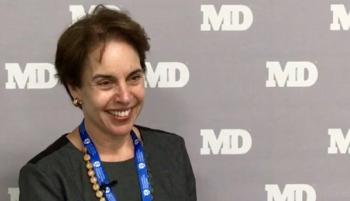
Leading eating disorder expert Evelyn Attia, MD, sat down with MD Mag at the American Psychiatric Association meeting to talk about the correlation between obesity and eating disorders.
Leading eating disorder expert Evelyn Attia, MD, sat down with MD Mag at the American Psychiatric Association meeting to talk about the correlation between obesity and eating disorders.

He and a Danish team believe they've found the cause of multiple sclerosis.
The Mount Sinai Hospital neurology professor shares his thoughts on MS care.
The study presented at CMSC 2017 compared the treatments to an interferon.

Telepsychiatry shown to be viable alternative in rural areas with limited access.
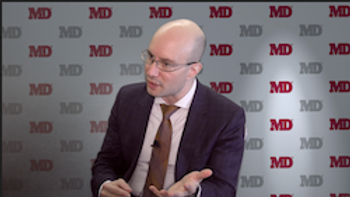
Stephen Krieger, MD, an associate professor at Mount Sinai Hospital, discusses the impact that recently-approved drug ocrelizumab has on the state of multiple sclerosis care, as well as his patient-centered app that depicts the MS condition in a more accurate manner, at the 2017 Consortium of Multiple Sclerosis Centers in New Orleans.

Physicians debated whether they would prescribe the new MS drug to a patient.
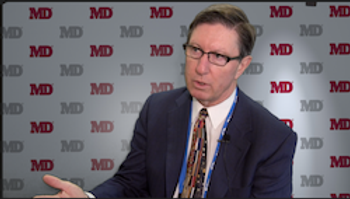
Allen Bowling, MD, PhD, physician associate of the Colorado Neurological Institute, discussed widely-researched benefits of cannabis on MS effects, its shortcomings, and the broad outcomes of alternative treatment.
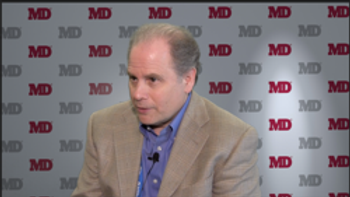
Clyde Markowitz, MD, director of the MS Center at the University of Pennsylvania, discusses how the patterns of male-to-female ratio in MS diagnoses may be linked to hormones, and whether testosterone could be key in bettering treatment.

An overview of the newest treatment options for the disease.
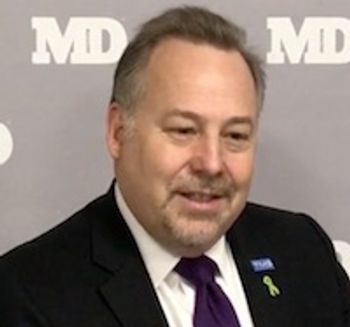
Transcranial Magnetic Stimulation (TMS) is getting good results as an adjunctive therapy for patients with major depression who have failed on several antidepressant medications.
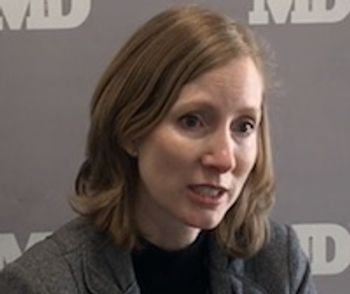
Dr. Melissa Arbuckle explains what neuroscience is and why every practicing psychiatrist should have an understanding and appreciation for this branch of science.
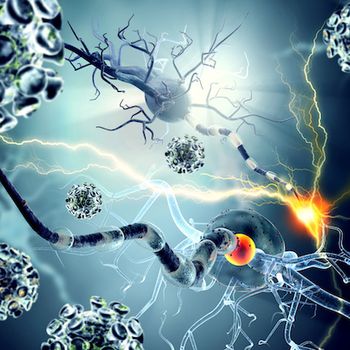
Physicians received an overview of the scope and severity of the disease.
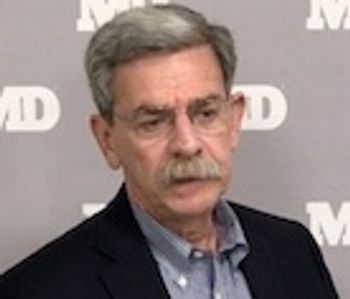
Dr. Stanley Caroff, Emeritus Professor CE of Psychiatry at the Philadelphia VA Medical Center, sits down with MD Magazine to explain what tardive dyskinesia is, and why it's so important for psychiatrists to be aware of this side effect in their patients taking antipsychotic medications. This is the conclusion of a two-part conversation.
Michael Wechsler, MD, MMSc, recounts the phase III trial of Mepolizumab on patients with eosinophilic granulomatosis with polyangiitis (EGPA).
The APA lecture focused on a model with detail to game theory.
Study examined the impact of incidents of adversity experienced in childhood.
Autism inked to maternal lifestyle, especially dietary factors impacting glucose.
Delirium-catatonia has been successfully treated with NMDA antagonists.
Cyberbullying exacerbates existing mental health conditions among adolescents.
200,000 to 400,000 people die annually from medical errors.
In the second leg of a weighty interview, Kaufman ruminates on what more is needed.
According to Tatsiana Singh, PA-C, Indiana State University Sycamore Center for Wellness, at an individual level, each Physician Assistant (PA) or healthcare provider should aim at staying up-to-date, reflecting on their workdays, and discerning whether there was a situation that was a close call and how it could be prevented in the future. Being a good team player is critical for PAs particularly and not being frightened to solicit another opinion and verify the diagnosis.
Stephanie Chen, MSN, MPH, NP-C, Barrow Neurological Institute, also discussed goals of The VA Epilepsy Centers of Excellence, a national consortium aiming to provide high quality epilepsy care and educational resources to patients and their caregivers.

What topics are important for PCPs to understand to treat their CVD patients?

Nguyen has had the fortune of having been involved in the trials of all three.

$1 million is up for grabs

Babies exposed to marijuana in the womb may require clinical care sooner.

The Synthroid brand of levothyroxine improved thyroid-stimulating hormone (TSH) levels by a significantly greater margin compared with generic versions of the synthetic T4 (LT4) hormones for patients with hypothyroidism.
At AACE 2017, John Bilezikian, MD, discussed the latest FDA approval of Tymlos for postmenopausal women with osteoporosis and for women who are at high risk for fracture.