

More than 25% of the US population over the age of 65 has diabetes.
More than 25% of the US population over the age of 65 has diabetes.
Peter Goadsby, M.B., B.S., Director of the NIHR- Wellcome Trust King’s Clinical Research, London, Professor of Neurology, University of California at San Francisco, explained the benefits of the recent FDA approval of the gammaCore non-invasive vagal nerve stimulator on patients suffering from cluster headaches.
In terms of specific endocrine functions, bones favor glucose metabolism and homeostasis and are necessary for memory formation and for muscle function during exercise. Gerard Karsenty, MD, PhD also explained that osteo-calcium is not only necessary to foster this function, but it’s also sufficient, and can improve this function in animals.

“Unlikely to have clinically relevant interactions with any commonly prescribed AEDs.â€

Researchers previously only considered ALS as one illness, but new knowledge has changed that mentality and has shown experts they need to personalize treatment approaches. “It’s important to understand the disease in different groups of people.â€

Could insulin could be dosed off of values from a continuous glucose monitor? Anne Peters, MD, and team sought to find out.

Meredith McCormack, MD, MHS, talked about managing asthma and COPD in the primary care setting and when it’s time to refer a patient to a specialist at the American College of Physicians Internal Medicine Meeting (ACP 2017) in San Diego, California.

Study observed more time in target range, even when adjusted for increased activity.

“Today, hernia is really an endocrine disease,†according to Hong Zhao.

Shanlee Davis, MD, University of Colorado, Children’s Hospital Colorado, and team were interested in the effects of this pre-pubertal androgen treatment on the testicular function, or puberty.
Farid Saad, DVM, PhD, Bayer Pharma AG learned that the men with type 1 diabetes did experience benefits of long-term testosterone therapy – they showed improvements in their underlying diseases.
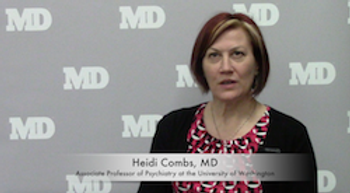
Heidi Combs, MD, says that many patients present to the primary care office thinking that they have other health problems when the diagnosis is really anxiety or depression. She discussed the topic at the American College of Physicians Internal Medicine Meeting (ACP 2017) in San Diego, California.
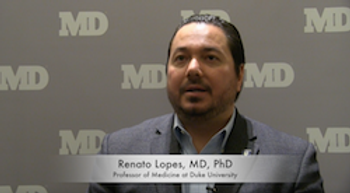
Using the database from the 40-country, double-blind phase 3 ARISTOTLE study, which has been around for over 5 years, a sub-analysis was conducted by Renato Lopes, MD, PhD, professor of Medicine at Duke University in Durham, North Carolina and colleagues.

Microbleeds in the brain appear to increase with cardiac procedures:Study.

The Absorb GT1 Bioresorbable Vascular Stent raised concerns at the FDA.

Excitement has been surrounding PCSK9 inhibitors due to high efficacy in lowering cholesterol. However, two reports in 2015 found that two of these drugs (evolocumab and alirocumab) were linked to cognitive issues. A phase 3 trial at ACC 2017 set out to find if that's actually the case.

Drugs were as effective in CTO patients as PCI, Korean study found.

New diagnostic tool iFR is less painful for heart patients than FFR.

In another major study comparing TAVR to surgery, outcomes were similar.

The phase 3b MUSCA trial reported positive results for mepolizumab.

Jay Jin, MD, PhD, Mayo Clinic, shared the results from his team's case series surrounding unexpected bradycardia effect from epinephrine administration.
Anthony S. Fauci, MD, Director, National Institute of Allergy and Infectious Diseases (NIAID), shared with MD Magazine what the main theme would be in his keynote address at the AAAAI 2017 meeting in Atlanta, GA: emerging and reemerging infections, a perpetual challenge.

Only a small percentage of people who think they have a penicillin allergy actually do.

How safe are anti-inflammatory medications for children?

A chlamydia vaccine would cut infection rates, but cost millions.
Katia Boven, MD, Head of Clinical Development and Global Medical Affairs, Infectious Diseases, Janssen, discussed results and impact of the SWORD clinical trial involving the investigational two-drug combination being as effective as the three or four regimens as maintenance therapy in HIV patients who have already achieved viral suppression.

"Even though we have a lot of drugs, because of the resistance profile of their virus, they don't have a lot of options, so what these results mean for the most vulnerable of our patients is that they have access now to a new class of drugs," Emu concluded.

Published literature says the pre-seroconversion window period lasts around 45 days.

Among a large sample of Veterans Affairs health care patients with peripheral artery disease, researchers found African Americans were 43% more likely to lose a limb to amputation--and it is likely not because of socioeconomic or behavioral factors.

In just over a year, Praluent has shown benefits in helping patients lower their cholesterol level. Despite the progress, there have also been some challenges.