
Researchers compiled best practices for clinicians diagnosing and treating aquagenic urticaria (AU), a rare, but debilitating form of the skin disorder that leaves patients unable to bathe, sweat, or cry without breaking out in painful wheals.
Researchers compiled best practices for clinicians diagnosing and treating aquagenic urticaria (AU), a rare, but debilitating form of the skin disorder that leaves patients unable to bathe, sweat, or cry without breaking out in painful wheals.

A new study reported no increased incidence of heart disease in patients treated for chronic urticaria, despite prior research highlighting a potential association with other cardiac risk precursors.
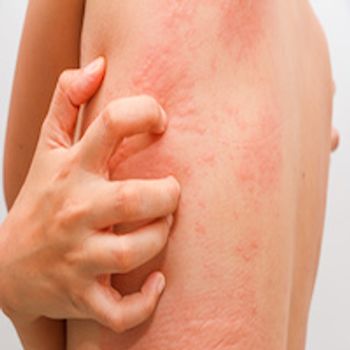
Researchers highlight a new set of tests that could streamline the process involved in identifying autoimmune chronic urticaria.

The family dog has been implicated in an epidemiological study tracing the spread of Clostridium difficile (C. difficile).

Too much television isn't just bad for kids' heads, it appears to weaken their bones as well, Australian researchers found.

When addicted physicians seek treatment, they generally succeed. Addiction specialist Joseph Garbely, DO, says physicians usually have too much at stake to fail.

The American College of Cardiology's outgoing President Kim A. Williams, MD, went vegan in 2003 and never looked back. He talks about the diet's power to heal and how being the ACC's first vegan leader played out.

Microcalcifications that can show up on mammograms can also predict a woman's risk of heart disease. MD Magazine spoke to Khurram Nasir, MD, co-author of an editorial urging physicians and their specialty societies to put this finding into practice.

Patients with COPD and other breathing disorders are at far higher risk of formaldehyde exposure from faulty laminated flooring than thought. The US Centers for Disease Control and Prevention said it made a major math error in calculating that risk in an earlier report.

Loss of the sense of taste in patients with multiple sclerosis is more common than thought.

The elusive “viral reservoir†has been seen by many as the last barrier to a cure for HIV infection since the 1997 discovery of the virus’ ability to lie dormant in certain long-lived cells. Chicago researchers have found that the virus can lurk in the lymph nodes in thriving colonies. The finding could lead to a new drug target that could cure AIDS instead of just managing it.
February 10th 2016

February 12th 2016

February 23rd 2016

May 27th 2016

July 13th 2016

September 9th 2016