

In a Q&A, Clipper Young, PharmD, MPH, discusses the Pharm2Home Initiative based on his presentation from ADCES 2023 and describes the impact of community-driven, pharmacist-led interventions to improve health literacy in those with chronic disease.
In a Q&A, Clipper Young, PharmD, MPH, discusses the Pharm2Home Initiative based on his presentation from ADCES 2023 and describes the impact of community-driven, pharmacist-led interventions to improve health literacy in those with chronic disease.

A single dose of intravitreal bevacizumab in individuals undergoing trabeculectomy for progressing glaucoma shows improved postoperative outcomes at 12 months.

This interview featured a discussion with Dr. Lim on his team’s findings regarding the effects of infrared radiation on human skin.

New 96-week data from PULSAR show patients treated with aflibercept 8 mg achieved good durability and maintained visual acuity gains from year 1 through year 2 of study.

Instances of urgent IBD hospitalization, surgery, death or lack of response to steroid therapy are linked to symptoms of depression and anxiety.

Michael J. Blaha, MD, MPH, discusses his interpretation of the growing data detailing the role of inflammation as a driver of cardiovascular risk and how clinicians can identify patients who stand to benefit most from colchicine 0.5 mg tablets.

Investigators find that while general hospitalizations decreased in 2020, hospitalizations due to alcohol-associated hepatitis increased by 16%.

Positive results from REMIX-1 and REMIX-2 on remilbrutinib could mean the beginning of a new class of chronic spontaneous urticaria therapy in about a decade.

Qazi reviews an analysis of an EHR-assisted smoking cessation module that could improve conversations between specialists and patients.

New 12-week data shows an investigative oral drug provided significant benefit in key outcomes associated with NASH disease relief.

Anatomic and visual improvements with high-dose aflibercept in CANDELA indicate a potential therapeutic benefit over aflibercept 2 mg, despite not achieving statistical significance.

Results from FARETINA-DME indicate a majority of eyes with DME began extending treatment intervals after 1-2 initial doses of faricimab.

This new data from the UK suggests possible opportunities for preventing anxiety and depression for those with eczema or psoriasis by addressing modifiable risk factors such as sleep.

Joshua Neumiller, PharmD, takes part in a Q&A on the role of deprescribing in older adults with diabetes mellitus based on a presentation from the Association of Diabetes Care and Education Specialists 2023 annual meeting.

With an uptick in COVID-19 cases, it is time for a reminder of the recommendations of how rheumatoid arthritis treatment should be amended if a patient is exposed to SARS-CoV-2. Test your knowledge with this quiz.

Positive topline results from the phase 3 trial suggest once-daily OCS-01 met both primary trial endpoints for the treatment of inflammation and pain following cataract surgery.

An analysis of postmenopausal women shows a nearly two-fold increase in liver cancer incidence among those who consume at least 1 soft drink or fruit drink daily.

In a recent Q&A, Michael Blaha, MD, discusses how he views the ideal role of cardiologists in the management of obesity and how this role could change based on the results of the SELECT trial.

This study’s findings demonstrate the necessity of risk factor identification for atopic-like dermatitis, as well as the importance of exploring alternative treatments for severe cases.

Last week, the FDA authorized marketing for Viz.AI’s Viz HCM, a standalone ECG analysis software to identify adult patients for further follow-up for hypertrophic cardiomyopathy.

At ADCES 2023, Halis Akturk, MD, presented data calling attention to the risk of hyperglycemic ketosis-cannabis hyperemesis syndrome in people with type 1 diabetes.

Novo Nordisk has announced topline data from the SELECT trial, which suggest use of once-weekly semaglutide 2.4 mg was associated with a statistically significant 20% reduction in 3-point MACE among a cohort with overweight or obesity and established cardiovascular disease.

Vistagen reported significant improvement of physician- and patient-reported anxiety among trial participants who underwent an anxiety-inducing public speaking exercise.

The new research in this study indicates that both types of food challenges may be equally useful when conducted by trained staff who use strict objective stop criteria.
Last week's FDA approval of avacincaptad pegol marked the second approved treatment for geographic atrophy in 2023. Here, 4 retina specialists discuss the complement inhibitor and what it could represent for patients with GA.

While discussing a review of noninvasive options, the gastroenterologist addresses the growing interest in non-colonoscopy screening and surveillance methods.

The empagliflozin reference drug and its biosimilar (CKD-370) demonstrated bioequivalence, and both treatments were well-tolerated among patients.

Data from PK profiles and safety analyses of intravitreal sozinibercept suggest the promise of the drug in combination with standard anti-VEGF agents for AMD and DME.

Approximately 1 in 5 newly diagnosed patients are initiating direct acting antivirals within 6 months, according to Medicaid data review.
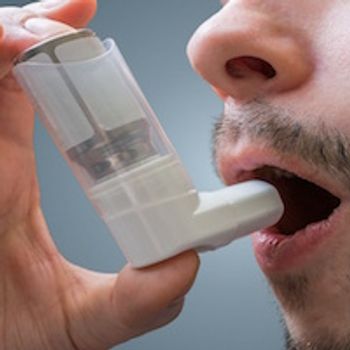
These new findings suggest the COMSA parameters may have applicability for standardizing observational studies’ results for pediatric patients with asthma.