
Opinion|Videos|September 15, 2026
Shared Decision Making and the Future of IgAN Therapy
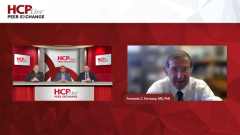
In "Shared Decision Making and the Future of IgAN Therapy," the panel closes the series on partnership and what lies ahead.
Advertisement
Episodes in this series
In "Shared Decision Making and the Future of IgAN Therapy," the panel closes the series on partnership and what lies ahead.
Dr. Parikh asks how the panel integrates shared decision making now that so many tools exist. Dr. Mehdi calls it key given the heterogeneity and uncertainty of the disease. He argues clinicians must be honest that they do not have all the answers. He separates the non-negotiables, blood pressure control, smoking cessation, weight loss, and low sodium, from the negotiable therapeutic choices. He frames the shared goal as preventing dialysis and deciding what treatment to use, and when. Dr. Parikh describes assessing what patients can control at home and what they will accept, such as injections versus budesonide pills. He stresses staggering therapies so patients feel comfortable rather than starting everything at once. Dr. Parikh then poses a rapid-fire question about the most exciting therapy on the horizon. Dr. Mehdi names CD38 plasma-cell-directed therapy, citing early promise beyond the BAFF/APRIL data. Dr. Fervenza agrees. Dr. Rovin takes a different path, saying he wants to see whether agents that degrade galactose-deficient IgA1 change the disease. He frames this as a way to test whether it is truly the autoantigen and to advance biomarker understanding. He notes that even so, the pathogenesis continues, so the leaking roof is not fixed. In closing thoughts, Dr. Rovin celebrates how exciting nephrology has become. Dr. Mehdi dares to dream of drug-free remission within five to ten years. Dr. Fervenza ends on individualized medicine, noting no two IgA nephropathy patients are alike, and that delivering the right treatment to the right patient is the coming challenge.
Advertisement
Latest CME



























































Advertisement
Advertisement
Trending on HCPLive
1
FDA Clears Beta Bionics' Mint Insulin Patch Pump for Diabetes
2
Evolocumab Prevents Recurrent Cardiovascular Events Following MI or Stroke
3
FDA Priority Review Granted to Zasocitinib for Moderate to Severe Psoriasis
4
Ameluz Treatment Becomes First FDA-Approved PDT for Skin Cancer
5