
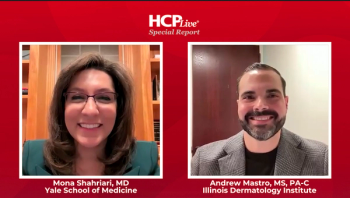
Healthcare providers discuss the importance of effective communication when switching patients from biologics to JAK inhibitors.
Healthcare providers discuss the importance of effective communication when switching patients from biologics to JAK inhibitors.
Clinicians discuss the importance of patient-centered treatment decisions and the need to address therapeutic inertia in managing chronic conditions.
Explore the evolving landscape of atopic dermatitis treatment, focusing on advanced therapies and long-term patient management strategies.
Healthcare professionals explore effective questioning techniques to uncover deeper emotional and physical impacts of skin pain in patients.
This video explores skin pain as a key symptom of atopic dermatitis and reviews clinical trial data with JAK inhibitors.

In this episode, the topic of navigating the holiday season and balancing a thriving medical career and a fulfilling family life are highlighted.

In this segment of her Fall Clinical interview, Shahriari highlights a session IL-13 inhibition and management of atopic dermatitis.
This interview at Fall Clinical highlights a session on clinical pearls related to diagnosing prurigo nodularis in patients with skin of color.
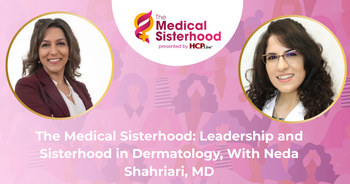
In this episode, sisters and dermatologists Mona and Neda Shahriari discuss mentorship, motherhood, and the meaning of sisterhood in medicine.

This interview at EADV 2025 features Mona Shahriari, MD, who highlighted recent findings on the drugs icotrokinra and povorcitinib in dermatology.
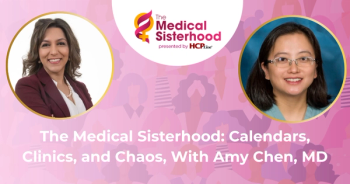
This episode highlights the challenges of navigating demanding medical careers while raising young children, with insights and practical strategies.
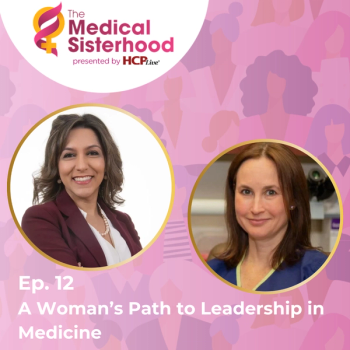
Laura Ferris, MD, PhD, reflects on her unexpected path to department chair as well as the lessons of her journey as a leader in academic medicine.

Elkady joins the program to discuss her experience transitioning from patient care to clinical trials and industry.

In this video, the last in a 6-part series, panelists discuss recent advancements in PsO management.
In this video, the fifth in a 6-part series, panelists discuss recent advancements in PsO management.
In this video, the fourth in a 6-part series, panelists discuss recent advancements in PsO management.
In this video, the third in a 6-part series, panelists discuss recent advancements in PsO management.
In this video, the second in a 6-part series, panelists discuss recent advancements in PsO management.
In this video, the first in a 6-part series, panelists discuss recent advancements in PsO management.

Melinda Gooderham, MD, MSc, joins The Medical Sisterhood to discuss balancing mentorship, leadership, and family, as well as the empowerment of women in the medical field.

In this interview with Shahriari at RAD 2025, she highlights some of the most significant burdens that patients and caregivers face with atopic dermatitis.

Amy Spizuoco, DO, joins the show to discuss her journey as a key opinion leader in dermatology.
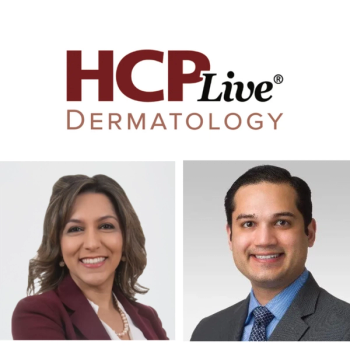
In this interview, Mona Shahriari, MD, and Raj Chovatiya, MD, PhD, touched on the evolving role of pharmacists and internal medicine doctors in atopic dermatitis.
In this interview, Chovatiya and Shahriari highlight notable elements of the upcoming Revolutionizing Atopic Dermatitis (RAD) Conference.

Jennifer Soung, MD, joins The Medical Sisterhood to discuss her journey to launching LEADderm and how owning the podium has changed her career.
Mona Shahriari, MD, previews the upcoming Revolutionizing Atopic Dermatitis Annual Meeting being held in Nashville, TN from June 06-07.

A pair of experts discuss unmet needs and educational gaps related to atopic dermatitis.

Panelists discuss how the future of atopic dermatitis treatments is evolving with novel biologics, Janus kinase inhibitors, and precision medicine targeting immune pathways. Advances in gene therapy, microbiome modulation, and personalized treatments offer promising long-term management options.
Panelists discuss how shared decision-making in atopic dermatitis care involves collaboration between health care providers and patients, considering individual preferences, values, and treatment goals. This approach enhances treatment adherence and improves outcomes through personalized, informed choices.
Panelists discuss how standard first-line treatments for nonresponsive patients often include systemic therapies like corticosteroids or immunomodulators. Second-line options may involve biologics or advanced systemic agents. Patient input is crucial in tailoring treatments to preferences, needs, and risks.