
Vivian Fonseca, MD, reflects on the 100-year anniversary of the discovery of insulin and how the role of insulin has evolved since Sir Frederick Banting's historic discovery.
Patrick Campbell is the editorial director of HCPLive. Patrick has spent years spearheading coverage surrounding cardiometabolic health and rheumatic disease for MJH Life Sciences. Before joining MJH Life Sciences in 2019, he spent time as a beat reporter and/or multimedia specialist with the Pocono Record, Star News Group, and NJ Advance Media. He is the executive producer for multiple HCPLive podcasts, including Diabetes Dialogue, Don't Miss a Beat, Kidney Compass, Medical Ethics Unpacked, The Medical Sisterhood, and Skin of Color Savvy.
Follow him on Twitter @RealPatCampbell or reach him via email at PCampbell@mjhlifesciences.com.
Vivian Fonseca, MD, reflects on the 100-year anniversary of the discovery of insulin and how the role of insulin has evolved since Sir Frederick Banting's historic discovery.

After presenting at TMIOA's 5th Heart in Diabetes meeting, Silvio Inzucchi, MD, reviews current knowledge related to the effects of diabetes medications on stroke risk.

Presented at HFSA 2021, results of REDWOOD-HCM provide insight into the effects of the oral selective cardiac myosin inhibitor aficamten in patients with obstructive hypertrophic cardiomyopathy.

Matthew Budoff, MD, discusses what he views as hurdles to achieving optimal prescription of newer agents in the treatment of cardiometabolic conditions, including diabetes, heart failure, dyslipidemia, and more.
Silvio Inzucchi, MD, discusses his presentation on the role of diabetes medications, including SGLT2 inhibitors and GLP-1 RAs, in stroke prevention from TMIOA's 5th Heart in Diabetes conference.
Presented at HFSA 2021, PRESERVED-HF provides evidence suggesting dapagliflozin use was associated with improvements in KCCQ symptom score and 6-minute walking distance in patients with heart failure with preserved ejection fraction.

A 12-week trial assessing the effects of a low calorie, low carbohydrate diet facilitated by community pharmacists suggests this approach could contribute to the remission of type 2 diabetes in adult patients.
The FDA and FTC posted warnings to 10 companies for violating the Federal Food, Drug, and Cosmetic Act by selling dietary supplements claiming to cure, treat, mitigate, or prevent diabetes.

An analysis of EHR data from more than 2 million patients in England is detailing the increased risk of becoming overweight or developing obesity in the next decade among young adults aged 18-24 compared to adults in other age groups.
Announced by Boehringer Ingelheim and Eli Lilly and Company on September 9, the Breakthrough Therapy designation for empagliflozin is based on the results of the EMPEROR-Preserved trial.
Announced in a statement from TransMedics Group Inc. on September 7, premarket approval to the OCS Heart System could allow for broader utilization of donor hearts for transplantation in the US.

Results of FIGARO-DKD were presented at ESC Congress 2021 and, combined with FIDELIO-DKD data, demonstrate the ability of finerenone to provide benefit across the spectrum of eGFR.
George Dangas, MD, PhD, discusses the results of ENVISAGE-TAVI AF and provides perspective into the priorities of investigators as they plan and conduct additional analyses of the trial.
Results of the TWILIGHT-Stent study provide insight into the impact of stent type on effects of ticagrelor monotherapy compared against ticagrelor plus aspirin among patients within the original TWILIGHT trial.

The Amulet IDE Trial is the first trial to offer a head-to-head comparison of the Amplatzer Amulet occluder from Abbot against the Watchman device from Boston Scientific for left atrial appendage occlusion.
TWILIGHT-HBR suggests ticagrelor monotherapy could lower bleeding risk among patients meeting ARC-HBR criteria. Study presenter Davide Cao, MD, offers further perspective on results of the post hoc analysis.
Deepak Bhatt, MD, discusses a presentation he gave at ESC Congress 2021 on SGLT2, 1/2 inhibition and reflects on the potential for sotagliflozin to receive approval from the FDA based on data from SOLOIST-WHF and SCORED.

Data from the Salt Substitute and Stroke Study suggest switching from regular salt to a salt substitute could reduce the risk of stroke by 14% and investigators believe these results can be applied to patient populations across the world.
Professor Bertram Pitt discusses the results of FIGARO-DKD, what they add when combined with FIDELIO-DKD, and future research priorities moving forward in a Q&A with Practical Cardiology.

Despite increasing detection of atrial fibrillation and rates of anticoagulation, continuous electrocardiographic monitoring with an implantable loop recorder did not significantly reduce risk of stroke in the LOOP study.

An ESC Congress 2021 analysis suggests icosapent ethyl was associated with a 35% reduction in total primary end point events among patients with a history of myocardial infarction prior to enrollment in the REDUCE-IT trial.
ENVISAGE-TAVI AF is the first trial to compare edoxaban against standard of care in patients who have atrial fibrillation and have undergone successful TAVR.

FIGARO-DKD concluded use of finerenone was associated with a 13% reduction in the primary outcome, which investigators purport demonstrates the benefit of finerenone use in a population with milder chronic kidney disease than those included in FIDELIO-DKD.

Results of MASTER DAPT demonstrate an abbreviated period of DAPT rather than a standard approach preserves ischemic benefits and reduces bleeding risk in patients at a high bleeding risk following stent implantation.

A randomized trial presented at ESC Congress 2021, results of SMART-MI demonstrate use of ICMs could help improve detection of arrhythmia and improve outcomes in a patient population that would normally not be eligible for ICM implantation.
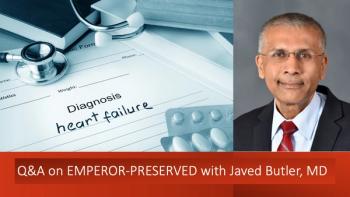
In an interview with Practical Cardiology, Javed Butler, MD, offers his perspective on the results of EMPEROR-Preserved and reflects on their rapid ascent into the cardiometabolic spotlight, evidenced by headlining trials at ESC Congress for the past 3 years.
Results of EMPEROR-Preserved demonstrate use of empagliflozin was associated with a 21% reduction in the composite end point of hospitalization for heart failure and cardiovascular death, with this effect mainly driven by a reduction in hospitalization for heart failure.

A pilot study found use of drones to deliver AEDs to patients with out-of-hospital cardiac arrest could improve response times compared to traditional emergency services.

An analysis of adherence to guideline-directed management at 1-year after ACS provides data suggesting optimal adherence could prolong event-free life expectancy by a median of 7.5 years.

Hailed by investigators as the largest and longest study of its kind, new research is providing clinicians with an overview of the potential for weight change and obesity among patients receiving gender-affirming hormone therapy.