
During the next part of his Q&A interview, Dr. Lebwohl further described new and future research into treating psoriasis.
Tim Smith joined the MJH Life Sciences team in 2022 and is currently an associate editor for HCPLive. He is also the executive producer of two podcasts: Skin of Color Savvy and The Medical Sisterhood. Previously, he was the producer of the Lungcast podcast. He graduated from UC Berkeley and worked in multimedia journalism as a staff writer prior to joining MJH. You can contact him at [email protected].
During the next part of his Q&A interview, Dr. Lebwohl further described new and future research into treating psoriasis.
This Q&A interview with Dr. Lebwohl featured a discussion about which therapies may be the best for patients who have psoriasis.

Dr. Del Rosso spoke regarding his conference presentation, titled ‘What’s New in the Medicine Chest,’ in which he describes newer therapies in the dermatology field.

Alopecia areata patients had higher rates of diseases including psoriasis, allergic rhinitis, asthma, and atopic dermatitis, highlighting the burden of comorbidities on patients in the US.

This new research indicates substantial detection of lower-risk disease among patients who are considered to be health-seeking.

This research indicates biologics may be safe for women of childbearing age, to whom they are often prescribed, as they pose an acceptable risk to fetuses/neonates.
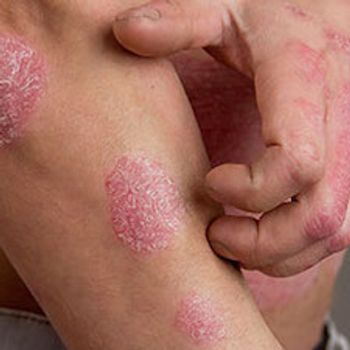
Early intervention was shown to lead to better clinical responses, results which could translate to long-term improvements in psoriasis and sustained maintenance of response after withdrawal.

Adaptation of penicillin allergy clinical decision tool PEN-FAST showed strong performance, indicating the potential utility of the tool for identifying patients with low-risk allergy phenotypes who may safely undergo direct oral challenges.

In the results of this final analysis, the hidradenitis suppurativa drug was found to be well tolerated in patients regardless of either differing demographics or clinical characteristics.

These 4 treatments and their biosimilars show no significant differences, though future studies may be necessary to assess long-term efficacy and safety of biosimilars in treating psoriasis.

This research supports the notion that brain morphology may be related to acceleration in the aging process for middle-aged and older-aged adults who have a long history of type 1 diabetes.

For this interview segment, Dr. Arkin discussed the biggest points she hopes dermatologists will take away from National Scleroderma Awareness Month this year.
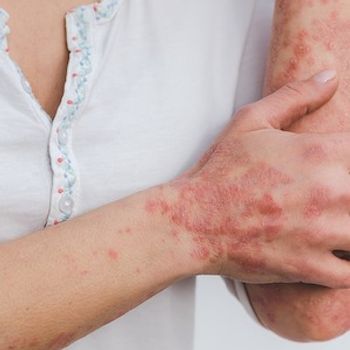
This new research into psoriasis and its systemic effects and comorbidities may be used to identify the mechanisms which affect skin inflammation in a single area and effects on other organs.
In this segment of her interview, Dr. Arkin was asked about news, recent research, and therapies for patients with scleroderma, in honor of National Scleroderma Awareness Month.
This interview with Dr. Arkin involved a discussion, in honor of June being National Scleroderma Awareness Month, of information on underlying causes and new research on the skin condition.
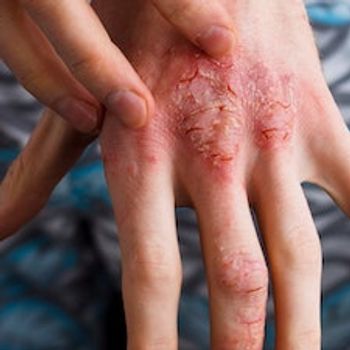
New data indicating this connection suggests a need for clinicians to take into account cardiovascular examination for patients with both the skin disorder and symptoms suggestive of incident venous thromboembolism.

This research was conducted to identify distinct subgroups of those with atopic dermatitis, and the findings may help to promote better counseling and treatment options.

These findings are relevant given that if labels are incorrectly identified, those with allergies may be at risk of severe reactions or receive suboptimal treatment.

Recent research from Japan indicates that there are several comorbidities identified for patients with psoriasis, raising awareness of incidental findings in CT analysis.
New data indicates that psoriasis patients who are naïve to biological therapies may benefit from early intervention with secukinumab, though further research is needed.
This research from Japan on the shifting preferences for individuals with psoriasis in the pre and post-pandemic era may indicate the effects of such events on treatment options.

This study highlighted the strong effects of environmental factors on eczema, especially given the higher prevalence of the skin condition in industrialized countries.

New research has led to the development of an algorithm designed to help improve detection of allergic reactions to antibiotics, given that antibiotics are among the most common medication adverse event causes.

Research into global prevalence rates of autoimmune conditions such as multiple sclerosis and psoriasis highlights important information for future research and medical resource allocation.

These findings suggest that disparities in reporting data may be present in nursing homes, with implications for surveillance of nursing homes, priority setting for facilities, as well as payment and research.
New data indicates that increased risk for offspring in developing different disorders is associated with maternal alopecia areata exposure, expanding the available information on alopecia and maternal autoimmunity.
This study examined survival of brodalumab after switching from ixekizumab, providing more information on real-world, non-medical switching for patients with psoriasis.
New data indicates the usefulness of spironolactone as an alternative to oral antibiotics for women in the UK with acne vulgaris, given increasing resistance to antibiotics due to widespread use.

New data from a systematic review of randomized control trials indicated that moderate-to-severe psoriasis patients benefited from deucravacitinib as a first line treatment.
In this interview, Marinkovich discussed the implications of the FDA’s landmark approval of B-VEC topical gene therapy for patients with the “butterfly disease.”