

During this interview segment, Stucky continued on his team's findings on a newspaper article’s association with increased prescribing rates of oral minoxidil, explaining the study’s limitations and implications.
Tim Smith joined the MJH Life Sciences team in 2022 and is currently an associate editor for HCPLive. He is also the executive producer of two podcasts: Skin of Color Savvy and The Medical Sisterhood. Previously, he was the producer of the Lungcast podcast. He graduated from UC Berkeley and worked in multimedia journalism as a staff writer prior to joining MJH. You can contact him at [email protected].
During this interview segment, Stucky continued on his team's findings on a newspaper article’s association with increased prescribing rates of oral minoxidil, explaining the study’s limitations and implications.
In this interview, Stucky discussed his team’s research into an uptick in oral minoxidil prescribing rates for hair loss that had immediately followed the publication of a New York Times article.
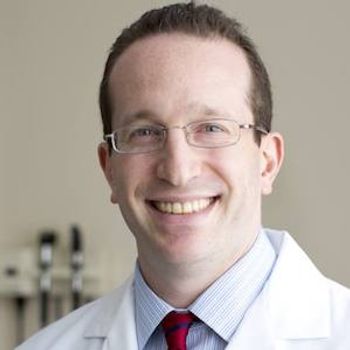
Friedman spoke in this interview segment on improvements that have been made and improvements that he believes are needed to affect change regarding atopic dermatitis treatment disparities.
During this interview segment, Friedman further explored the topics in his presentation on fixing disparities in care for eczema patients through teledermatology.

The long-awaited FDA approval follows data that demonstrated about 70% wound closure by 6 months in dystrophic epidermolysis bullosa patients treated with B-VEC.
In this interview, Friedman described his conference presentation on treating atopic dermatitis through telemedicine to address the disparities in care that are visible around the world.

In this interview, Hebert discussed recent positive topline results from the ADORING 1 trial on tapinarof cream for atopic dermatitis patients aged 2 years and older.

New data on trends among 22 million UK citizens examined the burden and rising prevalence of autoimmune diseases, as well as environmental factors and co-occurence of other conditions.

A new research letter highlighted findings that show a lack of viral reactivation in hepatitis patients with psoriasis, as well as other strong results, opening the door for new studies to confirm these findings.

A review of randomized clinical trials using the World Health Organization’s framework for clinical adherence to point to key knowledge gaps in self-exam knowledge among those at high risk for skin cancer.

The Food and Drug Administration approved the intradermal microdroplet injection, a hydrating gel product designed to smooth out patients’ skin in those over 21 of all Fitzpatrick skin types.

This new data indicates that the peanut patch was efficacious and safe in children with peanut allergies in this age bracket, expanding the body of research on desensitization for toddlers and young children.
It was announced by ARS Pharmaceuticals, Inc., that a US Food and Drug Administration Drug Advisory Committee voted in favor of a new intranasal epinephrine treatment for severe allergic reactions.

New phase 3 data on patients with eczema in China and Japan showed that crisaborole, 2%, was efficacious and safe in patients aged 2 and older, lining up with data from studies done in Western countries.
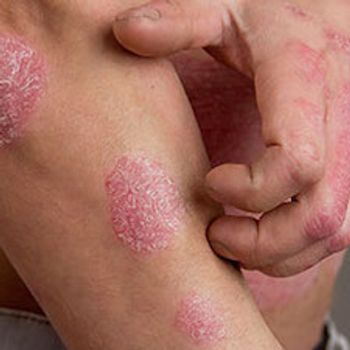
New data indicates that biologic treatments for psoriasis patients were found not to be significantly affected by comorbidities in older patients, widening the understanding of biologic use in different subgroups.

New research shows that mental health, life quality, and symptoms of eczema may all be improved through self-compassion and online mindfulness training that is both scalable and accessible to many.
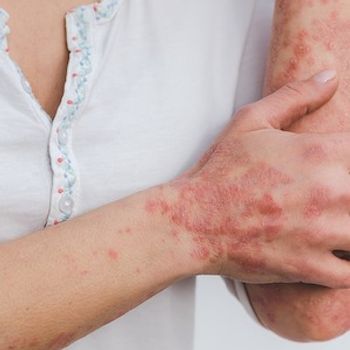
New data indicates an association between cardiovascular risk factors and psoriasis disease activity, shedding light on potential ways to identify and help those at risk for future heart issues.

New research shows that fall death rates for adults over 65 increased in both rate and number since 1999, indicating the necessity of more work toward fall prevention and reducing fall-related mortality.

A research letter highlighted coverage in The New York Times of a small study on oral minoxidil and this story’s connection with an immediate increase in the drug’s prescription rates.
New data suggests that anti-IL-17A biologics including ixekizumab showed strong self-reported results in signs and symptoms for psoriasis patients.
New data on using narrowband-UVB therapy for chronic plaque psoriasis found that the body’s lower limbs were the most difficult to treat, though excellent responses were still reported.

After spesolimab was found to be useful against generalized pustular psoriasis, this new analysis showed promising results for the treatment despite differences in demographics and other characteristics.

New data indicates a connection between post-surgery cognitive declines and delirium, though future research may be needed to understand the causal pathway.
The announcement resulted from the FDA’s request for manufacturing, administration, and patient monitoring information.
New data indicate that once-daily roflumilast foam in treating seborrheic dermatitis may improve the lives of those in the 5% or more of the global population with the skin disease.

Investigators found that dermatologist and convolutional neural network-cooperation led to improved lesion classification, indicating potential benefits of the human and machine approach for patients.
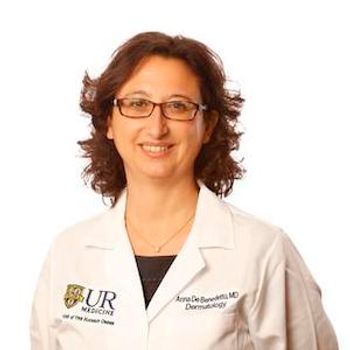
In this interview, de Benedetto discusses the major takeaways from her RAD 2023 conference presentation titled ‘New discoveries in the science of atopic dermatitis.’

In this interview segment, Chovatiya touched upon the late-breaking data he had presented at RAD 2023 conference on tapinarof cream 1% for younger eczema patients.
In his RAD 2023 conference presentation, Chovatiya discussed data on recent therapies for eczema such as upadacitinib, ruxolitinib, tralokinumab, and dupilumab.

Bunick describes the key safety data from new late-breaking research on upadacitinib for atopic dermatitis that he presented at the Revolutionizing Atopic Dermatitis conference.