





Atopic Dermatitis
Latest News
Advertisement
Latest Videos

CME Content























































Advertisement
More News

Dr. Raj Chovatiya discusses how recent approvals will influence the way in which he and other dermatologists will manage atopic dermatitis going forward.

Lawrence Eichenfield, MD, reviews major drug approvals and advancement of screening and prevention strategies for the youngest patients with atopic dermatitis.

An interview with Karan Lal, DO, regarding skincare product allergens, misdiagnosis of allergic contact dermatitis, and more.

Researchers have developed an automated hair loss measurement system for alopecia patients to track hair loss.

Research indicates the long-term benefits of sustained use of two developed online interventions for younger patients diagnosed with eczema.

Recent research has identified two groups as high risk for developing asthma, with one noted as having early eczema and the other not having the skin condition.

By combining specific severity-associated serum biomarkers, investigators were able to predict atopic dermatitis severity in children.

Though avoidance of common food allergens is a popular practice among patients with atopic dermatitis, clinical trial evidence doesn't support its benefit compared to its risks.

Mixed emollients were effective in preventing infant atopic dermatitis development compared to standard care.

Research suggested no significant relationship between peanut sensitivity and AD severity as measured by two scores, although the study was acknowledged to have a smaller population due to pandemic restrictions.
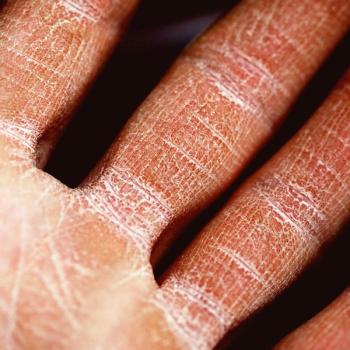
Both direct and indirect costs were higher in patients with mild-to-moderate and severe atopic dermatitis compared to the control group.

A Q&A interview with Dr. Simpson regarding the recent INTEGUMENT clinical trial results regarding roflumilast for atopic dermatitis.

New long-term phase 3 data show adults and adolescents both improved measures of quality of life when treated with either of 2 doses of ruxolitinib cream.

Findings from the ongoing LIBERTY AD OLE trial show the sustained long-term effect of the biologic therapy for eczema.

New data show adults receiving the biologic for eczema may see improvements in sleep disturbance within 4 weeks.

Post hoc analysis data from JADE REGIMEN show continuous and reduced-dose regimens provided similar efficacy and safety outcomes in the 2 age groups.

Phase 3 data suggest children aged <6 months to 5 years old have benefit in itch relief and skin clearance as soon as 1 week into systemic therapy regimens.
New data from ECZTRA 1 and 2 show patients unable to achieve complete skin clearance nonetheless benefitted in at least 1 component of disease improvement.
Phase 3 trial data from the INTEGUMENT-1 study yielded positive results for roflumilast cream on atopic dermatitis patients ages 6 and up.

A recent discussion with Dr. Brown on the use of tapinarof, approved for adult plaque psoriasis, in patients with atopic dermatitis.
An analysis of serum dupilumab treatment for atopic dermatitis patients suggests a lack of association between either response or adverse effects.

A discussion with the moderator of the Global Parents for Eczema Research symposium regarding climate change and the effects of fire, drought, airborne pollution on atopic dermatitis.
A discussion with Dr. Boos on the topic of climate change and airborne pollution exposure leading to or exacerbating atopic dermatitis.
A recent research letter highlighted a case observed in Japan in which a patient with alopecia totalis, and an associated case of atopic dermatitis, was treated effectively with baricitinib, a JAK inhibitor.

Recent phase 3 trial data suggests the efficacy across multiple endpoints of roflumilast foam as a treatment for seborrheic dermatitis.
Advertisement
Advertisement
Trending on HCPLive
1
New Injectable Substantially Reduces Visceral Adipose Tissue in Obesity
2
Remibrutinib Receives FDA Approval for Symptomatic Dermographism
3
ZUPREME-2: Petrelintide Outperforms Placebo for Weight Loss in T2D and Obesity
4
Why "Normal" Ferritin Can Miss Iron Deficiency, With Jacquelyn Powers, MD, MS
5