




Dermatology
Latest News
Advertisement
Latest Videos








CME Content























































Advertisement
More News

This analysis was conducted to evaluate the burden and disease characteristics of all 3 types of HAE among a set of Canadian patients.
In this review of the top stories in dermatology in March, several were highlighted such as the recent report on benzene in skincare products and the FDA’s approval of spesolimab for generalized pustular psoriasis.

In this interview, Del Rosso expresses his personal views on the recent report of benzene in benzoyl peroxide acne products.

Experts discuss the plethora of treatment options for psoriasis, including topicals, oral therapies, phototherapy, and biologics.
Dermatology physician assistants are talking about the evolving role of their profession in taking care of patients with plaque psoriasis.

A patient shares her journey to the diagnosis of generalized pustular psoriasis (GPP) and her care with dermatologist Dr Scott Boswell.
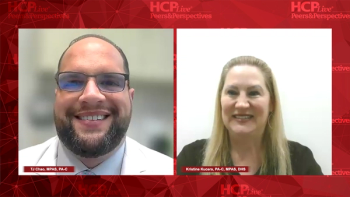
Advances practice providers TJ Chao, MPAS, PA-C and Kristine Kucera, PA-C, MPAS, DHS discuss the recent development in the treatment landscape of plaque psoriasis.

Chovatiya spoke in this post-AAD interview to some of the major takeaways in psoriasis research, highlighting deucravacitinib, bimekizumab, and other therapies.

Following this analysis, the conclusions provide more information on the views of potential dermatology patients on the future of their own medical images by artificial intelligence systems.

An expert in dermatology provides insight on approaching treatment in patients with plaque psoriasis who have a low BSA involvement, but with symptoms that present in difficult-to-treat areas.
Dr April W. Armstrong comments on patient selection for oral systemic treatments for plaque psoriasis management.

The FDA identified high concentration of lidocaine across marketed, over-the-counter topical products from 6 different companies.

In this analysis from the UK, the DDPS led to improved pathway management which also achieved lower service demand and smaller waiting lists for dermatologists.

This segment of Cohen’s interview from AAD covered the other talk given by Cohen titled ‘Knowing Lichenoid Dermatoses: Common Pathways and Treatments.’
April W. Armstrong, MD, MPH, shares her experience using oral systemic treatments in clinical practice for the management of plaque psoriasis.
An expert in dermatologic conditions examines laboratory requirements for initiating deucravacitinib in patients with moderate-to-severe plaque psoriasis and the impact of deucravacitinib on the treatment landscape.

These data indicate that, despite the promise held by AI in dermatological care improvement, further evaluation of training, validation, and ethical issues must be done before it is integrated.

These data highlight the risk of anxiety and depression among dermatologists, with notable findings based on gender differences observed among clinicians.

New data suggest children with atopic dermatitis and comorbid ADHD are nearly 3 times more likely to struggle with memory compared to those with just ADHD.

Counting down the most impactful news at major medical meetings, it’s the HCPLive Five! This edition shares 5 important updates from the American Academy of Dermatology (AAD) 2024 meeting.

The results of this analysis highlight the link between patients’ experiences with pruritus intensity and the mental health difficulties such struggles place on patients.

Data show significant maternal and fetal risks in cases when pregnant women are diagnosed with hidradenitis suppurativa. A researcher discusses opportunities to learn more.

Isotretinoin was actually linked to a taller adult height among those who took it to treat acne in childhood versus doxycycline, in a new study.

A post-AAD 2024 discussion on the importance of tailoring acne and rosacea management to individual patients’ needs, focusing more attention on diverse skin types and backgrounds.

In this AAD 2024 interview, Bunick highlights several new findings on the use of topical isotretinoin for treatment of congenital ichthyosis.
Advertisement
Advertisement
Trending on HCPLive
1
RELIEVE-AD-PEDs: Dupilumab Sustains Adolescent Atopic Dermatitis Control at 1 Year
2
3 Hematology Headlines You Missed in September 2026
3
Conservative Therapy in Fibrillary GN: A Four-Drug Kidney-Protective Approach
4
Top Reason for Leaving HAE Attacks Untreated, Survey Finds
5