





Endocrinology
Latest News
Advertisement
Latest Videos


CME Content




























































Advertisement
More News
In the endocrinology month in review, we spotlight top news in the endocrinology pipeline and the most important updates from ADA 2024.

Counting down the most impactful news at major medical meetings, it’s the HCPLive Five! This episode focuses on 5 updates from the 84th American Diabetes Association (ADA) Scientific Sessions.
In this episode, hosts recaps their picks for top diabetes technology-related updates from ADA 2024, including news from Omnipod, MiniMed 780G, and the Tandem mobi.

Neurocrine Biosciences was granted Priority Review designations for two crinecerfont NDAs focused on children, adolescents, and adults with classic CAH.

Carol Levy, MD, discusses INHALE-3 trial and how to incorporate individual patient-level factors into the management of patients with type 1 diabetes who could benefit from inhaled insulin.

Monica Gomberg, MD, joins the podcast to discuss how Blue Circle Health leverages free support and education programs to improve management and quality of life in people with types 1 diabetes.

Davida Kruger, NP, joins the podcast to discuss updates in automated insulin delivery and continuous glucose monitoring systems from ADA 2024.

Data on outcomes stratified according to baseline use of SGLT2 inhibitors from the FLOW trial were presented at ADA 2024.

Ralph DeFronzo, MD, discusses the results of the first phase of the CATALYST trial and how results should influence the care of patients with difficult-to-treat type 2 diabetes.

The CATALYST trial sheds light on the true prevalence of hypercortisolism among difficult-to-control type 2 diabetes, with data at ADA 2024 shedding light on adrenal abnormalities and presence among subgroups.

Findings highlight the potential utility of low-dose SGLT2 inhibitors for optimizing diabetes control and managing renal complications in pediatric patients with type 1 diabetes.

Study results highlight the impact of continuous glucose monitoring on glucose control and HbA1c improvements in patients with type 2 diabetes, regardless of treatment regimen.
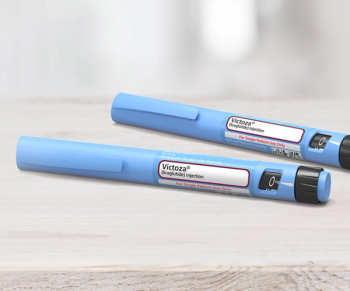
Teva Pharmaceuticals’ launch of an authorized generic of liraglutide injection 1.8 mg (Victoza) for type 2 diabetes makes it the first-ever generic GLP-1.

Anastasia Albanese-O'Neill, PhD, APRN, joins Diabetes Dialogue to discuss newly released consensus guidance on monitoring of early-stage type 1 diabetes spearheaded by Breakthrough T1D.

In the special on-site ADA 2024 episode, hosts are joined by the ADA's Chief Scientific and Medical Officer Robert Gabbay, MD, PhD, to discuss the newly formed Obesity Association.

MOMENTUM trial data shows pemvidutide reduced body weight by 15.6%, with 78.1% fat loss, highlighting the GLP-1/Glucagon receptor agonist's ability to achieve significant weight reduction and minimal muscle loss.

In this episode, hosts are joined by Grazia Aleppo, MD, for a discussion on the use of inhaled insulin following the INHALE-3 trial and relevant updates in diabetes technology at ADA 2024.

An analysis of over 2.5 million patients with type 2 diabetes shows newer GLP-1 RAs are linked to lower HbA1c levels.

Halis Akturk, MD, offers an overview of the growing prevalence and dangers associated with cannabis use among patients with type 1 diabetes.

Use of LX9211 showed significant benefits for diabetic peripheral neuropathic pain in the phase 2 RELIEF-DPN 1 trial.

Details of an analysis from ADA 2024 compared matched cohorts from SURMOUNT-1 and SURMOUNT-2 to determine drivers of differences in weight loss from the trials.

Omnipod 5 improved HbA1c from 8.2% to 7.4% in 13 weeks among adults with type 2 diabetes in the SECURE-T2D trial, with a nearly 5-hour increase in time in range per day.

ADA study highlights disparities in CGM access for children with type 1 diabetes, showing delays for publicly insured and minority children.

New data from INHALE-3 at ADA 84th Scientific Sessions show inhaled insulin (Afrezza) is safe, effective for type 1 diabetes, improving glycemic control and HbA1c goals.

Participants assigned to a 4-day energy balance diet plus oral bisphenol A administration at 50 μg/kg body weight experienced significant decreases in peripheral insulin sensitivity.
Advertisement
Advertisement
Trending on HCPLive
1
Half-Life vs. Real Life: How Real-World Evidence Is Reframing Wet AMD Treatment
2
ProACt Data Show Early Functional Gains with Adjunctive Cariprazine In MDD
3
FDA Updates Sotatercept Label with HYPERION Data in Early PAH
4
EMBARQ-CSU: Barzolvolimab Meets Primary, Secondary Endpoints in CSU Trials
5