




Major Depressive Disorder
Latest News
Advertisement
Latest Videos




CME Content




























































Advertisement
More News

Despite these findings, there is still uncertainty as to whether mitigating symptoms of depression can lower cardiovascular risk.
Experts expect more individuals to face mental health challenges caused by the events of 2020.

The risk of suicidality and psychological adverse events appears to be particularly high in younger men with alopecia who are given finasteride.

Cataracts, but not AMD or glaucoma, were associated with an increased risk of depressive symptoms in the elderly in a prospective long-term study.

There was also a decline depression care in recent years among adolescents and young adults.

There could be a lasting impact caused by some of the changes due to the pandemic.

This edition from the 10 Year Plan features perspective from leadership at APA and AADPRT, as well as survey results from psychiatrists.
For many patients suffering from depression or anxiety, the added stress of the pandemic has led to a medication change.

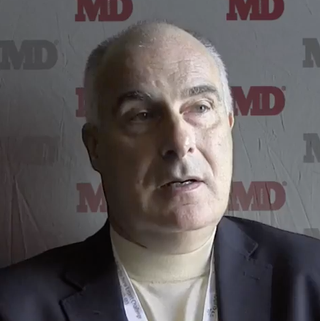
J. John Mann, MD, discusses potential next steps for further assessment of ketamine's antidepressant effects.
J. John Mann, MD, discusses findings in a new study that uncovers the mechanisms behind Ketamine's antidepressant effect.
J. John Mann, MD, compares esketamine nasal spray to intravenous administration and explains the drawbacks of the newly approved treatment method for MDD.

The majority of older adults participating in the study expressed outrage at what they deemed to be an inadequate government response to the pandemic.
J. John Mann, MD, gives a brief overview of where we are now in treatment of major depressive disorder.

Low- and moderate-frequency magnetic seizure therapy help patients with treatment-resistant depression go into remission.

A number of new modifiable risk factors for depression were identified including confiding in others, time spent watching television, and daytime napping.

According to new findings, low Glx response is associated with increase in clinical improvements in at-need patients.

The risk of depression or clinically relevant depressive symptoms did not significantly differ between a group taking Vitamin D and a group taking a placebo.

MagVenture TMS Therapy can be used as adjunctive therapy to other OCD treatments.

A leading psychiatric expert discusses some of the pitfalls people face due to the ongoing pandemic.

Approximately half of depression patients do not sufficiently benefit after treated with electroconvulsive therapy, leading to high rates of relapses.

The level of distress for adults in the UK rose from 18.9% in 2018-19 to 27.3% in April.
The fast-acting therapy has been long-discussed for its unique benefits to severe patients—as well as notable concerns surrounding its administration.

Impairment in reward-processing subcomponent categories is associated with tasks assessing option valuation, reward bias, and reinforcement learning.

The findings demonstrate the importance of providers to manage diabetes, diabetic retinopathy, and mental illness comorbidities.

Patients with bipolar depression have struggled during the COVID-19 pandemic.
Advertisement
Advertisement
Trending on HCPLive
1
The Case for Routine Kidney Screening, With Pranav Garimella, MBBS, MPH
2
FDA Approves Obinutuzumab (Gazyva) for Idiopathic Nephrotic Syndrome
3
Zilurgisertib Receives FDA Approval for FOP in Patients 12 and Older
4
What The FDA Psychedelic Hearing Means for Psychiatrists
5