

Sickle Cell
Latest News
Advertisement
Video Series
Latest Videos
Shorts
0:38
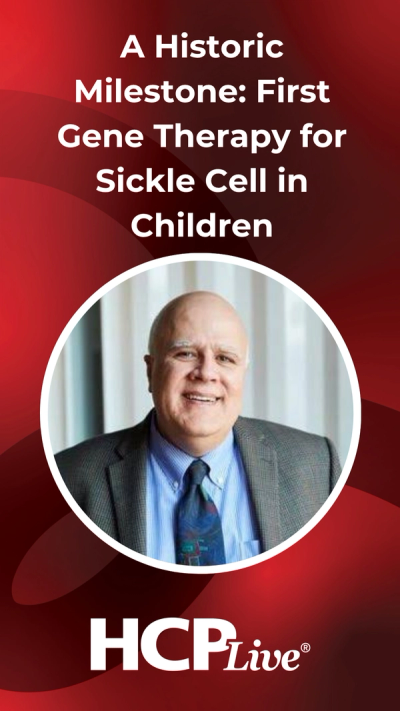
A Historic Milestone: First Gene Therapy for Sickle Cell in Children
2 months ago
by
Haydar Frangoul, MD, MS
1:09
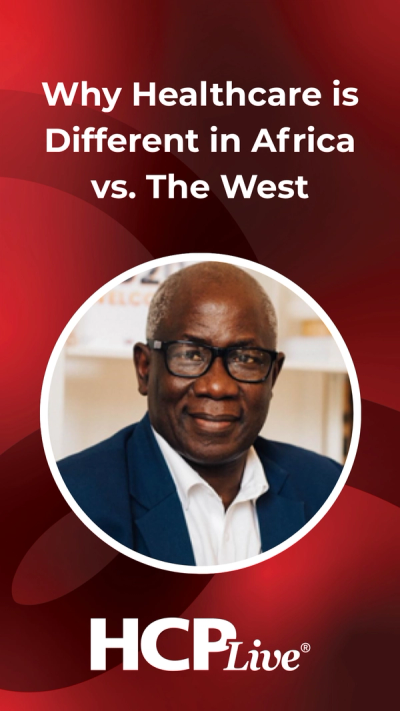
Why Healthcare is Different in Africa vs. The West
4 months ago
by
Baba Inusa, MBBS
0:36
A Revolutionary Gene Therapy for Sickle Cell Disease
5 months ago
by
Rabi Hanna, MD
0:43
How Temperature Extremes Impact Vaso-Occlusive Crisis Risks
7 months ago
by
Frank Gonzalez, MD
Podcasts



CME Content

























































Advertisement
More News

Exagamglogene autotemcel (Casgevy) is now the first CRISPR-based gene-editing therapy to reach this age group in either condition.
Mitapivat has been submitted to the FDA for accelerated approval in sickle cell disease after phase 3 results showed a hemoglobin benefit.
Stay updated with the latest healthcare breakthroughs, including FDA actions and new topline clinical trial data, in this week’s essential news roundup.
Etavopivat reduced VOC events by 27% and improved hemoglobin response in the phase 3 HIBISCUS trial in sickle cell disease.
In the first study of its kind, researchers found that physicians treating sickle cell disease experience burnout at a rate of 60% — driven not by personal factors, but by systemic ones.
Morris discusses this latest trial in a long list of phase 3 studies which failed to evaluate arginine therapy’s value in vaso-occlusive pain episodes in SCD.
Strunk highlights reduced length of stay and superior outpatient pain management due to palliative care in hospitalized patients.
This Sickle Cell Awareness Month, HCPLive draws attention to recent advancements made in SCD treatment and how much still needs to be done to address it.
Our recap of the first half of 2025 highlights 5 regulatory updates, 5 trial announcements, and 3 top perspectives in hematology.
A relatively quiet quarter for hematology, punctuated by both successes and failures in clinical trials and a handful of Orphan Drug and Fast Track designations.
The FDA distributed several designations and many trials successfully met their endpoints during an eventful June for hematology.
Data from the Phase 1/2 BEACON trial indicate the efficacy and safety of this investigative 1-time therapy, particularly in decreasing blood cell sickling.

An ongoing phase 1 study aims to prove the safety and tolerability of VAS-101, as well as its effect on blood flow dynamics, red blood cell sickling, and oxygen dissociation.
A relatively quiet month for hematology, marked by brief ups and downs for trials and new research on anemia and sickle cell disease.

Investigators examined emergency department utilization as a product of age, patient-reported severity of vaso-occlusive episodes, and Social Vulnerability Index score.

In her interview at ATS, Willen further described elements highlighted in her presentation on new treatments for sickle cell disease.
A mixture of thalidomide and hydroxyurea outperformed hydroxyurea alone in all primary outcomes.
Patient-reported outcome measures display positive trends after hematopoietic stem cell transplantation for patients with sickle cell disease.

Bernaudin discussed the Drepagreffe-1 and 2 studies and improvements seen over 10 years of follow-up.

Appiah-Kubi also noted that despite elevated HbF levels, very young children with SCA already had anemia and reticulocytosis.

Frangoul discussed highlights from the latest data update from the CLIMB SCD-121 trial of Casgevy.

While the therapy was generally well-tolerated, the PIVOT trial failed its primary endpoint of dose-limiting toxicities.

The therapy uses a novel pyruvate kinase activator mechanism and warrants further investigation in an ongoing phase 3 trial.
Dexamethasone treatment was linked to worse clinical outcomes in patients with sickle cell disease hospitalized for COVID-19.
Advertisement
Advertisement
Trending on HCPLive
1
Alpha-Gal Syndrome: Closing an Underrecognized Allergy Diagnostic Gap
2
Pelacarsen Misses Primary Endpoint in Lp(a)HORIZON Phase 3 Trial
3
GRI-0621 Improves FVC, Reduces Fibrotic Biomarkers in IPF
4
ORFAN-MAESTRIA: AI Predicts Cardioembolic Stroke, Atrial Fibrillation from CT Scans
5