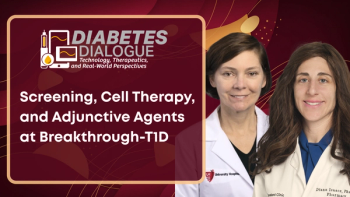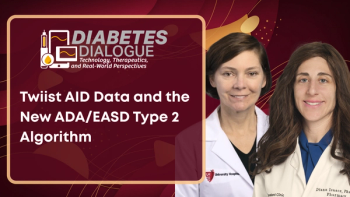
Diana Isaacs, PharmD, and Natalie Bellini, DNP, discuss a major breakthrough with the Twiist insulin pump and the recent ADA/EASD T2D guidelines.

Hanna explains the real-world barriers to implementing gene editing therapies in sickle cell disease.
Emerging data on renizgamglogene autogedtemcel (reni-cel) continue to position gene editing as a potential “functional cure” for
As previously reported, the investigational therapy uses a CRISPR gene editing–Cas12a approach to modify autologous hematopoietic stem cells, enabling increased fetal hemoglobin production and prevention of red blood cell sickling.1,2,3
However, experts caution that current approaches represent an early iteration of gene-based therapies.
Catch up with
Speaking with HCPLive, Rabi Hanna emphasized that, despite strong clinical outcomes, significant limitations remain in how these therapies are delivered.
“This is really very exciting in terms of seeing a result of gene therapy, but I would call this first-generation gene therapy. We need advances in conditioning—right now we are using myeloablative busulfan, which is very strong and can cause long-term side effects, including infertility. It is on us to find better ways to deliver this without those unnecessary risks,” Hanna said.
A key barrier is the continued reliance on myeloablative conditioning, as well as inefficiencies in stem cell collection and manufacturing. Patients with sickle cell disease often require multiple collection cycles due to disease-related bone marrow challenges, and current gene-editing processes require large numbers of stem cells, increasing time and resource burden.
Despite its promise, gene therapy remains limited by cost and infrastructure requirements, restricting availability to specialized centers.
Broader structural challenges are also emerging. A program sponsored by Editas Medicine was discontinued despite encouraging results, reflecting the financial and logistical barriers associated with late-stage development.
These challenges underscore the need for more flexible regulatory pathways and new payment models, particularly for rare and resource-intensive therapies, to ensure broader and more equitable access.
Although gene editing does not eliminate all aspects of disease biology, its ability to restore red blood cell function has led clinicians to describe it as a functional cure.
“I use the word functional cure quite a lot, because I want to make sure patients understand we are curing the red blood cells, not the rest of the body—but what we are seeing is that this is really giving them freedom to pursue their dreams. I have patients now going to nursing school, others doing things like skydiving that they could never have imagined before,” Hanna said.
Editor’s Note: Hanna reports relevant disclosures with Chiesi USA, Inc., Swedish Orphan Biovitrum AB (Sobi), and Vertex Pharmaceuticals Incorporated.