

This RAD 2024 interview featured a discussion of currently FDA-approved atopic dermatitis therapies and their comparisons.
This RAD 2024 interview featured a discussion of currently FDA-approved atopic dermatitis therapies and their comparisons.

Congly explains key findings from his cross-sectional study of costs associated with HBV treatment in patients on Medicaid and the economic impact of generic versus originator use.

This segment of Paller’s RAD 2024 interview covers tips for treating children with biologics as well as unmet needs of eczema patients and upcoming treatments.

An analysis of data from the NIH's All of Us program details the prevalence of fatigue among patients with pruritus among US patients.
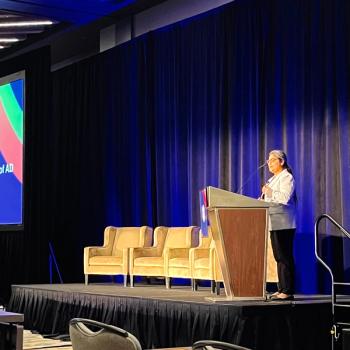
In her presentation at RAD 2024, Singh highlighted ways to manage the atopic comorbidities linked to eczema in children.

The global, real-world TRACE study was designed to improve the understanding of tralokinumab’s safety, efficacy, and clinical utilization in daily practice for eczema.
In her RAD conference interview, Paller describes several treatments featured in her talk on the subject of pediatric eczema.

A real-world analysis of 60 patients suggests traolkinumab was effective in atopic dermatitis, regardless of prior therapy use.

In an interview at RAD 2024, Silverberg discusses ways to help patients navigate such comorbidities associated with eczema.

Phase 2 data presented at EASL showed 52 weeks of treatment with tirzepatide led to MASH resolution with no worsening of fibrosis in patients with MASH and F2/F3 fibrosis.

Lisa Swanson, MD, discusses the recent advancements in pediatric dermatology and emphasizes the importance of correctly diagnosing conditions to improve patient outcomes.

At Heart in Diabetes, full results of the GRACE trial detailed the benefits of relacorilant use from both parts of the 2-part, phase 3 trial.

Knowledge, attitudes, and practices remain relevant for disease management among patients with anemia.

These data indicate the benefits of implementing individual protective measures in winter by patients with COPD.
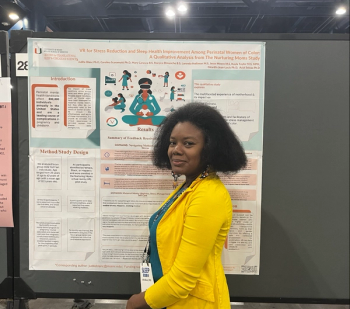
During SLEEP 2024, Judite Blanc, PhD, discussed her team’s ongoing study assessing whether an education VR program improves maternal stress and sleep among women of color.
Kaitlin Mayne, MBChB, discusses an analysis of the EMPA-Kidney trial examining the effects of multimorbidity, polypharmacy, and quality of life on effects of empagliflozin.

8 weeks of treatment with combination bemnifosbuvir and ruzasvir showed a 97% SVR rate at 12 weeks post-treatment in a phase 2 lead-in cohort.

At SLEEP 2024, Broussard told HCPLive about how eating time restriction can serve as another as another dietary tool for people who are unsuccessful with other strategies.
Broussard discussed the importance of eating during the day at SLEEP 2024.

High-impact chronic pain is a severely affected subgroup in SCD and is associated with greater pain burden and worse health outcomes.
These data suggest that those with psoriasis maintain an innate psychological vulnerability, indicating the necessity of addressing mental well-being in the disease’s management.
A study found that only 0.32% of 1.2 million patients underwent Lp(a) testing, with non-Hispanic Black and Hispanic patients significantly less likely to receive the test compared to White patients.

Survodutide, a glucagon/GLP-1 receptor dual agonist, improved MASH with no worsening of fibrosis, reduced liver fat content, and improved fibrosis by ≥ 1 stage in a phase 2 trial.

A lower FACIT-Fatigue score, indicating higher fatigue was independently associated with female sex, a high BMI, a high stress level, and poor sleep quality.

Alexandra Louise Møller, MS, PhD, discusses the results of a PROVALID analysis examining the predictive value of endotrophin levels for predicting CKD events.

The investigators looked at patients whose severity improved based on either the Physician Global Assessment or the modified Localized Scleroderma Severity Index.

This analysis looked at the efficacy and safety of 200-mg of orally-administered abrocitinib at a rate of once daily, highlighting the drug’s use among patients with CPUO or PN.

The Council recommends the elimination of unnecessary clinical efficacy trials and establishing global regulatory comparators.
File joins Lungcast to review the ATS-IDSA 2019 guideline updates for community-acquired pneumonia, and advances to diagnostics and care.

Mona Shahriari, MD, discusses how she foresees the role of nonsteroidal topical creams growing within the management of plaque psoriasis.