

This data from the NOTUS trial is set to be submitted to the FDA alongside the phase 3 BOREAS trial data later in the year.
This data from the NOTUS trial is set to be submitted to the FDA alongside the phase 3 BOREAS trial data later in the year.

Real-world data from the FARETINA-AMD study show faricimab extended treatment intervals among eyes with nAMD.

Gideon Hirschfield, PhD, MB BChir, Lily and Terry Horner Chair in Autoimmune Liver Disease Research at the University of Toronto, sat down with HCPLive Hepatology to discuss the role of the microbiome in autoimmune liver disease.

This cardiology case report from Brady Pregerson, MD, features a man in his late 50s presenting with 3 days of episodic chest pain. Can you determine the correct diagnosis?

Presented at AAO 2023, a new analysis indicates racial and ethnic minoritized individuals may have a higher likelihood of neovascular glaucoma.

Rheumatoid arthritis and depression frequently occur together. Test your knowledge of what this means for patients with this quiz.

Safer discusses how symptoms and quality of life often go unaddressed in the few clinician-patient interactions about primary sclerosing cholangitis.

Lassailly discusses the role of bariatric surgery versus weight-loss treatments like semaglutide for patients with MASH.

Cynthia Levy, MD, professor of medicine at the University of Miami, provided further insight into unmet needs in PBC, the use of OCA-bezafibrate in PBC, and the significance of results from a pair of phase 2 studies presented at The Liver Meeting.

The FDA has approved the second renal denervation device in the agency's history with the approval of Medtronic's Symplicity Spyral system.

This case report from Brady Pregerson, MD, features a man in his early 70s presenting to the hospital with palpitations for the past 2 hours that started while playing a round of golf. Can you determine the most likely rhythm?

During this interview segment, Dr. Chovatiya further analyzed the updated National Psoriasis Foundation consensus statements for GPP and the future of treatment research.

These pivotal trial results from a study in China indicated the potential of this drug as a quarterly treatment for individuals with eczema.

The PEAUrigami art exhibit was designed to educate participants to better understand the pathophysiology of skin using origami artwork with skin pattern-printed papers.

Therapy with glecaprevir/pibrentasvir (G/P) demonstrated a virologic response at posttreatment week 12 rate, which was superior to the prior efficacy threshold.

Patients with HCV-related cirrhosis remain at risk for developing liver-related and non-liver-related events after achieving sustained virologic response.

A cohort analysis shows foreign-born patients are significantly less likely to be immunized for HBV than US-born patients.

This phase 3 program was advised to discontinue given that cobitolimod was shown to be less likely to meet its primary endpoint.

A new study from AASLD 2023 provides a snapshot of how the introduction of second-generation direct-acting antivirals on treatment patterns for hepatitis C.
In this interview, Dr. Chovatiya summarized and discussed the updated National Psoriasis Foundation consensus statements for GPP.

sLOX-1 was positively associated with high-risk coronary plaque features in patients with psoriasis and increased inflammation.

This research provides an early analysis of plaque psoriasis patients within routine clinical practice settings and outside of a clinical trial setting.

Individuals with intermediate polysocial risk scores had a 1.2 times higher risk of developing psoriasis, while those with high polysocial risk scores had a 1.5 times higher risk.

A randomized trial examining acupuncture in people with CSU suggests use of acupuncture could improve UAS7 scores in these patients, but investigators noted this failed to reach the threshold for significance.

Results showed significant improvements in serum HDL, CRP, and ESR after treatment with biologic therapies

Bayer has announced the IDMC for OCEANIC-AF trial has recommended the trial be discontinued as a result of inferior efficacy.
This news from the FDA followed a resubmission after the FDA’s complete response letter for the P2X3 receptor antagonist’s use in refractory chronic cough and unexplained cough.
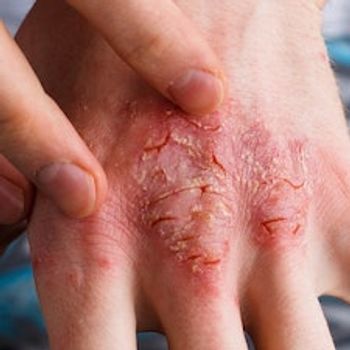
This long-term data on dupilumab investigated both survival rates and rationale for treatment discontinuation.

Most ophthalmology teaching faculty noted their lack of awareness about available resources or training as a barrier, rather than a lack of time, perceived benefit, or funding.

Some racial minority groups face higher disease burdens and worse outcomes in rheumatoid arthritis, so it is important to ensure that clinical trials include representatives from these groups. Take this quiz to test your knowledge of efforts to ensure minorities are represented in clinical trials.