





Cardiology
Latest News
Advertisement
Latest Videos

CME Content






















































Advertisement
More News

In his most recent column, Dr. Paul Thompson offers perspective on why he feels clinicians should consider performing a chest x-ray in patients with dyspnea or frequent palpitations, but no history of lung disease and a normal cardiac work-up.

Data show a significant association between wearable tracker use and increased physical activity during a 15-week period.

A recent study has found statins are underutilized for NASH and NAFLD patients.

A prespecified analysis of patients with stage 4 CKD from DAPA-CKD suggests the magnitude of effects seen with dapagliflozin use among these patients was similar to that seen among patients with normal to moderately impaired kidney function from the trial.

Data show postoperative initiation of factor XI inhibition was effective method for reducing the risk of VTE following total knee arthroplasty.

A 412-patient trial comparing 3 dosing regimens of abelacimab versus enoxaparin, results indicate all 3 regimens of abelacimab demonstrated noninferiority against enoxaparin and 2 of the 3 demonstrated superiority against the current standard of care.
The FDA's CRDAC July 15 meeting concluded with committee members voting against recommending the approval of roxadustat for the treatment of anemia in adult patients with chronic kidney disease not on dialysis and on dialysis.

A 10-year study presented at the European Association of Urology meeting indicates testosterone therapy was associated with a decreased risk of major adverse cardiovascular events in men with hypogonadism.

The subject of a July 15 meeting, the FDA's Cardiovascular and Renal Drugs Advisory Committee voted 13-1 and 12-2 against recommending approval of roxadustat for treatment of anemia in adult patients with chronic kidney disease not on dialysis and on dialysis, respectively.
The FDA Cardiovascular and Renal Drugs Advisory Committee cited concerns over an increase in thrombotic events.
A new statement from the AHA and American Stroke Association stressed the need to address gaps in care that may lead to high risk of stroke recurrence.

Data show both microvascular and macrovascular outcomes were significantly improved following bariatric intervention in patients with obesity.

In his latest column, Dr. Paul Thompson offers perspective on the diagnosis and potential overdiagnosis of non-compaction cardiomyopathy in athletes.

An analysis of data from the Framingham Heart Study Offspring Cohort by investigators at the USDA Human Nutrition Research Center on Aging suggests greater consumption of whole grains was associated with a more preferable cardiometabolic risk profile than lesser consumption or consumption of refined grains.

A study from the Annual Congress of the European Association of Urology suggests undergoing testosterone therapy could improve cardiovascular health and reduce risk of adverse events in men with hypogonadism.
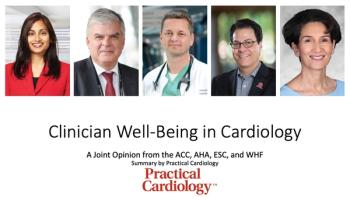
Four of the world's leading cardiology organizations—the ESC, ACC, AHA, and WHF—have collaborated to form a joint opinion statement seeking to address and outline drivers and strategies for mitigation of burnout.

There are several cholesterol lowering drugs available for this patient population.

Our latest case report from Brady Pregerson, MD, features a man in his mid-20s presenting to the emergency department for palpitations and non-radiating chest tightness. Can you determine the correct diagnosis?
The virtual sessions will cover a litany of topics in the greater spectrum of cardiovascular disease prevention and care.

Data show SGLT2is reduced HHF in patients with both stablished HFrEF and CKD and are likely to also be effective in patients with HFpEF.

Data from COMPASS show adding low-dose low-dose rivaroxaban to aspirin resulted in benefits regardless of number of concomitant drugs or comorbidities.
Cardiac monitoring has not been adequately established for such patients.
Novartis announced the Complete Response resubmission for inclisiran in a statement on July 6, 2021.

Dr. Manesh Patel shares perspective on the "renaissance of anti-thrombotic therapy" for patients at risk of cardiovascular events.
Our latest cardiology case report from Brady Pregerson, MD, features a man in his 20s presenting to the emergency department complaining of body aches, chest discomfort, and light-headedness. Can you determine the correct diagnosis?
Advertisement
Advertisement
Trending on HCPLive
1
eGFR Underestimates CKD in Patients with Cancer, Study Finds
2
The HCPFive: Top News for Healthcare Providers from the Week of 10/18
3
42% on Povetacicept Reach KDIGO-Aligned UPCR Target in RAINIER
4
Tegoprubart Improves Quality of Life vs Tacrolimus After Kidney Transplant
5