


Dermatology
Latest News
Advertisement
Latest Videos

CME Content






















































Advertisement
More News

An examination of the physical, emotional and social burden of psoriasis, and the continued need for research to advance care for patients.

Onychomycosis—fungal infection of the nail—is a common medical problem. Treatments are widely available, but relapse is common.
This is the third indication for the biologic therapy, following its approvals for adult AD and moderate to severe asthma maintenance care.
In a post hoc analysis, Green and colleagues examined the effect of halobetasol and tazarotene lotion on plaque psoriasis in a Hispanic population.
Green introduces the combination lotion tested in this clinical trial of patients with moderate-to-sever plaque psoriasis.
Recommendations for acne treatment drawn from AAD position paper and presentations.
The biologic has been previously approved for adult atopic dermatitis and uncontrolled asthma, and is being assesed for another half-dozen allergic/immunologic indications.

Even in trials like UltIMMA that compare 2 drugs, a placebo control grounds the data, says Ken Gordon, MD.

The nodular acne therapy has been a staple treatment for 3 decades, yet new AAD data showed it could still be better utilized in patients.

Confocal microscopy is especially useful for diagnosing pigmented lesions, moles, melanoma, and basal cell carcinoma.
Confocal microscopy is an emerging technique that can offer a non-invasive alternative to biopsy.

The prevalence of anxiety, depression, and ADD was higher in patients with this excessive sweating disorder than the general population.
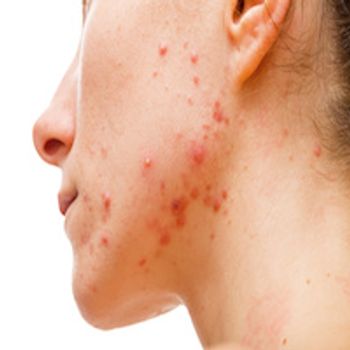
A new, long-term assessment of phase 4 data shows a twice-daily regimen of the common acne therapy can retain patient benefits weeks after treatment ends.
Gooderham addresses what the 3-year results of the reSURFACE 2 trial of tildrakizumab for plaque psoriasis mean for prescribers.
The analysis of the UltIMMa 1 & 2 trials of risankizumab demonstrated efficacy and safety in the treatment of moderate-to-severe plaque psoriasis.
Investigational treatment PRN1008 demonstrated efficacy in this difficult-to-treat condition.
This extension study investigated the long-term efficacy and safety of tildrakizumab for patients with plaque psoriasis.

Results from the reSURFACE 1 phase 3 trial shows the biologic is beneficial to patient rates of anxiety, pain, and depression.
Patrick Burnett shares about the secondary endpoints and safety data of the CAMP 1 & 2 clinical trials.
The phase 2 Believe-PV study observed few adverse events in patients with pemphigus vulgaris.
Patrick Burnett reports impressive topline results from the CAMP 1 & 2 studies of investigational treatment VP-102.
Though there are few treatments for pemphigus vulgaris, a rare disease, the Believe-PV trial of PRN1008 raises the possibility of a new, better option.

Investigators assessed patients’ scores for body surface area, static Physician Global Assessments, and Dermatology QoL Index at 1 month post-index, and at three-month intervals both pre- and post-index.

Compared to standard cleansers and moisturizers, natural versions for sensitive skin provided benefits to patients with rosacea who were also taking prescription treatments.

In this analysis, brodalumab was successful in treating patients who had a psoriasis diagnosis for
Advertisement
Advertisement
Trending on HCPLive
1
RELIEVE-AD-PEDs: Dupilumab Sustains Adolescent Atopic Dermatitis Control at 1 Year
2
Targeting the Disease Mechanism in PFIC, With Hisamitsu Hayashi, PhD
3
Top Reason for Leaving HAE Attacks Untreated, Survey Finds
4
10 Nephrology Headlines You Missed in Q3 2026
5