





























































The headline drug class has been quickly added to cardiologists' toolsets, amid more and more phase 3 data.


The headline drug class has been quickly added to cardiologists' toolsets, amid more and more phase 3 data.

How do a pair of burgeoning agents influence endocrinology and renal outcomes in cardiovascular care?

The scope and scale of kidney disease is on the rise—much like its most commonly associated conditions.

FDA announced the approval of the glucagon (Gvoke) injection for the treatment of severe hypoglycemic events in diabetic patients ages 2 and up on September 10.

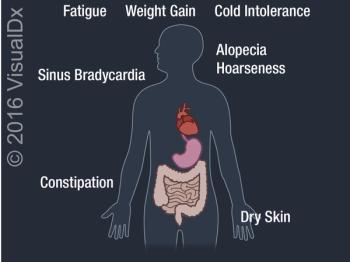
Normal thyroid stimulating hormone levels don't necessarily stave off all-cause mortality for hypothyroid patients, but adverse outcomes may intensify if levels fall below or above the norm.

Estrogen-based hormone therapy may not be associated with reduced loss of lean body mass compared with no hormone therapy in postmenopausal women, find researchers writing in JAMA Network Open last month.

By allocating 1% of their day to exercise, patients can turn an unhealthy lifestyle into a healthy lifestyle.

An analysis of CREDENCE, EMPA-REG, the CANVAS Program, and DECLARE-TIMI 58 found SGLT2 inhibitor use reduced dialysis, transplantation, or death due to kidney disease by 33%.

A 60-year-old woman undergoing hemodialysis for chronic kidney disease visited her physician with concerns about a painful smooth plaque on her leg that developed over the last few weeks. What's your diagnosis?

New findings from the THEMIS trial show patients with stable coronary artery disease and type 2 diabetes mellitus face major bleeding risks from the combination regimen.

Results of the DAPA-HF study — presented at the ESC Congress 2019, reveal use of dapagliflozin reduce hospitalizations from heart failure and deaths from cardiovascular causes in patients with heart failure with reduced ejection fraction.

The European Society of Cardiology and European Association for the Study of Diabetes released new diabetes and cardiovascular guidelines during ESC Congress 2019.

A lot has changed over the course of 10 years in solo practice, writes Melissa Young, M.D., in this month's Endocrine Feedback column. Dr. Young describes a decade of changes for the solo endocrinology practitioner.

The SGLT-2 inhibitor is seeking an additional indication for primary renal outcome prevention in patients with or without type 2 diabetes.

The OneDraw A1C Test System was granted marketing clearance based on the strength of clinical findings reported at ADA 2019.

World Health Organization review finds that consumption of fish oil supplements have little to no impact on development or diagnosis of diabetes.

A recent analysis of the Asian Sudden Cardiac Death in Heart Failure registry found that type 2 diabetes mellitus was associated with structural changes of the heart and poorer quality of life.

Metformin as monotherapy is the preferred treatment for children and teens with type 2 diabetes, but a new study published in the Aug. 15 issue of the New England Journal of Medicine suggests that adding liraglutide to the treatment can more effectively control glycemic levels.

A single course of treatment with teplizumab significantly slowed the progression of type 1 diabetes in high-risk individuals who had not yet deveoped the condition, according to a study in the New England Journal of Medicine.

Stacy Brethauer, MD, will lead discussion on the influence of BMI on bariatric surgery, and the influence of obesity on public health.

Children and adolescents have considerably fewer control therapy options for T2D. The GLP-1 agonist could be the first of its class for pediatric indication.

Despite potentially playing a key role in the lives of patients, little is known about the true impact of gut microbiota on metabolic health. Hana Kahleova, MD, PhD, discusses the reality of our understanding in a recent interview.

The investigative monoclonal antibody from Regeneron shows significant benefit for patients with the rare, severe homozygous familial hypercholesterolemia.

Stimulating the sphenopalatine ganglion-a collection of nerve cells closely associated with the trigeminal nerve most responsible for headaches-could be a safe intervention for patients with acute ischemic stroke who aren’t eligible for thrombolytic therapy, researchers report in The Lancet.

Awareness of the prevalence of hypertension has increased substantially over the past 40 years in high-income countries, as has treatment and control of the condition. But, the level of control falls short of rates seen in dedicated hypertension programs, and it’s stagnating, according to research published last month in The Lancet.