

































































In this month's "Endocrine Feedback" column, Dr. Melissa Young explores how her career has evolved over the years and questions what the future may hold.

In this month's "Endocrine Feedback" column, Dr. Melissa Young explores how her career has evolved over the years and questions what the future may hold.

During AHA, investigators suggest ways to improve care for women in regard to diabetic and cardiovascular interventions.

Investigators present data from the CREDENCE trial during AHA.

New empagliflozin data assesses the SGLT-2 inhibitor versus GLP-1 agonists and DPP-4 inhibitors for patients with heart failure.

The adult heart failure study is the first of its kind: a completely decentralized, indication-seeking clinical trial.

George Bakris, MD, discusses how nephrologists can work with other specialists and what the highlight of Kidney Week was.
George Bakris, MD, discusses the major study during Kidney Week, as well as what diseases should get more attention in future research.

Matthew Weir, MD talks about some of the challenges in nephrology and what has people buzzing while at Kidney Week.
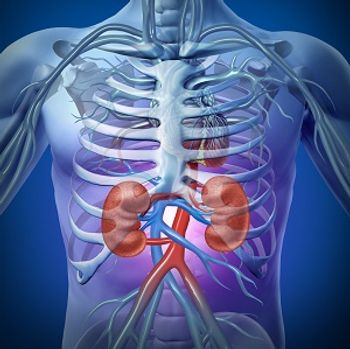
During Kidney Week, investigators present data showing that canagliflozin could be beneficial for patients across various levels of kidney function.

Kenneth Mahaffey, MD, discussed during Kidney Week the CREDENCE trial and what the link is between the 3 different medical fields.

A 58-year-old man with a history of diabetes mellitus type 1 went to the urgent care after he awoke one morning and noticed the bottom of his foot near his toes felt funny. When he looked at the area, he realized that a bulla had formed on the bottom of his foot overnight. He hadn’t injured or cut the foot or leg recently, and he felt in good health otherwise. What's your diagnosis?

A new study from Duke University suggests combining weight loss counseling to group medical visits was noninferior to typical medication treatment for lowing HbA1c in diabetic patients.

A new study from the National Center for Global Health and Medicine in Japan has found thiazide use in diabetics with well-controlled blood pressure led to an increased risk of MACE, particularly stroke.

The rapid-acting insulin will now be used in infusion pumps to treat adults with Type 1 or Type 2 diabetes.
AstraZeneca announced approval of the SGLT2 inhibitor for the reduction of hospitalization for heart failure in type 2 diabetes patients in a release on Monday.

Researchers writing in the New England Journal of Medicine report that a combination treatment of ticagrelor and aspirin leads to improved cardiovascular disease outcomes in patients with stable coronary artery disease and diabetes mellitus.

A comprehensive systematic review and meta-analysis of 36 randomized clinical trials shows that using activity trackers produces some health benefit, but primarily when combined with coaching.

Hepatitis C virus infections are strongly linked to type 2 diabetes, according to new research.

The type 2 diabetes drug dapagliflozin reduces the risk for worsening heart failure or death from cardiovascular disease among individuals with heart failure and reduced ejection fraction, whether or not they have diabetes, shows a study published in the New England Journal of Medicine.

Adults with early type two diabetes and elevated cardiovascular risk may be able to safely take linagliptin or sulfonylurea (glimepiride) without increasing their risk of cardiovascular events, researchers report in JAMA.

A recent study of primary practices in England found Asian patients were 15% less likely to be prescribed insulin, while black patients were half as likely to be prescribed a GLP-1 agonist or SGLT2 inhibitor.

George Bakris, MD, professor of medicine at University of Chicago Medicine and member of CREDENCE steering committee, discusses the recent approval of canagliflozin and what it means for diabetic patients and their physicians.

African Americans are more greatly burdened by the cardiovascular condition and its common comorbidities. Are new therapies able to help?

A new study from the Harvard T.H. Chan School of Public Health found increasing consumption of sugary beverages, including 100% fruit juices, by half a serving per day could increase a person's risk of diabetes by 16%.

A recent study from the ACC Middle East Conference 2019 found patients with hypertension and type 2 diabetes who consume a high fiber diet had improvement in their blood pressure, cholesterol and fasting glucose.