



Geriatrics
Latest News


Older Adults with Mild Cognitive Decline Improved with Aerobics-Cognitive Training Combination
By Tim Smith
Advertisement
Latest Videos









CME Content























































Advertisement
More News

This new data demonstrated that hearing loss led to worse outcomes for older individuals, and fatigue assessments may be needed in the future to further capture fatigue’s multidimensionality.

In this episode of MEDcast, expert geriatric psychiatrist and neurologist delve into the recent advances in the treatment of Alzheimer’s disease. We will discuss treatments that are on the cusp of FDA approval and others that are coming down the pipeline.
In this episode of MEDcast, expert geriatric psychiatrist and neurologist delve into the recent advances in the treatment of Alzheimer’s disease. We will discuss treatments that are on the cusp of FDA approval and others that are coming down the pipeline.

New data indicates that hospital culture must be considered when facilities make significant changes, especially when they concern institutional values.

New research into menopausal hormone therapy shows that even short term use can have downstream consequences for neurological health.

New research into the information needs of adults over 65 and their patient portal interactions points to the value of consumer-oriented health information technologies.
Expert geriatric psychiatrists explore a frequently encountered symptom in Alzheimer’s disease, agitation. We will discuss its impact on patient’s and care giver’s quality of life, the current standard of care and the first FDA approved agent for treatment of agitation symptoms in Alzheimer’s disease.

The new guidelines call for MDD screening for adults, including pregnant and postpartum individuals and those aged 65 years and older, which would have a moderate net benefit.

Expert geriatric psychiatrists explore a frequently encountered symptom in Alzheimer’s disease, agitation. We will discuss its impact on patient’s and care giver’s quality of life, the current standard of care and the first FDA approved agent for treatment of agitation symptoms in Alzheimer’s disease.

This research was conducted to examine the end-of-life trajectories of older adults and investigate distribution over gender, age, and causes of mortality.

This research supports the notion that brain morphology may be related to acceleration in the aging process for middle-aged and older-aged adults who have a long history of type 1 diabetes.

The approval for Abrysvo represents the second RSV vaccine approved for adults aged 60 years and older in the last month.

These findings suggest that disparities in reporting data may be present in nursing homes, with implications for surveillance of nursing homes, priority setting for facilities, as well as payment and research.

New research shows that fall death rates for adults over 65 increased in both rate and number since 1999, indicating the necessity of more work toward fall prevention and reducing fall-related mortality.

New data indicates a connection between post-surgery cognitive declines and delirium, though future research may be needed to understand the causal pathway.
Older adults with comorbidities, including diabetes and chronic heart and lung disease, are at an increased risk of RSV hospitalization and death.

Glecaprevir and Pibrentasvir Results in High Sustained Virologic Response in Older Patients With HCV
The SVR rates remained consistently high after the investigators conducted a subgroup analysis stratified by genotype, treatment duration, fibrosis stage, and concomitant medications.

New data indicates that unawareness of declines in memory was more associated with Alzheimer’s than awareness, providing physicians with a greater understanding of cognitive decline.

Data from the SPRINT MIND trial suggests intensive blood pressuring-lowering was associated with slower increases in white matter lesions and improved cerebral blood flow.

Greater improvement in mild cognitive impairment for older adults with positive beliefs about age suggests a link between cognitive health and cultural or societal influences.

New research showed mixed results with perturbation-based balance training, or PBT, for older adults living in communities and their rate of falls.

New data on US Medicare beneficiaries indicates that the head and neck region of the body was most commonly affected by squamous cell carcinomas compared to other areas.

The results show depressive disorders in the first cohort were associated with a nearly 4-fold higher risk of depressive disorders in the spousal cohort.

New results of a retrospective cohort study showed an important trend with regard to COVID-19 cases and skilled nursing facilities practicing surveillance testing.
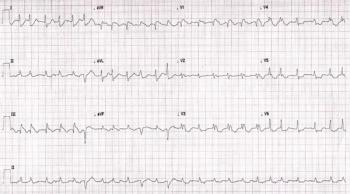
Our latest cardiology case report from Brady Pregerson, MD, features an older man with dementia presenting with hypotension and brought to the hospital with a possible STEMI. Can you determine the correct diagnosis?
Advertisement
Advertisement
Trending on HCPLive
1
FDA Approves Once-Monthly Subcutaneous Olanzapine for Schizophrenia
2
Tilrekimig Meets EASI-75 Goal in Atopic Dermatitis, With Eric Simpson, MD
3
Tips on Optimizing HS Biologics, Combinations, and Surgery
4
Why "Normal" Ferritin Can Miss Iron Deficiency, With Jacquelyn Powers, MD, MS
5