






Ophthalmology
Latest News
Advertisement
Latest Videos






CME Content


























































Advertisement
More News

The study authors suggest a thinner macular RNFL may predict a decline in cognitive performance.
The NDA submission is based on results from the Phase 3 DERBY and OAKS studies and the Phase 2 FILLY study.

The meta-analysis included more than 11,000 patients with between 8 and 9 years of mean follow-up periods.

In a recent column, Gregory Weiss, MD, provides perspective on recent data detailing the potential impact optimal diabetes management can have on the patient- and societal-level toll imposed by diabetic eye disease.
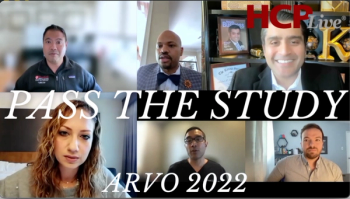
In the first episode of this new game show, a team of ARVO 2022 investigators work to invent an innovative clinical trial.
From curative stem cell approaches to in-clinic subretinal injections, Arshad Khanani, MD, MA, navigates what the future drug class may entail.
An FDA decision could come as soon as this year. One expert stresses the need for improved screening, biomarker research, and patient communication beforehand.
Early-stage prevention of modifiable risk factors may contribute to the prevention of neurodegenerative changes and diabetic retinopathy.
Study author Arshad Khanani, MD, MA, discusses how the novel-targeting gene therapy candidate may uniquely benefit patients with treated retina disease.

Theodore Leng, MD, MS, discusses his team's IRIS registry findings suggesting a need for quantifying how vision-loss patients are impacted by functional or quality-of-life measures.

Data show half of all eyes with CRVO were still being treated at 36-months.

Treatment delay and steroid usage were both associated with worse improvements in long term BVA and CST in patients with RVO-related macular edema.
Veeral S. Sheth, MD, MBA, gives an update on his practice's adoption of the novel PDS in patients with AMD—and discusses other potential methods of anti-VEGF delivery.
These data further elucidate the relationship between mental health and diabetic retinopathy.

However, data show RVO patients with clinical findings associated with glaucoma risk are often not coded with suspected glaucoma.

A new assessment from ARVO 2022 showed methodology to predict one-year treatment response to treat-and-extend ranibizumab at 1 year.

The study agent was otherwise not associated with an increased number of intravitreal injections over a 12-month period.
Veeral S. Sheth, MD, MBA, discusses promising agents in development for geographic atrophy and other under-addressed ophthalmic diseases.

Patients with DR had an average interval between anti-VEGF injections of 70 days, compared to 54 days for RVO patients and 55 days for wetAMD patients.
The Elevatum trial will assess the newly approved ophthalmic drug in patients from African American, Hispanic, Latin American, and Indigenous communities.
One researcher suggests the supplement may serve as an add-on measurement against AMD progression in early-stage patients.
An ARVO 2022 study author discusses her team's research into omega-3 fatty acids for diseases including dry AMD.

The estimated median duration of ≥1 line gained was greater than 9 hours on both study day 1 and day 30 in patients with presbyopia treated with the study agent.

A new cohort analysis suggest one-year intravitreal treatment burden can be significantly reduced when patients are only administered brolucizumab.

Data suggest baseline vision was a key predictor of poor response at Week 24 in patients with macular edema secondary to central retinal vein occlusion.
Advertisement
Advertisement
Trending on HCPLive
1
AIRCULES: Lunsekimig Benefit Scales With Severity, With Njira Lugogo, MD
2
What Baseline Disease Severity Hides in PsA Trial Data, With David Oberlin, MD
3
ESC 2026 Recap: 5 Practice-Changing Trials to Know
4
Semaglutide Cuts Asthma Attacks by up to 40% in Real-World Study
5