



Ophthalmology
Latest News
Advertisement
Latest Videos



CME Content


























































Advertisement
More News
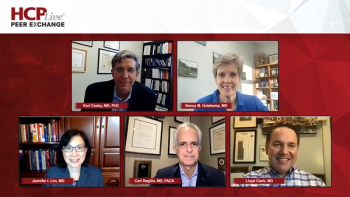
The panel closes out this Peer Exchange by relaying their idea of unmet needs found when using the available treatment options for age-related macular degeneration.
Lloyd Clark, MD, discusses a different VEGF inhibitor that could have a positive effect on age-related macular degeneration treatment: KSI-301.

In a Dutch population, the prevalence of MMD increased with older age, lower spherical equivalent of refractive error, and higher axial length.

Comprehensive insight on optimal work-up and diagnostic testing for patients with retinal vein occlusion.
Experts define retinal vein occlusion and discuss risk factors, diagnostic testing, prognosis, and lifestyle modifications prevalent in the current paradigm.
Two specialists give their insight into a VEGF inhibitor that could potentially be used as an effective treatment for age-related macular degeneration: port delivery system.
Two specialists examine the YOSEMITE and RHINE clinical trials that explored faricimab as a therapeutic option for patients with both diabetes and age-related macular degeneration.

A panel of retinal disease experts provide some advice for physicians and comment on the future of treating nonproliferative diabetic retinopathy.

Key opinion leaders emphasize important considerations when discussing the safety of anti-VEGF agents with patients and highlight unmet needs in nonproliferative diabetic retinopathy treatments.
Drs Lim, Holekamp, and Regillo discuss the introduction of the drug faricimab as a therapy option for age-related macular degeneration and the data from the TEYANA and LUCERNE clinical trials.
Dr Clark details additional diagnostic tools he uses when deciding to use anti-VEGF agents, as well as his experience using the drug brolucizumab, and Dr Regillo elaborates on brolucizumab.

The cumulative probability of death was 26% at day 7 and increased to 53% at day 21.

The first approval for the novel device was met with acclaim in the field this year. Now, specialists want to see how their colleagues will implement it.

The meta-analysis showed a mean improvement of 15.7 ETDRS letters and central retinal thickness of 269.7 μm at 12 months.
Drs Ehsan Rahimy and Joseph M. Coney analyze the implications of clinical trial data on the management of nonproliferative diabetic retinopathy.
A panel of experts reviews data on nonproliferative diabetic retinopathy treatments from the PANORAMA, Protocol W, RISE, and RIDE studies.

A Mayo Clinic-led retrospective analysis suggests patients with T2D had an 88% greater risk of developing any diabetic retinopathy within the first 15 years of diagnosis compared to those with T1D.

Data show the HR of the risk between T2D and T2D rates of developing complications were 1.88 (95% CI, 1.13 - 3.12; P = .02) for any diabetic retinopathy.
Nancy M. Holekamp, MD, and Carl Regillo, MD, FACS, discuss the safety aspects of anti-VEGF agents when treating age-related macular degeneration.
Lloyd Clark, MD, and Jennifer I. Lim, MD, give their insight into therapy considerations when deciding to use anti-VEGF agents to treat age-related macular degeneration.
Dr Joseph M. Coney provides insight into the goals of therapy for patients with nonproliferative diabetic retinopathy.
Joseph M. Coney, MD, and Ehsan Rahimy, MD, explain the complications of nonproliferative diabetic retinopathy and emphasize the importance of early detection.
Drs Ehsan Rahimy and Diana V. Do define diabetic retinopathy and describe the symptoms.
Expert ophthalmologists debate the rationale behind choosing an anti-VEGF inhibitor for patients and the challenges involved in treatment management.

Dr. Leng discusses the progression of dry AMD patients in the IRIS registry from early stages to potential GA, as well as the benefit in narrowing the clinical definition of intermediate dry AMD.
Advertisement
Advertisement
Trending on HCPLive
1
AIRCULES: Lunsekimig Benefit Scales With Severity, With Njira Lugogo, MD
2
What Baseline Disease Severity Hides in PsA Trial Data, With David Oberlin, MD
3
ESC 2026 Recap: 5 Practice-Changing Trials to Know
4
Semaglutide Cuts Asthma Attacks by up to 40% in Real-World Study
5