






























































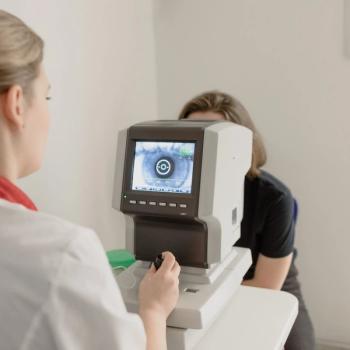
A systematic review of clinical trials notes that topical eye drops may lead to favorable retinal and visual outcomes, despite heterogeneity across multiple studies.
A systematic review of clinical trials notes that topical eye drops may lead to favorable retinal and visual outcomes, despite heterogeneity across multiple studies.
An overview of new gene therapy options for wet AMD that are currently being explored in clinical trials.

Results of recent phase III clinical trials with respect to efficacy and safety of faricimab, an investigational bispecific antibody which inhibits both VEGF-A and angiopoietin-2.

A panel of retinal experts developed definitions for and classified the reasons behind patient nonadherence and nonpersistence.
Retina specialists provide insight into the patient selection and safety concerns with the innovative Port Delivery System (PDS) that offers a new means of sustained anti-VEGF therapy.
Carl Regillo, MD highlights the Port Delivery System (PDS), a new surgical implant with sustained release of anti-VEGF therapy that recently completed phase III clinical trials.

The ortho-k lenses are fitted to a patient's eye using a corneal shape to temporarily reshape the cornea.

Dr Arshad Khanani highlights various strategies currently under investigation for the treatment of age-related macular degeneration and explains the impact long-term data and real-world evidence has on his treatment decisions.
Considerations for treating patients with diabetes who have wet age-related macular degeneration with faricimab to reduce treatment burden based on results of recent clinical trials.

Research at ARVO 2021 highlighted a gamut of interplaying diabetes and vision loss risk factors, and even treatments for both. But experts depict a referral and care process that lacks whole diabetes care.

A podcast interview with study author Paul Yang, MD, PhD, on the current research and future implementation of the agent.

Data from the KITE study shows that ≥50% of brolucizumab patients maintained a 12-week interval schedule through 52 weeks.

Patients who utilized virtual and in-person visits had comparable numbers of follow-ups, referrals, and outpatient surgeries.

The implant was linked to visual acuity improvements at final follow-up visit.
Animal models suggest the investigative treatment is safe and tolerable in treating retinal vascular diseases.

There were no significant differences between dexamethasone and fluocinolone acetonide intravitreal implants in controlling inflammation; however, the latter is considered more difficult to use.

A discussion with an investigator on how the SGLT-2 inhibitor may help affected patients.

Up to 77% of patients maintained or improved best-corrected visual acuity at 12 month post-injection.

Hispanic and Black patients with chronic eye diseases had higher odds of missing out on appointments.

Investigators report a low incidence rate of unscheduled or urgent visits within 7 days of injection.

A discussion on the uncovered benefits in risk reduction observed in patients with severe NDPR.
CDC data suggest ophthalmic patients are significantly more likely to present with a heart disease-driving condition or habit. How could preventive care improve?

An assessment of VISTA and VIVID patient data uncovered surprising risk factors associated with aflibercept success or failure in DME resolution.

Patients with nAMD, DME, and RVO received fewer intravitreal injections between pre- and post-lockdown periods.

The UCLA expert discusses the lengthy virtual agenda of this year's meeting, as well as his own session recommendations and key discussions.