




Ophthalmology
Latest News
Advertisement
Latest Videos





CME Content


























































Advertisement
More News

A meta-analysis of studies assessing presence of pathological eating behaviors and risk of diabetic retinopathy was associated with a more than 3-fold increase in risk of retinopathy.

The annual rate of visual field loss was −0.15 dB for the slow OCTA progressors and −0.43 dB for the fast OCTA progressors.

Future clinical trials may be necessary to confirm if 1 treatment is superior to the other to a clinically relevant degree in patients with thyroid eye disease.

Thinner RNFL and GCL were associated with lower Full Scale IQ in childhood and at age 45 years, while thinner RNFL in middle age was associated with greater decline in processing speed.

Post hoc data from GATHER1 show the complement inhibitor's 18-month benefit in regions including the central fovea.

Data show the 5-year cumulative incidence of glaucoma was 46% among children with bilateral aphakia and 25% with unilateral aphakia.

Data show ≥60% of eligible faricimab patients with DME could extend treatment to every 4 months, while 95% of ranibizumab implants in wetAMD treatment maintained a six-month schedule.

Steffen Schmitz-Valckenberg, MD, explains the close association between disease progression and uncovered risk alleles.

Veeral S. Sheth, MD, MBA, discusses the potential value of complement inhibitors for the at-need patient population.

A panel of eye care specialists share clinical advice and future directions for the treatment of wet AMD.
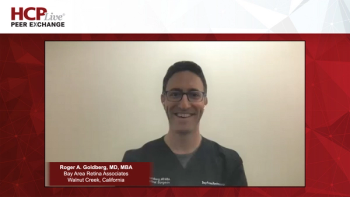
Dante J. Pieramici, MD; Roger A. Goldberg, MD, MBA; and Lloyd Clark, MD, review novel compounds in development for the treatment of wet AMD.
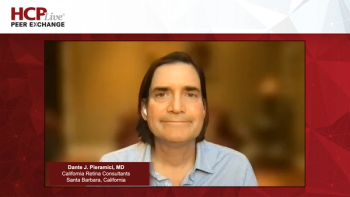
Dante J. Pieramici, MD, leads the discussion on potential safety issues of anti-VEGF agents and addressing these concerns with patients who have wet AMD.

Dr. Brown discusses the most common conditions of patients treated for ocular trauma and highlights the range of performed procedures in the ED.

New findings observing links between visual acuity, disease progression and risk loci could inform new clinical studies of the leading cause of irreversible vision loss.

Monthly IV pegcetacoplan was associated with 39% reduced risk of progression from incomplete to complete RPE and outer retinal atrophy.

The FDA began conducting research to support the development of bioequivalence recommendations for cyclosporine ophthalmic emulsion in 2012.
A panel of eye care specialists review challenges faced with the management of wet AMD when patients are put on an extended treatment regimen.
Dante J. Pieramici, MD, and Lloyd Clark, MD, provide insight on approaching the treatment of wet AMD with intravitreal injections and discuss creating a tailored treatment regimen for patients.

The study suggested children born extremely premature may remain "preterm for life," with ophthalmic sequelae persisting into adulthood.

The approved indication is a first-of-its-kind for a novel therapy—a bispecific antibody injection treatment for the leading causes of blindness.

A multitude of promising new investigative therapies are on the horizon for inherited retinal disease.

YOSEMITE and RHINE data further supports the novel agent for diabetic macular edema. A study investigators explains the impact of the new findings.

Dr. Modi discusses the pending approval of faricimab for nAMD, DME treatment and highlights important observations from phase 3 data.

Perspective from trial investigators and ophthalmologists on the novel drug, just prior to its potential FDA approval.

Outlook Therapeutics is expected to submit a BLA to the FDA for the investigative ophthalmic bevacizumab-vikg formulation (ONS-5010).
Advertisement
Advertisement
Trending on HCPLive
1
AIRCULES: Lunsekimig Benefit Scales With Severity, With Njira Lugogo, MD
2
What Baseline Disease Severity Hides in PsA Trial Data, With David Oberlin, MD
3
ESC 2026 Recap: 5 Practice-Changing Trials to Know
4
Semaglutide Cuts Asthma Attacks by up to 40% in Real-World Study
5