


Plaque Psoriasis
Latest News
Advertisement
Latest Videos



CME Content




























































Advertisement
More News

Investigators note that the histopathologic diagnosis of inflammatory skin disorders can prove challenging, with psoriasis being particularly heterogeneous and dynamic.

Side effects of the vaccines occurred at a lower incidence in the current study.

Patients with psoriasis slept 1 hour less than control subjects, and associations with anxiety and depression were observed.
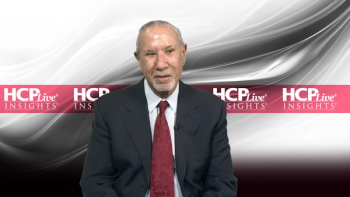
Jerry Bagel, MD, MS, explains clinical trial data on the investigational anti-IL17A/F monoclonal antibody bimekizumab.
An overview of the novel selective tyrosine kinase 2 (TYK2) inhibitor deucravacitinib for the management of plaque psoriasis.
Dr Jerry Bagel describes the unmet needs of plaque psoriasis management.
An expert dermatologist details the effect of the COVID-19 pandemic and other comorbidities on treatment selection for plaque psoriasis.

Though the pathogenesis of psoriasis remains vague, recent studies hypothesized that oxidative stress could be involved in the development and perpetuation of psoriasis.
The safety syringe and auto-injector provide patients with psoriasis with 2 options for the self-administration of bimekizumab.
Jerry Bagel, MD, MS, discuss new targets, treatment goals, and utilizing shared decision making when treating patients with plaque psoriasis.
Jerry Bagel, MD, MS, provides an overview of potential challenges in managing plaque psoriasis and assess to biologics utilized in plaque psoriasis.

Previous research indicated that the worsening of different inflammatory cutaneous diseases had been associated with exposure to air pollution.

Dr Lebwohl concludes by giving advice to community physicians and dermatologist on what they can do to improve treating patients with plaque psoriasis.
The panel ponders how they will incorporate the discussed new agents into their plaque psoriasis treatment processes.
The panel each list challenges and unmet needs faced when managing the treatment of plaque psoriasis.
A total of 45 studies were selected for the systematic review, with non-White patients being underrepresented across them all.
Dr. Bagel details newer topical therapies such as tapinarof and roflumilast, and speaks to how greater access to these therapies is needed among psoriasis patients.
Drs Bagel and Lebwohl discuss the new biologic agent, bimekuzumab, and the data results from the phase 3 BE READY trial.
Jerry Bagel, MD, MS, provides and overview of the phase 3 POETYK PSO-1 and POETYK PSO-2 trials, while Leon Kircik, MD, reviews the efficacy and safety of each of them.

Key opinion leaders conclude their discussion on plaque psoriasis by commenting on the potential for research into the genetic origin of disease, possible biomarkers, and treatment options with greater efficacy.
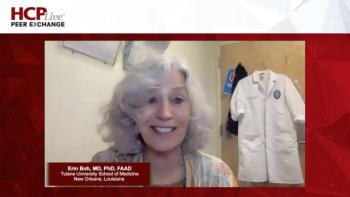
A group of specialists discusses unmet needs in psoriatic disease including physician education about biologics and research about treatment options for pediatric patients, patients with malignancies, and patients who are pregnant.
Dr Lebwohl provides insight on a new class of agents, the TYK2 inhibitors.
Drs Kircik and Stein Gold address roflumilast and tapinarof as new topical agents for the management of plaque psoriasis.

Investigators observed that many patients with psoriasis are not actively seeing a primary care physician and would welcome management of their cardiovascular risk factors.
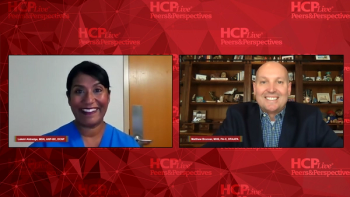
Matthew Brunner, MHS, PA-C, DFAAPA, highlights the most anticipated developments in the field of treating patients with plaque psoriasis.
Advertisement
Advertisement
Trending on HCPLive
1
The Case for Routine Kidney Screening, With Pranav Garimella, MBBS, MPH
2
FDA Approves Obinutuzumab (Gazyva) for Idiopathic Nephrotic Syndrome
3
Zilurgisertib Receives FDA Approval for FOP in Patients 12 and Older
4
What The FDA Psychedelic Hearing Means for Psychiatrists
5