

Plaque Psoriasis
Latest News


Study Finds ‘Rosacea Area and Severity Index’ System Provides Nuanced View of Rosacea Extent, Severity
By Tim Smith

Higher Incidence of Skin Cancer Observed in Vitiligo, Psoriasis Patients Receiving Phototherapy
By Tim Smith
Advertisement
Latest Videos

CME Content




























































Advertisement
More News

Recent clinical trial data from UNCOVER-1 and UNCOVER-2 demonstrated the positive effects of ixekizumab use in adult plaque psoriasis patients.

The recent GUIDE study examined the efficacy of guselkumab for moderate-to-severe plaque psoriasis, finding it consistent with previous trials.

The moisturizer was designed to address concerns regarding the suitability of sunscreens for individuals with skin of color and show the importance of "aesthetic elegance” to increase sunscreen utilization.

Recent phase 3 trial results suggest positive effects and faster onset using CAL/BDP cream for adult plaque psoriasis.

A discussion regarding the use of plaque psoriasis treatments such as apremilast, ixekizumab, and methotrexate.

PASI 100 was achieved by 28% of patients in week 4, 89% in week 12, and 68% in week 36.
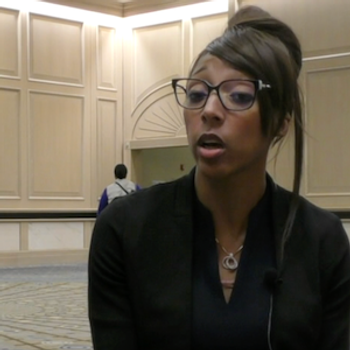
An interview with Dr. Anwuri regarding her Pri-Med Midwest presentation on treating adult plaque psoriasis.

Overall, secukinumab was more effective in biologic-naïve patients and in patients with a lower body mass index (BMI).
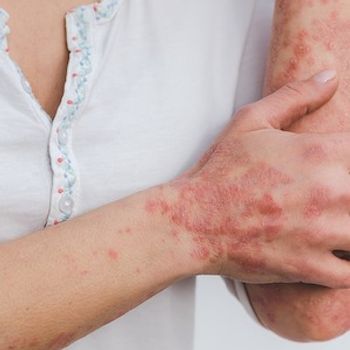
A research team described data regarding the potential of escalating adalimumab doses for certain patients with psoriasis.

A combination therapy approach may be useful for psoriasis treatment, though an 8-week regimen may not be long enough.
Research suggests that tildrakizumab may be useful in real-life settings against moderate-to-severe plaque psoriasis.

Research finds potential benefits to using apremilast for plaque psoriasis patients.

The results of two phase 3 clinical trials suggest a topical psoriasis treatment option.
The daily TYK2 inhibitor agent was associated with improved rates of psoriasis surface improvement versus apremilast in clinical trials.

Recent research from the National Psoriasis Foundation (NPF) found that 1 in 3 individuals living with psoriatic conditions experience depression.
The latest indications for the novel selective antibody will make it available as a treatment for pustular psoriasis.
Experts in plaque psoriasis discuss the future for the management of plaque psoriasis.
Jerry Bagel, MD, MS, and Alexa Hetzel, MS, PA-C, discuss how clinical trials play an important role in the management of plaque psoriasis.
Dr Jerry Bagel and physician assistant Alexa Hetzel comment on the impact of COVID-19 pandemic on patients with plaque psoriasis.
Experts in plaque psoriasis discuss the impact of access to medication for plaque psoriasis and how biosimilars might impact the treatment of plaque psoriasis.
Jerry Bagel, MD, MS, discusses the relationship between a physician and physician assistant treating plaque psoriasis.

Among flares identified in outpatient (53%), inpatient (36%), and emergency department (9%) settings, the most utilized treatments were topical corticosteroids (35%), opioids (21%), and other oral treatments.
Experts in plaque psoriasis discuss how patients are referred to them for treatment.
Jerry Bagel, MD, MS, and Alexa Hetzel, MS, PA-C, touch on unmet needs that remain in the treatment of plaque psoriasis.
Dr Jerry Bagel and physician assistant Alexa Hetzel comment on other agents available for the treatment of plaque psoriasis.
Advertisement
Advertisement
Trending on HCPLive
1
The Case for Routine Kidney Screening, With Pranav Garimella, MBBS, MPH
2
FDA Approves Obinutuzumab (Gazyva) for Idiopathic Nephrotic Syndrome
3
Zilurgisertib Receives FDA Approval for FOP in Patients 12 and Older
4
FDA Approves Baricitinib for Adolescents With Severe Alopecia Areata
5