





























































Obese patients looking to lose weight or treat type 2 diabetes have often turned to gastric bypass or other stomach-shrinking surgeries, which have produced favorable results, decreasing cancer risks.
Obese patients looking to lose weight or treat type 2 diabetes have often turned to gastric bypass or other stomach-shrinking surgeries, which have produced favorable results, decreasing cancer risks.

Although the prevalence of Barrett's esophagus is considered moderate, the condition is the only established precursor of esophageal adenocarcinoma, and thus it has become the focus of programs of endoscopic screening and surveillance.

It's been nearly 3 years since Eduardo Rodriguez, MD, performed the most comprehensive face transplant ever done, a procedure that gave a Virginia man a new face, jaws, teeth, and tongue. Now NYU Langone Medical Center's chair of the Department of Plastic Surgery and Director of the Institute of Plastic Surgery and Helen L. Kimmel professor of reconstructive plastic surgery, Rodriguez is poised to do New York's first face transplant. He's just waiting for the phone to ring with news that a donor has been found.

Genetics may hold the key to a disfiguring and disabling --but surgically treatable-set of birth anomalies, a condition known as craniosynostosis. The chief of pediatric plastic surgery at NYU Langone Medical Center in Manhattan, David Staffenberg, MD said craniosynostosis, a problem in which the bones of a newborn's skull fuse prematurely, appears to usually be related to a spontaneous mutation. The condition occurs in 1 of every 2,000 births, he sai
Once a diagnosis of Craniosynostosis is made there is still much more work to be done including determining what kind of the condition exists. The form of the defect then determines what kind of operation is needed to remedy the condition.

Many patients with chronic subdural hematomas are referred to neurosurgeons who generally agree that surgical drainage is warranted. Controversy surrounds the decision as to which drainage method is best because evidence is lacking. Surgeons often therefore select the procedure based on other factors.
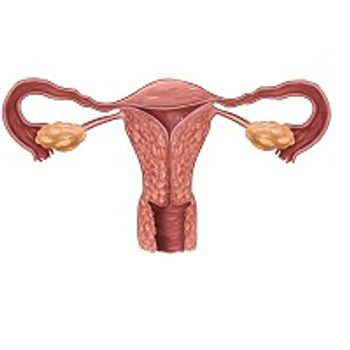
Approximately 20% of women develop leiomyomas during their childbearing years. When these uterine fibroids cause excessive bleeding, pelvic pain, cramping, or painful intercourse, surgery is indicated. Hysterectomy is an appropriate choice for women who are done with childbearing, but for women with childbearing plans for the future, myomectomy is an option. However, hemorrhage is a common complication during myomectomy.
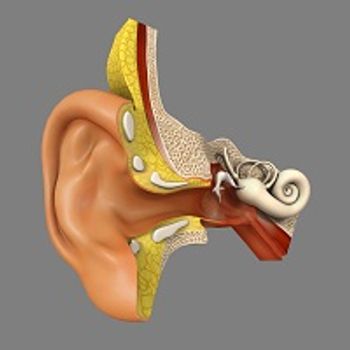
Some studies have suggested that advanced age may be associated with poor post-revision outcomes in cochlear reimplantation. Investigators from the University of North Carolina at Chapel Hill have completed a study that asks whether advanced age should be a contraindication for revision cochlear implantation.
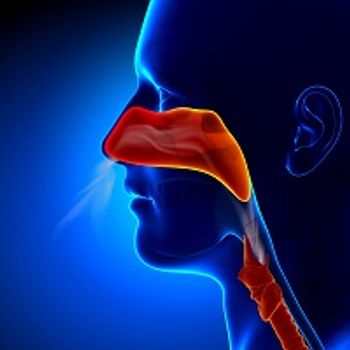
Endoscopically guided removal of bridging tissue between ostia can alleviate sinusitis, congestion, and other symptoms caused by mucous recirculation.

Surgeons have traditionally repaired cleft palate using relaxing incision to close the palate, but this surgery has been linked to palatal fistulas and other complications. A recent study in JAMA Facial Plastic Surgery described predictive associations of persistent palatal fistulas in patients with a previously repaired cleft palate.

Gynecomastia-the growth of breast tissue in men-can be an embarrassment for adolescents, but for professional bodybuilders it can be a career-ender. Two plastic surgeons said steroid use is to blame and surgery-not liposuction-is the best treatment.
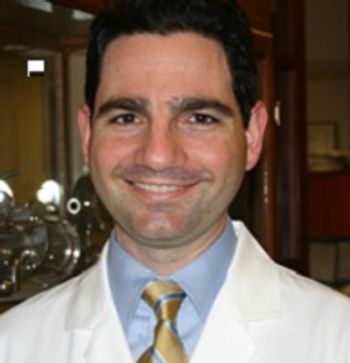
The hospital shooting death of Boston cardiac surgeon Michael Davidson, MD, 44, has shocked the cardiology world-far beyond his colleagues at Brigham and Women's Hospital where he was director of endovascular cardiac surgery. On a remembrance page and in formal statements, tributes are pouring in. Davidson, a respected innovator in heart valve replacement, died late Jan. 20, hours after he was shot by the son of a former patient who then turned his gun on himself.He leaves his wife Teri Davidson, who is 7 months pregnant, and 3 children ages 2 to 9.

Surgeons from several leading medical schools in the United States gathered expert witness guidelines among major surgical societies for review. They looked for gaps in the standards to stimulate discussion about areas for improvement. Their review provides an educational look at the surgeon's role in the judicial system.

A new analysis of several prospective health studies indicates that low testosterone levels at any age are associated with an increased risk ischemic stroke in men.

Many health care organizations have started to lessen their environmental impact slowly by tackling small problems and making manageable changes. A multidisciplinary team of researchers from across the US carved out one surgical procedure to determine environmental impact. Their assessment of abdominal, vaginal, laparoscopic, and robotic hysterectomy appears ahead of print in the journal Environmental Science and Technology.

In many medical fields, malpractice has driven changes in the way physicians practice medicine. In the surgical field, tracheotomies are often crucial, but are associated with a high risk of morbidity and mortality. A quick look at the results when one enters "tracheotomy" and "lawsuit" into any search engine shows that patients, dissatisfied with myriad aspects of breathing through a tube, often sue after this procedure.

Postextubation dysphagia is a common but often unrecognized problem in critically ill patients who've been intubated for 2 days or more. Its causes include mechanical abrasion, cognitive disturbances, and the residual effects of narcotics and anxiolytic medications.

Slightly more than 6.8 million community-dwelling Americans use assistive devices (eg, canes, walkers, crutches) to help them with mobility and, of these, 1.7 million people use wheelchairs or scooter riders. These Americans at risk for unique musculoskeletal problems, especially rotator cuff injuries.

Spinal cord injury animal models were able to regain muscle function after a treatment with a peptide injection, according to study results published in Nature.
A 28 year-old commercial realtor comes to your office on Monday morning after spraining his right ankle in a basketball game with friends the preceding Saturday afternoon. He has a swollen right ankle with tenderness inferior and anterior to the lateral malleolus. He is limping but able to apply weight to the injured extremity.
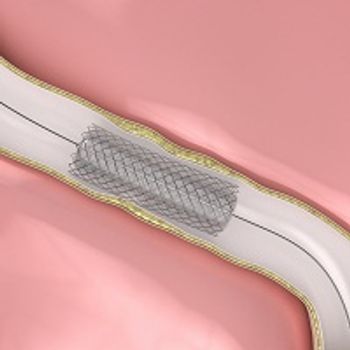
Cardiologists have discussed the pros and cons of drug-eluting stents (DES) for several years. Some evidence seems to indicate that DES reduce risk of restenosis or ischemia-driven target vessel revascularization. They may, however, be more prone than bare metal stents to late (beyond 1 year) and sudden coronary artery occlusion.
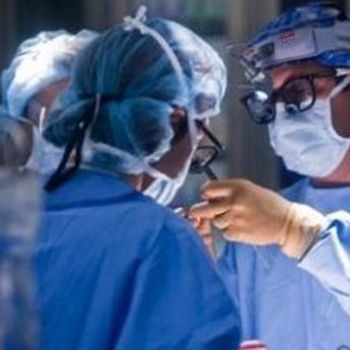
Although the introduction of peroral endoscopic myotomy (POEM) for the treatment of achalasia, a condition that affects the ability of the esophagus to move food into the stomach, has caused quite a stir, clinicians are reminded to consider additional factors when discussing therapeutic options.
Oprah Winfrey. Bill Cosby. Muhammad Ali. Sidney Poitier. Alvin Crawford, MD. If that last name seems out of place with the others, guess again.
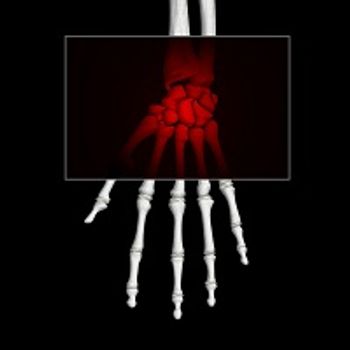
Distal radius fracture-also called a wrist fracture by patients-is common. Its incidence is expected to increase in the next 20 years, since our population is aging and the risk of this specific fracture increases in patients with metabolic disorders, including osteoporosis. However, the health care community has yet to reach a consensus regarding indications for surgery, and there is insufficient data to identify a preferred operative technique.
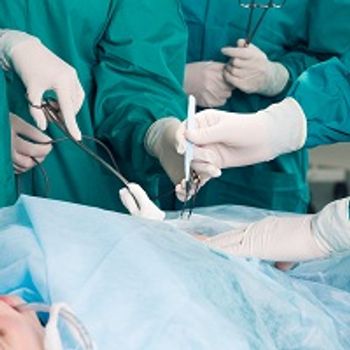
Clinicians who see their own clinical outcomes data (sometimes referred to as surgeon-specific mortality data) can use that information to promote and enhance patient safety. However, critics of this approach argue that places the burden solely on the surgeon and under-appreciates the surgical team's role and dismisses hospital staffing, infrastructure, and process as contributors to patient safety.