

Extension analysis from a phase 1 trial show the investigative oral mitapivat was not associated with any discontinuations nor deaths over 2 years.
Extension analysis from a phase 1 trial show the investigative oral mitapivat was not associated with any discontinuations nor deaths over 2 years.

New case-control data from ASH 2023 show a particularly increased link between sickle cell trait and monocytic and myeloid leukemia progression.

These findings presented at ASH show promise for future studies on GBT02601 as a potential alternative to voxelotor for sickle cell disease.

This new data on a European sickle cell disease cohort expands upon existing knowledge of the effects of HU on fertility, with the findings showing the benefits of cryopreservation.

The phase 3 STAND study contrasts from the phase 2 SUSTAIN study results, highlighting the absence of superiority of crizanlizumab over placebo on key efficacy endpoints.

Results of the phase 2 RISE UP trial offer additional perspective into the benefit-risk profile of mitapivat in patients with sickle cell disease.
Two experts describe the correlation between the severity of arginine deficiency and worse clinical outcomes among hospitalized children with sickle cell disease experiencing vaso-occlusive pain episodes.

Bezuclastinib, a targeted oral therapy, shows promise in reducing disease burden and improving symptoms by 50% or more in nonadvanced systemic mastocytosis patients, as revealed in the phase 2 SUMMIT trial data presented at ASH 2023.

Despite concerns, Dr. Margaret Ragni discusses the significance of the Roctavian's effectiveness for reducing hemophilia A bleeds and improving patient quality of life.
"The challenge right now is that we have no therapies in the emergency department to treat acute pain, outside of pain medications and IV opioids," Dr. Claudia Morris says in an interview.

The motive of the study wasn't to implement hematopoietic stem cell transplantation (HSCT) programs worldwide, but as a contribution to comprehensive cancer control efforts.
According to Dr. Corinna Schultz, a key part of the conversation of sickle cell trait (SCT) is centered around reproductive choices for the patient in the future.
Dr. Adam Lamble recommends that pediatric patients with AML and TP53 status should now be considered for transplant in first remission, and novel interventions are warranted.

Dr. Molly Tokaz and Dr. Lisa Force discuss the extensive data they collected on the utilization of hematopoietic stem cell transplantation (HSCT) for patients with AML.
Almost 25 years later, Dr. Claudia Morris concluded 2022 by presenting phase 2 data at the 64th ASH Annual Meeting that demonstrated the therapy's benefit, and her original premise. Her team's phase 3 trial evaluating Arg is currently underway.
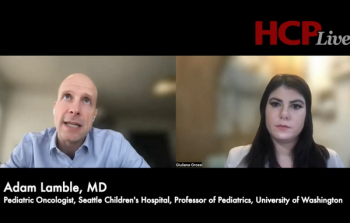
Dr. Adam Lamble shares that outcomes for pediatric patients with acute myeloid leukemia that have TP53 status are inferior to other patients with high-risk disease.
Dr. Corinna Schultz talks about her latest data and the growing body of literature showing medical complications that can come with sickle cell trait.
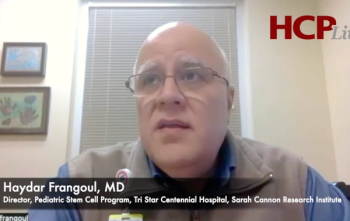
"Using CRISPR/Cas9 you are able to actually fix a disease, that otherwise, was not fixable," Dr. Haydar Frangoul explains the data he presented at ASH 2022.
New developments in gene therapy offer a promising perspective of a future where curing sickle cell disease (SCD) is possible.
Expert Stephanie Guarino, MD, MSHP, shares her plan for the future of pain management specifically for sickle cell disease is based on results from a series of studies.

The most common thrombophilia types were heterozygosity for factor V Leiden, prothrombin 20210A mutation, and protein S deficiency.

More research presented by Dr. Stephanie Guarino resulted in a recommended guideline designed for investigating sickle cell disease pain to standardize and enhance the quality of data.

In a late-breaking abstract presented during ASH 2022, investigators found patients treated with PTCy had a significantly lower hazard of GRFS than the standard therapy group.

A recent study presented at ASH 2022 examined the safety profiles of different hormonal contraceptives for female sickle cell disease patients at risk of thromboembolism.

The treatment was superior in various secondary endpoints, included transfusion avoidance, changes from baseline in hemoglobin level, FACIT-F scores and ARC, and the rate of clinical BTH.
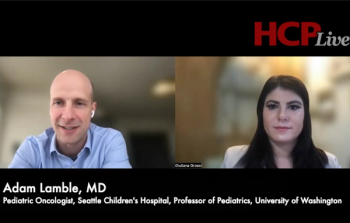
Data from the largest investigation of TP53 mutations in pediatric patients with acute myeloid leukemia (AML) is presented at the ASH 2022 Annual Meeting.
"There's no national guidance on how this information should be delivered back to families, which leaves it up to each state's newborn screening program to decide the best route that they see fit," Dr. Corinna Schultz explains.

New phase 2 interim data show rates of the erectile condition were halved after 26 weeks of treatment.
Dr. Stephanie Guarino's novel analysis found a significant relationship between self-efficacy in adults with SCD, and experiences of disease-related stigma.