

Oldham highlights the anticipated change to a more dimensional perspective on personality disorders in new guidelines anticipated later this year.
Oldham highlights the anticipated change to a more dimensional perspective on personality disorders in new guidelines anticipated later this year.

In an interview, King provided an overview of the history of psychedelic research for psychiatric conditions, where we are now, and what hurdles investigators must address.

At APA 2024, Weinrieb discussed the positive patient outcomes of using a psychiatry-hepatology approach for the treatment of alcohol-associated liver disease.

At the end of ARVO 2024, Srinivas R. Sadda, MD, became the organization's president for the 2024-2025 year. He spoke to HCPLive about his expectations for the next year in eye care.

Sibille and colleagues have made progress in refining the therapeutic pathways of Alzheimer disease. Human trials may soon follow.

Factors, including social deprivation and race, significantly affected visit adherence for patients with nAMD across a large healthcare system.

Phillips emphasizes the importance of screening for obsessive-compulsive disorders, such as OCD, body dysmorphic disorder, and trichillomania.

At ARVO 2024, Nazlee Zebardast, MD, MSc describes the value of a polygenic risk score to predict the onset of primary open-angle glaucoma.

In an interview with HCPLive, Jha said clinicians should think of interventional approaches for treatment-resistant depression “sooner rather than later.”

McIntyre discusses how GLP-1 and GIP receptor agonists like semaglutide could potentially improve both acute and long-term measures of psychiatric disease.
In an interview, Phillip explained the difference between OCD and body dysmorphic disorder, even though they are grouped in the DSM-5.

A higher dietary intake of several nutrients was strongly associated with slower progression toward the central macula in eyes with non-central GA.

At ARVO 2024, Roger Goldberg, MD explores the greater reductions in hard exudates achieved with faricimab than aflibercept in eyes with DME.

In an interview with HCPLive, Barnett discussed the ethical concerns of using psychedelics for treating substance use disorders.

In an interview with Adler at APA 2024, he also explained how adults with ADHD may present additional symptoms not noted on the DSM when they have comorbidities.

At ARVO 2024, Deepayan Kar, MD, PhD, describes the potential of measuring contrast sensitivity function using a novel gaze tracking-based VR headset in AMD.

In an interview with HCPLive, Karlin and Robinson discuss the phase 2b trial on MM120 for generalized anxiety disorder.

Daniel Su, MD describes the promise of APX3330 for delaying or preventing diabetic retinopathy progression in a post-hoc analysis of the ZETA-1 trial.

Disease characteristics in wet AMD at baseline were not linked to aflibercept 8 mg dosing interval extensions in the phase 3 PULSAR trial at 96 weeks.
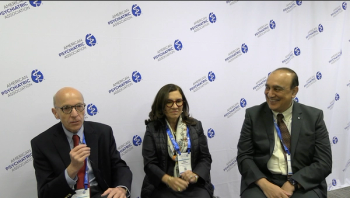
At APA 2024, HCPLive interviewed APA members about how DSM-5-TR classifies psychiatric disorders differently than previous iterations.

Retina specialists and an AI screening tool trained to measure geographic atrophy agreed in a majority of cases, potentially expediting clinical trial enrollment and increasing consistency in measuring the disease.

At ARVO 2024, Ashkan Abbey, MD describes key data from the pivotal OAKS and DERBY, and the GALE extension trial over 3 years of pegcetacoplan treatment.

Nelson discusses how personality disorder care has been slow to apply evidence into practice—and how it's affecting patients.

The anti-VEGF agent tarcocimab significantly improved diabetic retinopathy severity score compared with SHAM in a phase 3 study.

The utility of second-generation antipsychotics and clozapine has been less advantageous than it could be, Kane explained.

BI 764524 was well tolerated following intravitreal administration of single and multiple doses in the phase 1/2a trial, with signs pointing to early efficacy.
McIntyre explains why GLP-1/GIP receptor agonists like semaglutide may alter cognitive and psychiatric care similar to cardiometabolic disease.

Devanand reviews lecanemab and the advent of blood biomarkers for dementia and Alzheimer's management at APA 2024.
Kane explains why newer long-acting injectables and clozapine may be under-utilized still in the management of schizophrenia.

Despite often presenting to the hospital with similar non-psychiatric conditions, patients with schizophrenia often experience a more difficult care process than those without.