

The phase 3 trial met its primary endpoint of mean rate of growth in GA area at 12 months with statistical significance and a favorable safety profile.
The phase 3 trial met its primary endpoint of mean rate of growth in GA area at 12 months with statistical significance and a favorable safety profile.

Mesalamine use was linked to fewer relapses in the ulcerative colitis or IBD-unclassified cohorts compared to patients with Crohn’s disease.

In this podcast episode, Jorge Plutzky, MD, and Michael Farkouh, MD, speak with University of Maryland's Matthew Weir, MD, about the growing involvement of renal care in modern heart disease patients.

Rebecca T. Brown, MD, MPH, describes contributing factors to older homeless adult mortality and future topics of interest in this field.

Mean systolic blood pressure increased by 5.09 mm Hg immediately after implementation of automated monitoring.

The investigators identified 4 distinct subgroups—earlier rising/robust, shorter active period/less modelable, shorter active period/very weak, and later settling/very weak.
In the first episode of our monthly series, cardiologists Jorge Plutzky, MD, and Michael Farkouh, MD, interview nephrologist Matthew Weir, MD.

Recent research from the National Psoriasis Foundation (NPF) found that 1 in 3 individuals living with psoriatic conditions experience depression.

New cohort analysis suggest updates to broaden the age and smoking-rate eligibility may have benefitted the historic disparity in low-dose CT screening practice.

A cross-sectional analysis of a Penn Medicine primary care practice shows which patients may prefer a phone or tablet versus a computer.

The latest indications for the novel selective antibody will make it available as a treatment for pustular psoriasis.

The odds of HBV seroprevalence in participants with no or primary education was higher than individuals with secondary level education or higher.

The 3-D technology was able to produce custom frames with a successful fit for patients with craniofacial anomalies at risk of vision loss.

In the second portion of the Rare Disease Report: CDKL5 podcast, Elia Pestana Knight, MD, a pediatric epileptologist shares her clinical expertise on CDKL5 deficiency disorder (CDD).

A study from Germany elucidated new information on the rare uncombable hair syndrome, changing the ways in which the syndrome may be analyzed.

Rebecca T. Brown, MD, MPH, discusses the growing prevalence of older homeless adults, and what diseases community leaders and caregivers are combating most frequently in them.

A novel biomarker was identified for posterior uveitis that postulates previously undetected sources of green and red emission fluorescent components (GEFC/REFC).

According to new research, stroke occurrence trends coinciding with tuberculous meningitis (TBM) are suggested to have regional characteristics.

Serum total cholesterol, HDL-C, and LDL-C were associated positively with IOP, while triglyceride levels may be associated negatively.
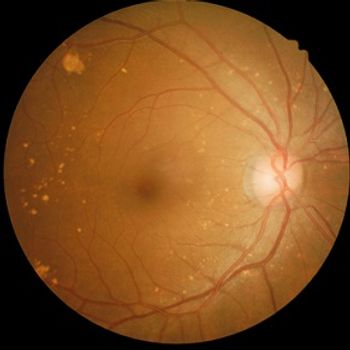
The strongest risk factor for RVO was identified as nonideal blood pressure, followed by nonideal body mass index.

The investigators found no significant differences when trainees participated in the ADR, CIR, and perforation rate compared to when trainees did not participate.

Older participants had smaller dual-task performance deficits for gait and texting speed in both the ADHD group and the control group.

NAFLD patients had a 13% higher risk of developing IBS after multivariable adjustment compared to patients without NAFLD.

The mean daily alcohol consumption was also lower in the psilocybin group compared to the placebo group.

A lower SPPB score was associated with greater risk of composite and individual CVD outcomes.

Olipudase alfa (Xenpozyme) was developed by Sanofi to treat symptoms unrelated to the central nervous system in pediatric and adult patients with the life-threatening condition.

Recent research from George Washington University analyzed the effects of COVID-19 on recruitment and funding for medical school pathway programs.
The FDA granted priority review for the Bioloigics License Application (BLA) Sanofi submitted for efanesoctocog alfa indicated for individuals with hemophilia A with a decision date set for February 28, 2023.

Temperatures changes between summer and the rest of the year correlated with the magnitude of decrease in renal function during summer.
In the first episode of a 2-part Rare Disease Report, Whitney Mitchell, mother and caregiver to her 5 year old daughter Havilah, shared her experience leading up to, and now living with, Havilah’s CDKL5 deficiency disorder diagnosis.