

From a couple of novel heart failure treatments to a promising dual receptor agonist, here's a rundown of expected pipeline news this year in heart disease.
From a couple of novel heart failure treatments to a promising dual receptor agonist, here's a rundown of expected pipeline news this year in heart disease.

Virk will chair a discussion on depression treatments on March 3.

The novel technology combines daily disposable contact lenses with ketotifen in a first in its new category approval.

When the pandemic began, prescribers in Canada were allowed to increase the amount of opioid agonist therapy take-home doses for individuals with opioid use disorder.

Dr. Obi speaks of the disparities associated with the disease, the challenges patients face, and how sarcoidosis – the “great mimicker” as some clinicians have described it- can be differentiated from other diseases.

Influenza mortality rates have not been updates since the last estimate in 2009.

The Johns Hopkins expert details recent advances in remote cardiovascular care and research, and explains how the field will continue to evolve.

Though atopic dermatitis is linked to sleep disturbance, the exact timing of weekday versus weekend sleep and light exposure have not been evaluated.

The absolute survival rate observed for US patients with IHCA and COVID-19 was 11.9%.

There were no associations found between infantile colic and the risk of developing functional gastrointestinal disorders at age 4-6.

Investigators noted that the psychosocial impacts of food allergy have only intensified with the introduction of the COVID-19 virus.

The biologic sustained responses in managing sleep interference with numerically higher responses than omalizumab.

Clinical results show that 98% of patients with relapsed or refractory multiple myeloma responded to cilta-cel after a single treatment.

General progress has been made in decreasing diabetes mortality at ages younger than 25 years, but challenges remain in low and low-middle SDI countries.

It was unknown prior to the study if dupilumab treatment improved skin microbial and barrier abnormalities in patients with atopic dermatitis.

Long-term care facilities were able to see a reduction in antibiotic starts and days of antibiotic therapy by engaging in an antibiotic stewardship program.

Investigators noted that the study of the atopic march has largely focused on White populations that biased current paradigms

Pupillary dilation and manual eyelid lifting were shown to substantially increase visible retinal area and PLL-HMA detection using fully automated algorithms.
The FDA granted accelerated approval to the treatment of adults with intermediate or high-risk primary or second myelofibrosis.
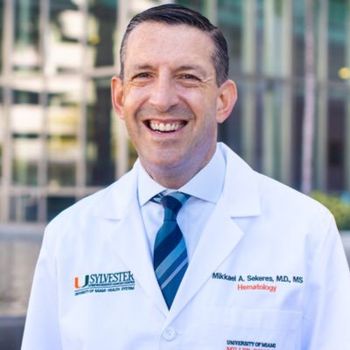
Expert Mikkael Sekeres, MD, explains that the COVID-19 pandemic affected all of medicine, but in a rare disease domain that impact was even greater.

Clinical and industry leaders share their perspectives on the importance of collaboration in developing treatments for rare diseases.
The FDA asked the company to submit additional confirmatory evidence of effectiveness in the treatment of epidermolysis bullosa.

Those who are underweight or normal weight were more likely to have an IgE mediated food allergy.
The complete response letter from the FDA cited a lack of effectiveness in slowing the loss of kidney function in patients with Alport syndrome.

Chief Scientific Officer of the CMT Research Foundation talks about being cognizant of the blood-nerve barrier when treating patients and developing therapies.

Investigators noted that the epidemiology and disease overlap among eosinophilic diseases are poorly understood.

The president of Make-A-Wish New Jersey speaks about the impact of granting a wish to a child living with a rare disease.

Gestational age and NICU admission both were associated with the risk of developing EoE.

The Rare Disease Report Podcast returns! Our first episode features Karen Kozarsky, PhD, an expert on gene therapy and adrenomyelonueropathy.

The algorithm also resulted in a large reduction in oral food challenges.