
Opinion|Videos|October 28, 2026
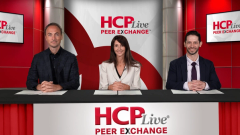
Positioning B-Cell Depletion and B-Cell Inhibition in IgG4-RD Care
With both B-cell depletion and B-cell inhibition now studied in phase 3 trials, treatment selection becomes a shared decision. The panel discusses induction, maintenance, and what reversibility offers.
Advertisement
Episodes in this series
"Positioning B-Cell Depletion and B-Cell Inhibition in IgG4-RD Care" takes up the question of how two distinct B-cell strategies may divide the treatment landscape.
Dr. Katz, also an INDIGO investigator, calls the trial overwhelmingly positive. He notes, however, that obexelimab did not show the near-universal efficacy seen with B-cell depletion. He believes aspects of the trial design partly explain that difference. He views B-cell inhibition as a middle ground between no treatment or glucocorticoids alone and B-cell depletion. He hopes it will deliver most of the disease control of depletion with fewer long-term risks.
Reversibility is central to that hope. Long-term data are still needed. If obexelimab avoids hypogammaglobulinemia and other consequences of prolonged depletion, Dr. Katz expects a potential paradigm shift in maintenance therapy. A safer long-term option would be very attractive.
Asked about conventional immunosuppressants such as mycophenolate and cyclophosphamide, Dr. Katz says he rarely uses them. Their efficacy is more variable and their side effects greater than those of B-cell-targeted therapies. If obexelimab gains FDA approval, he plans to discuss its risks and benefits against depletion with many patients. Some will prefer subcutaneous injections and others infusions. Some will want a drug that almost guarantees remission rather than one with a high, but less certain, likelihood.
For the rare patient with extremely active multi-organ disease and catastrophic risk, Dr. Katz would still choose B-cell depletion. Most patients, however, could reasonably receive either. He is also considering inducing remission with depletion and maintaining it with B-cell inhibition. No data yet support this strategy, and he would like to see it studied.
Dr. Della Torre agrees. More drugs will allow clinicians to tailor therapy to comorbidities again. A drug that can be withdrawn after side effects is reassuring. Broader B-cell depletion is also valuable. Dr. Culver adds that reversibility may suit patients with poor vaccine responses or high infection risk.
In "Emerging IgG4-RD Therapies: Cellular, Oral, and Pathway-Targeted Approaches," both panelists will look past current options to the therapies now moving through development.
Advertisement
Related to this article
ORKA-001, a half-life extended IL-23p19 antibody, achieved PASI 100 in 61% of high-dose patients at week 16 in the phase 2b EVERLAST-B psoriasis trial.

In PHINDER, IPF had the highest PVD-B65 mortality risk scores. Rali discusses why PH in ILD is missed and when to refer for right heart catheterization.
Parth Rali, MD, explains how the AHA/ACC A-through-E categories compare with ESC risk tiers and how hospitals can meet the class 1 PERT recommendation.
Colin Church, MBBS, PhD, discusses durable 6MWD and NT-proBNP signals in a TPIP open-label extension and what phase 3 needs to show next.
Colin Church, MBBS, PhD, discusses 24-month open-label extension data showing TPIP remains tolerable in patients with PH-ILD, with no new safety signals.
Vanda’s oral NK-1 receptor antagonist cut any vomiting by 27% vs placebo after a single 1 mg semaglutide dose, and the company plans an sNDA submission.

This segment of Nguyen's 2026 Fall Clinical Dermatology interview highlights key insights on early dermatology career strategies and other information.
Brynn Marks, MD, MSHPEd, joins Diana Isaacs, PharmD, and Natalie Bellini, DNP, to discuss a new framework defining fully closed loop insulin delivery.
Advertisement
Advertisement
Trending on HCPLive
1
eGFR Underestimates CKD in Patients with Cancer, Study Finds
2
Tradipitant Cuts Semaglutide-Induced Vomiting in Phase 3 Trial
3
Respiratory Monitoring After Spinal Muscular Atrophy Gene Therapy
4
Inside The New AHA/ACC Acute Pulmonary Embolism Categories
5