

Opinion|Videos|October 28, 2026
Predicting Relapse in IgG4-RD: Risk Factors and Ongoing Surveillance
Multi-organ disease and certain serologic markers predict relapse, but timing remains unpredictable for individual patients. Dr. Katz explains why close monitoring continues even during apparent remission.
Advertisement
Episodes in this series
In "Predicting Relapse in IgG4-RD: Risk Factors and Ongoing Surveillance," our experts examine what clinicians can and cannot predict about disease recurrence.
Dr. Culver asks Dr. Katz which features at first presentation mark a patient as high risk for relapse. She also asks when those features would prompt earlier targeted therapy. Dr. Katz identifies multi-organ disease and certain serologic findings as the main risk factors. These include highly elevated serum IgG4, elevated IgE, and eosinophilia. Several cohorts have linked these markers to relapse, and they tend to occur together. It therefore makes sense that they travel with higher risk.
He tells high-risk patients to expect a relapse at some point. The challenge is that no one knows when. Even among high-risk patients, the time to relapse varies substantially. Timing also depends heavily on the initial treatment. A high-risk patient treated with glucocorticoids alone will reliably relapse soon after withdrawal. Some relapse once the dose falls to about 10 mg of prednisone or less.
Patients treated with B-cell depletion behave differently, Dr. Katz explains. They almost always enter remission after the first course of two infusions. Relapse may follow at 4 to 6 months, at 18 months to 2 years, or occasionally several years later. Patients with risk factors are more likely to relapse earlier.
At the individual level, however, clinicians remain poor at predicting who will relapse and when. For that reason, Dr. Katz monitors all patients closely, including those without risk factors. He obtains serial laboratory tests in every patient. He adds imaging when the disease involves organs that cannot be assessed any other way. He continues this monitoring even when patients appear to be in remission, because relapse prediction remains unreliable.
Dr. Culver summarizes the discussion. Although clinicians have some sense of which markers predict relapse, real-world prediction remains uncertain. Long-term monitoring and close individual attention to each patient therefore remain essential.
The next episode in this series, "Anti-CD20 B-Cell Depletion for Inducing Remission in IgG4-RD," features Dr. Della Torre on how European centers adopted anti-CD20 therapy and when he uses it for induction.
Advertisement
Related to this article

ORKA-001, a half-life extended IL-23p19 antibody, achieved PASI 100 in 61% of high-dose patients at week 16 in the phase 2b EVERLAST-B psoriasis trial.

In PHINDER, IPF had the highest PVD-B65 mortality risk scores. Rali discusses why PH in ILD is missed and when to refer for right heart catheterization.
Parth Rali, MD, explains how the AHA/ACC A-through-E categories compare with ESC risk tiers and how hospitals can meet the class 1 PERT recommendation.

Colin Church, MBBS, PhD, discusses durable 6MWD and NT-proBNP signals in a TPIP open-label extension and what phase 3 needs to show next.
Colin Church, MBBS, PhD, discusses 24-month open-label extension data showing TPIP remains tolerable in patients with PH-ILD, with no new safety signals.

Vanda’s oral NK-1 receptor antagonist cut any vomiting by 27% vs placebo after a single 1 mg semaglutide dose, and the company plans an sNDA submission.

This segment of Nguyen's 2026 Fall Clinical Dermatology interview highlights key insights on early dermatology career strategies and other information.
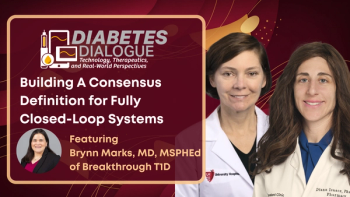
Brynn Marks, MD, MSHPEd, joins Diana Isaacs, PharmD, and Natalie Bellini, DNP, to discuss a new framework defining fully closed loop insulin delivery.
Advertisement
Advertisement
Trending on HCPLive
1
eGFR Underestimates CKD in Patients with Cancer, Study Finds
2
Tradipitant Cuts Semaglutide-Induced Vomiting in Phase 3 Trial
3
Respiratory Monitoring After Spinal Muscular Atrophy Gene Therapy
4
Inside The New AHA/ACC Acute Pulmonary Embolism Categories
5