
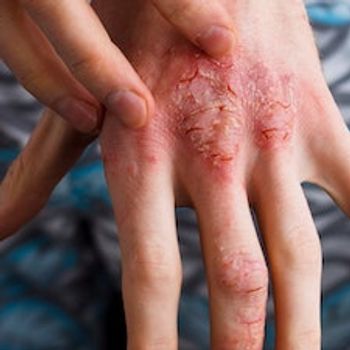
Allergic contact dermatitis burden many people, but it is important for patients to know why and how they may limit their risk.
Tim Smith joined the MJH Life Sciences team in 2022 and is currently an associate editor for HCPLive. He is also the executive producer of two podcasts: Skin of Color Savvy and The Medical Sisterhood. Previously, he was the producer of the Lungcast podcast. He graduated from UC Berkeley and worked in multimedia journalism as a staff writer prior to joining MJH. You can contact him at [email protected].
Allergic contact dermatitis burden many people, but it is important for patients to know why and how they may limit their risk.
An interview segment with Peter Young featuring a description of the response to the research into personal care product allergens.
A segment of an interview with Peter Young in which he describes his original interest in the subject of skincare product allergens.
A new study explored the topic of predictive biomarkers of clinical improvement of EASI scores for atopic dermatitis patients being given dupilumab.
Research on patients with generalized pustular psoriasis or erythrodermic psoriasis showed positive results for risankizumab.

A recent study highlighted psoriasis patients' lack of awareness of a link between psoriasis and obesity, as well as these same patients' hopes for future treatment programs targeting weight loss.

This newly-approved monoclonal antibody was developed as a citrate-free formulation of adalimumab.
New research into bimekizumab for psoriatic arthritis suggests the treatment to be effective for joint and skin improvements at 16 weeks.
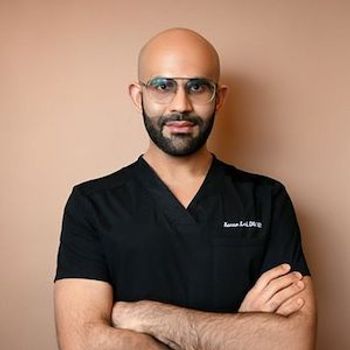
An interview with Karan Lal, DO, regarding skincare product allergens, misdiagnosis of allergic contact dermatitis, and more.

New research indicated that the effects of sleep and physical activity deficiencies in low income youth were found to have an association with maladjustment.

Researchers have developed an automated hair loss measurement system for alopecia patients to track hair loss.
This year saw 4 new FDA approvals for the chronic condition. But dermatologists are still not satisfied.
A recent study presented at ASH 2022 examined the safety profiles of different hormonal contraceptives for female sickle cell disease patients at risk of thromboembolism.

New research presented at ASH 2022 and conducted following a Hemophilia-Related Distress Questionnaire indicated racial disparities between White and Black patients.

New research presented at ASH 2022 showed survival rate improvements for APL patients through a simplified treatment algorithm designed by the trial investigators.

New research assessed whether the T117S gene variant could be useful as a marker for predicting sickle cell disease patients' might responses to hydroxyurea treatment.
Research into ovarian follicular density in younger female sickle cell disease patients finds no effect from exposure to hydroxyurea.
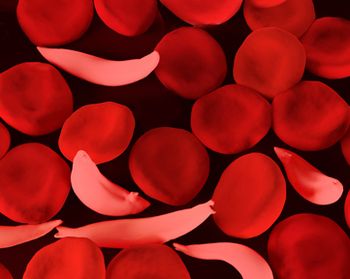
A study in the Dominican Republic assessed the use of dose escalation of hydroxyurea for children in a single hospital with sickle cell anemia.

Research presented at ASH 2022 examined the ages of onset of ASSC in younger sickle cell disease patients treated with hydroxyurea.
Research indicates the long-term benefits of sustained use of two developed online interventions for younger patients diagnosed with eczema.
Recent research has identified two groups as high risk for developing asthma, with one noted as having early eczema and the other not having the skin condition.
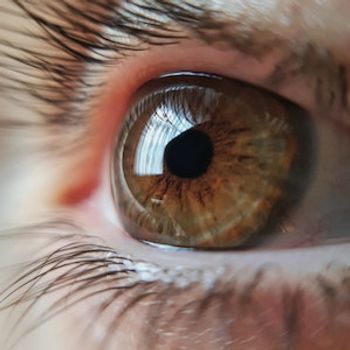
New research suggests lower central foveal thickness fluctuation scores with patients on ranibizumab were associated with the greatest gains in vision.
New research highlights the growing number of claims among all providers, including advanced practice practitioners and non-dermatologists, of Cal/BD foam usage for Medicare beneficiaries.
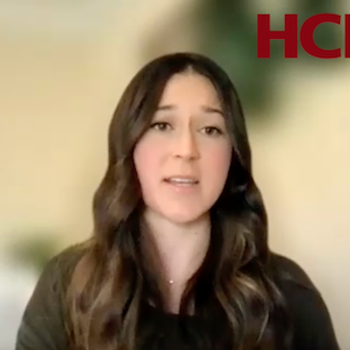
A discussion with Emily Strouphauer on her team's findings regarding mental health in pediatric psoriasis, as well as her views on helping younger patients facing these issues.
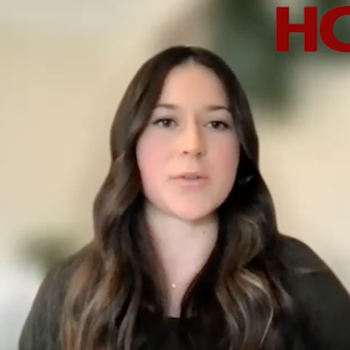
In her HCPLive interview, Emily Strouphauer, BSA, spoke about her team’s recent findings on the association between pediatric psoriasis and anxiety and depression.
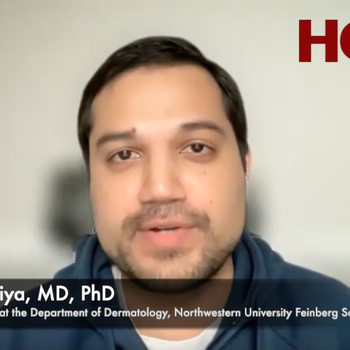
In an interview with HCPLive, Dr. Chovatiya spoke about recent FDA approvals for psoriasis treatments, including deucravacitinib, spesolimab, roflumilast, and tapinarof.

During his HCPLive interview, Dr. Eichenfield described the results from the phase 3 TRuE-AD trials testing ruxolitinib for atopic dermatitis, including how the findings might affect treatment for vitiligo or psoriasis.

In a segment from his HCPLive interview, Dr. Lal described the difference between the skin microbiome and the gut microbiome, and their effects on psoriasis.
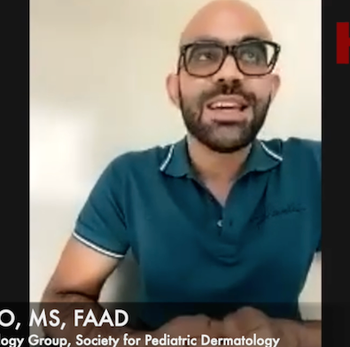
In an interview segment on HCPLive, Dr. Lal described several treatments approved in 2022 for psoriasis patients such as spesolimab, roflumilast, and tapinarof.

In a recent study, DAMPs were found to play a major role in deteriorating vitiligo conditions by initiating host defenses against signals of danger.