






Anaphylaxis
Latest News
Advertisement
Latest Videos






CME Content




























































Advertisement
More News

A discrete choice experiment revealed food allergy treatment preferences among adolescents, with efficacy ranking as the most important attribute.

Multicenter study finds most children with anaphylaxis can be safely discharged within 2 hours, with 4 hours for those with cardiovascular involvement.

A new advisory highlights cephalexin’s efficacy and low cross-reactivity risk, supporting its safe use in patients with penicillin allergy.

New research confirms that adrenaline is safe and effective for anaphylaxis, debunking myths.

In this large study, oral berotralstat resulted in early and sustained reductions in HAE attack rates, offering a promising long-term prophylaxis option.

In a study of children with food allergy and atopic dermatitis, longer dupilumab use was associated with significantly lower food-specific IgE levels.

A 4.5 mm cut-off using the Skin Prick Automated Test showed comparable accuracy to the standard skin prick test in detecting birch pollen and house dust mite allergies.
This month in review spotlights 6 headlines, from the FDA approving sebetralsta for HAE to NICE Recommending Betula Verrucosa for Birch Tree Allergy.

An online course, AllergyAware, significantly improved school personnel’s ability to recognize and manage anaphylaxis.

New research finds patients with severe allergic asthma had greater emotional regulation than those with venom anaphylaxis, despite reporting poorer physical well-being.

The National Institute for Health and Care Excellence endorses betula verrucosa for long-term relief from severe birch tree allergies, such as allergic rhinitis or conjunctivitis.

A new study showed that cashew-induced anaphylaxis mostly affects children under 5 years, often from tiny amounts that are under a teaspoon.

A 2-step direct amoxicillin challenge safely ruled out penicillin allergy in low-risk pregnant patients, offering a faster alternative to skin testing.

Neffy showed fast symptom resolution in children experiencing moderate anaphylaxis following oral food challenges, offering a needle-free alternative to epinephrine injection.

Daily intake of baked milk significantly improved tolerance and immune markers in young children with baked milk tolerance, according to a 12-month study.

Shaker shares how allergist-immunologists can use brief CBT, motivational interviewing, and risk reframing to shift patients’ fear of their food allergies into confidence.
With the FDA acceptance of the NDA, the agency has assigned a PDUFA target action date of January 31, 2026, and may require an Advisory Committee meeting for approval.

UK study finds atopic conditions, especially anaphylaxis, significantly raise the risk of anxiety, depression, OCD, and other mental illnesses in primary care patients.

Asthma and peanuts were identified as key risk factors for grade 4 anaphylaxis in a retrospective study, highlighting the need for tailored prevention.

Despite controversy, new data show that even high-risk pediatric patients may benefit from a gradual, supervised reintroduction of milk and egg.
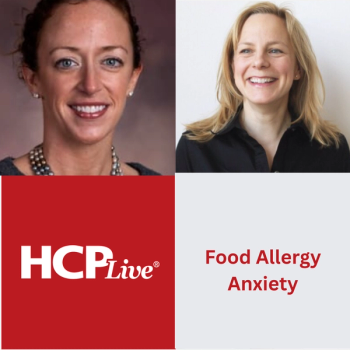
Katherine Dahlsgaard, PhD, and Megan Lewis, MSN, discuss how proximity challenges can reduce medically unnecessary avoidance for patients with food allergy anxiety.

Despite shifting guidelines and growing awareness, food allergies continue to rise, and experts point to multiple possible culprits.

Moderate-severe asthma, anaphylaxis, and allergic rhinitis risk are all higher in children with atopic dermatitis and food allergy.

Study suggests age 2 may be optimal for hen’s egg oral food challenge in FPIES. Early OFCs linked to higher risk of positive results in Turkish pediatric cohort.

Despite 2020 guidelines discouraging first-generation antihistamines, ED diphenhydramine use for anaphylaxis and urticaria remained unchanged since 2019.
Advertisement
Advertisement
Trending on HCPLive
1
The Case for Routine Kidney Screening, With Pranav Garimella, MBBS, MPH
2
FDA Approves Obinutuzumab (Gazyva) for Idiopathic Nephrotic Syndrome
3
Zilurgisertib Receives FDA Approval for FOP in Patients 12 and Older
4
FDA Approves Baricitinib for Adolescents With Severe Alopecia Areata
5