































































Jay Jin, MD, PhD, Mayo Clinic, shared the results from his team's case series surrounding unexpected bradycardia effect from epinephrine administration.
Jay Jin, MD, PhD, Mayo Clinic, shared the results from his team's case series surrounding unexpected bradycardia effect from epinephrine administration.

How safe are anti-inflammatory medications for children?
Drug store CVS now carries cheaper option to EpiPen.

How expensive? Study results show that families with children who are allergic to staple food items pay out thousands of extra dollars each year in direct and indirect costs.

Earlier this year, a skin patch designed to reduce the risk of anaphylaxis and other severe reactions to peanuts became the first allergy treatment ever granted a Breakthrough Therapy Designation by the FDA.
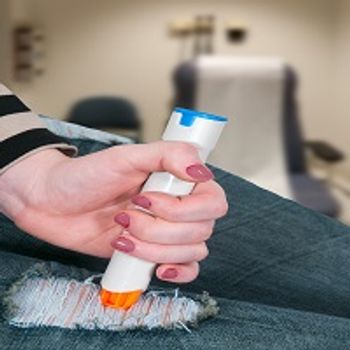
Over the past year, school officials in several of the nation's largest states have implemented new policies to address the growing prevalence and severity of pediatric allergies by increasing access to epinephrine auto-injectors.
The increasing prevalence of food allergies (along with increasing awareness of the dangers associated with those allergies) has famously led to food restrictions in schools and on commercial airlines. The trend has now spread to a venue that's strongly associated with the enjoyment of fresh roasted peanuts: baseball stadiums.

Research using mouse models may offer clues to potential prophylactic approaches for patients with venom sensitivity.
Recent studies of anaphylaxis and other allergic reactions induced by medications have informed a new set of guidelines for the diagnosis and treatment drug hypersensitivity.
New research indicated adolescents are twice as likely as younger kids to suffer from anaphylaxis and other severe allergic reactions while they are in school.

Study results show that incorrect use of inhalers and epinephrine autoinjectors is widespread among patients, which should prompt treating physicians to focus more on educating patients on proper use.

The US Food and Drug Administration (FDA) issued a strong warning on a drug used to treat iron deficiency anemia in patients with chronic kidney disease. Intravenous injections of ferumoxytol (Feraheme/Amag Pharmaceuticals) can cause serious allergic reactions including death in patients who are sensitive to the drug, the FDA cautioned in a new boxed warning. The drug was approved in 2009.

Study results indicate that the increasing rate and severity of obesity in western nations has rendered today's epinephrine autoinjectors an ineffective anaphylaxis treatment for many people.

Results from a recent survey indicate that efforts to educate American doctors about the diagnosis and treatment of anaphylaxis have achieved mixed results.
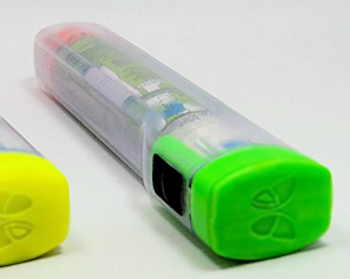
Aterica Digital Health, based in Waterloo, Canada, has designed an EpiPen case that's difficult to lose or leave behind.The "Veta smart case" uses sensors, Bluetooth radios and other technology to broadcast its location and perform several other tricks that could help users survive anaphylaxis. The case itself works with an app that runs on either Apple iOS or Google Android. Whenever a user's smartphone and case get too far apart to communicate, an alert appears on the phone. If a user misplaces a case, the app can reveal its exact location by tracking the signal it emits.

Four separate cases of fatal anaphylaxis, all within days of each other, vividly illustrate both the extreme difficulty of avoiding known food allergens and the potential consequences of any given exposure.

Allergists have long known that women are more likely than men to suffer severe allergic reactions such as anaphylaxis, but a new study may finally explain why.

In the first documented instance of its kind, a child was recently successfully treated for severe anaphylaxis triggered by eating an orange.

Sublingual immunotherapy was developed nearly 30 years ago as an alternative to subcutaneous immunotherapy, an alternative that might trigger fewer systematic reactions such as anaphylaxis.

Researchers from Germany believe they have improved upon current methods for diagnosing wheat-dependent exercise-induced anaphylaxis (WDEIA) - and demonstrated that the condition isn't necessarily induced by exercise.

Why do some allergic reactions produce only relatively mild symptoms while others trigger anaphylaxis and eventual death?
A new study indicates that medications produce far more fatal cases of anaphylaxis than either venom or food.
To ensure that anaphylaxis episodes are treated in a timely and effective manner, action plans should be developed and distributed to patients, family and other caregivers, and schools.
New research indicates that doctors who treat anaphylaxis with intravenous epinephrine rather than intramuscular or subcutaneous injections are increasing the risk that patients will suffer overdoses or other adverse reactions.

Study results indicate BAX326 shows potential and is an efficacious and safe alternative treatment for patients with hemophilia B.