






Cardiology
Latest News
Advertisement
Latest Videos






CME Content






















































Advertisement
More News
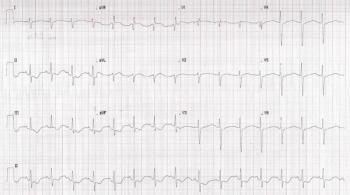
This case report from Brady Pregerson, MD, features a woman in her mid-60s presenting to the ER with generalized weakness and dyspnea. Can you determine the correct diagnosis?

Announced by Milestone Pharmaceuticals on October 24, 2023, the New Drug Application includes positive results on etripamil from the pivotal phase 3 RAPID trial.
Dhiren Patel, PharmD, and Bob Busch, MD, interview Fatima Cody Stanford, MD, MPH, MPA, an obesity medicine specialist, to examine the cardiovascular (CV) impact of obesity and delve into the potential benefits of newer weight loss medications in mitigating CV risk and heart failure.
The first-of-its-kind Aurora EV-ICD system offers a single-device, single procedure with a lead placed outside of the heart and veins.
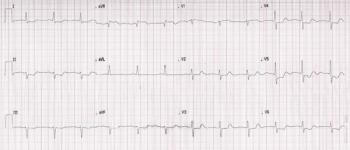
This case report from Brady Pregerson, MD, features a woman in her mid-80s with a history of ASCVD admitted for intermittent chest pain. Check out the ECG and determine the correct diagnosis!

A highlight of different sessions, presentations, and conversations focused on trends and impact of disparities in women's heart health at HFSA 2023.

Alex Hajduczok, MD, provides perspective on the new GUIDE-HF trial data presented at HFSA 2023.

Dhiren Patel, PharmD, and Bob Busch, MD, interview Fatima Cody Stanford, MD, MPH, MPA, an obesity medicine specialist, to examine the cardiovascular (CV) impact of obesity and delve into the potential benefits of newer weight loss medications in mitigating CV risk and heart failure.

A group of 9 experts in heart failure, ranging from leading trialists to early career clinicians, provide perspective on what they see as the biggest news in heart failure from 2023.

Ahmad Masri, MD, MS, discusses long-term data from the open-label extension period of the phase 2 AG10-201 trial examining acoramidis in patients with ATTR-CM.
Ahmad Masri, MD, MS, offers perspective om the study design of the ACACIA-HCM trial and the unmet need within nonobstructive hypertrophic cardiomyopathy.

Ankeet Bhatt, MD, MBA provides additional perspective on a recent study examining the cost-effectiveness and health impact of sacubitril/valsartan use at different thresholds of ejection fraction.

Use of antiviral therapy was linked to a decreased risk of multiple cardiovascular outcomes and mortality compared to patients not using antiviral therapy.
Ankeet Bhatt, MD, MBA, offers perspective into the results of a recent analysis of the GWTG-HF registry at HFSA 2023.
Data from a phase 1b trial presented at HFSA 2023 detail the effects of JK07, an investigational agent from Salubris Biotherapeutics, in patients with heart failure with reduced ejection fraction.

On the floor at HFSA 2023, Muthiah Vaduganathan, MD, MPH, provides his perspective on the latest IV iron supplementation guidelines from the European Society of Cardiology.

A study presented at HFSA 2023 offers clinicians an overview of the influence of socioeconomic status on access to implantable hemodynamic monitors using the National Inpatient Sample.
Announced on October 9, the decision to issue a CRL is based on the FDA's belief the clinical meaningfulness of patisiran’s treatment effects for the cardiomyopathy of ATTR amyloidosis had not been established.

Prespecified analysis of STEP-HFpEF trial shows semaglutide benefits consistent across ejection fraction spectrum, offering potential HFpEF management.

Hosts are joined by Marat Fudim, MD, MHS, of Duke, to discuss the REBALANCE-HF trial, which examined endovascular ablation of the right greater splanchnic nerve in heart failure with preserved ejection fraction.

DELTA-HF trial: Device-based thoracic duct decompression with the eLym system could prove beneficial in acute decompensated heart failure patients.

The REBALANCE-HF trial at HFSA 2023 reveals that right greater splanchnic nerve ablation was well-tolerated and safe in patients with HFpEF, with additional analysis shedding light on the proportion of responders to the procedure.

Anand Shah, MD, MBA, provides insights into a study he led examining the impact of out-of-pocket costs and insurance type on uptake of GDMT in patients with heart failure with reduced ejection fraction.

A propensity score-matched analysis of data suggests use of spironolactone could reduce the 3-year risk of developing Alzheimer disease or dementia among patients with heart failure with reduced ejection fraction.
José López, MD, discusses the results of a study he led examining contemporary trends in racial disparities as it pertains to LVAD utilization in patients with heart failure with reduced ejection fraction.
Advertisement
Advertisement
Trending on HCPLive
1
eGFR Underestimates CKD in Patients with Cancer, Study Finds
2
The HCPFive: Top News for Healthcare Providers from the Week of 10/18
3
Tegoprubart Improves Quality of Life vs Tacrolimus After Kidney Transplant
4
42% on Povetacicept Reach KDIGO-Aligned UPCR Target in RAINIER
5