




Cardiology
Latest News
Advertisement
Latest Videos








CME Content






















































Advertisement
More News

Data show cfPWV at 17.7 years was independently and directly associated with total fat mass and trunk fat mass at 24.5 years.

Investigators also reported that cardiorespiratory fitness was superior in patients with complete revascularization when compared to the patients with incomplete revascularization.

Dr. Paul Thompson offers perspective on the recent "Pollution and the Heart" article published in NEJM and provides insight into the potential for metal pollution from beer on influencing risk of cardiovascular disease.

Adults 40 years and younger generally aren't tested for lipid level risk—a byproduct of national guidance and clinical trial needs.

Data show the absolute risk difference for the development of PPHN after exposure to antidepressants in late pregnancy was 1.3 per 1000 infants.

Recurrent VTE shows a higher rate than expected for patients with subsegmental pulmonary embolism without proximal deep vein thrombosis managed without anticoagulation.

Dr. Gregory Weiss reviews a recent BMJ article detailing sodium content in processed meats and fish in different countries throughout the world and the implications it could have on cardiovascular health at a national level.

Data show the multivariable-adjusted HR for increase in seafood consumption of 1 oz per day and all-cause mortality was 0.84 and for CVD-related mortality was 0.89.
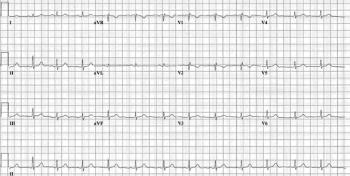
Our latest cardiology case report from Dr. Brady Pregerson features a woman in her mid-20s presenting to the emergency department with chest pain for the last 24 hours and a slight cough.

Patients with history of VTE, peak D-dimer ≥3 μg/mL, and predischarge CRP ≥10 mg/dL were at high risk of experiencing new onset of VTE after hospital discharge.
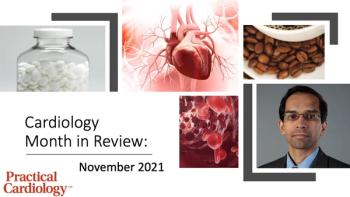
November's cardiology month in review features stories from the AHA's late-breaking sessions and Kidney Week 2021.

Patients considered adherent to caFFR had a significantly lower risk of MACE, compared to non-adherent patients (adjusted hazard ratio, 0.33).
Dr. Gregory Weiss offers a breakdown of the recent ESC guidelines for management of cardiovascular disease during the ongoing COVID-19 pandemic, including specific insight into care pathways, treatment, and follow-up.

There was no differences in complications by site in either the left or right subclavian vein.
Undergoing bariatric surgery was associated with reductions in risk of adverse liver outcomes and MACE versus nonsurgical management among patients with obesity and biopsy-proven nonalcoholic steatohepatitis in the SPLENDOR study.

Study data show for each $1,000 decrease in median household income, the number of TAVR procedures performed per 100,000 Medicare beneficiaries was 0.2% lower.
An analysis of data from the SPLENDOR study suggests undergoing baraitric surgery was associated with an 88% reduction in risk of progression of fatty liver to cirrhosis, liver cancer, or liver-related death and a 70% reduction in risk of major adverse cardiovascular events in patients with NASH and obesity.

An analysis of nearly 1000 patients from Spain is providing clinicians with insight into factors that could help predict negative outcomes among patients with stable coronary artery disease.

Data from the SWISS-AF study is providing clinicians with insight into the likelihood of patients to perceive symptoms of atrial fibrillation based on whether or not they had diabetes.

Investigators noted that several types of AID systems improved Time-in-Range and HbA1c with minimal concerns around severe hypoglycemia in type 1 diabetes care.

The treatment was effective across all weight groups.

The latest data from the digital care transformation program provides insight into effects of digital monitoring programs on helping patients achieve blood pressure and cholesterol goals.

More than 90% of patients in hypertension and lipid management accomplished their predetermined goals after completing the remote program.

Every year, AHA Scientific Sessions provides clinicians and researchers with a glimpse into the latest data from clinical trials. Our editorial staff's top picks for late-breaking data from AHA 2021 Scientific Sessions includes AVATAR, RAPID CABG, REVERSE-IT, and more.

After 1 year, 37% of patients had died and 65% of patients were readmitted to the hospital.
Advertisement
Advertisement
Trending on HCPLive
1
eGFR Underestimates CKD in Patients with Cancer, Study Finds
2
The HCPFive: Top News for Healthcare Providers from the Week of 10/18
3
42% on Povetacicept Reach KDIGO-Aligned UPCR Target in RAINIER
4
Tegoprubart Improves Quality of Life vs Tacrolimus After Kidney Transplant
5