




Endocrinology
Latest News
Advertisement
Latest Videos







CME Content




























































Advertisement
More News
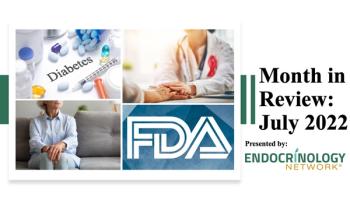
Our endocrinology month in review spotlights the most popular content from the past month. The top content from July includes hormone therapy guidance from NAMS, a comparison of management practices among Medicare beneficiaries, and a recap of the top approvals from the first half of 2022.

The highest adjusted probability of CGM use occurred in middle adulthood, while the probability of CGM utilization decreased with increasing age in older adulthood.

For the July 2022 episode of Diabetes Dialogue: Therapeutics, Technology, and Real-World Perspectives, hosts Diana Isaacs, PharmD, and Natalie Bellini, DNP, sit down to provide perspective on the latest advances in the fight to cure type 1 diabetes and offer insight into their experiences at the Practical Ways to Achieve Targets in Diabetes Care Conference held in Keystone, CO in mid-July.

A trial assessing a 12-week fully automated, no-cost online education program suggests participation in the program was linked to a mean weight loss of 5.1% of starting body weight, with greater levels of participation linked to greater weight loss among participants.

New data report a slightly higher but nonsignificant increase in diabetes incidence among children in Canada during COVID-19 pandemic.

The new recommendation acknowledges the role of disease-preventive behaviors that can be taken on by approximately 12% of the US population.

Jennifer Green, MD, discusses the benefit of relatively new innovations including continuous glucose monitoring and smart insulin pens.

During follow-up, 2.6% of the patients were diagnosed with depression, while 32.1% were treated with antidepressants.

Women with endometriosis had a 34% greater risk of stroke than women without the chronic inflammatory gynecological condition, according to an analysis of the Nurses Health Study II.

The Duke expert reviews key strategies for starting and continuing care with the pivotal glycemic control agent.

An analysis of data from more than 8400 postmenopausal women with a history of early-stage nonmetastatic, ER-positive breast cancer suggests there was no increase in risk of breast cancer recurrence or mortality observed with use of vaginal estrogen therapy or menopausal hormone therapy.

An analysis of claims data from more than 150,000 patients with pediatric obesity, results of the study led investigators to call for specific, actionable guidelines outlining proper testing and screening procedures in this patient population.

Despite some reports detailing concerning trends in weight gain and inactivity during the COVID-19 pandemic, an analysis of medical record data from 4.25 million US adults suggests the mean weight gain was just 0.1 kg greater than the preceding year.

New research suggests being born to a mother with polycystic ovary syndrome was associated with a 32% increase in risk of childhood hospitalizations among offspring.

An analysis of more than a decade of follow-up data from patients with obesity who underwent Roux-en-Y gastric bypass details the impact participation in educational programs after surgery can have on long-term weight loss outcomes.

Released on July 7, the 2022 hormone therapy position statement from the North American Menopause Society is 28 pages in length and has received endorsement from 20 international organizations, including the AACE.

There was no association found between ever using metformin and the risk of either IBD, Crohn’s disease, or ulcerative colitis.

An analysis of nationally representative data from NHANES cycles from 1999-2000 through 2017-2018 suggests just 6.8% of US adults had optimal cardiometabolic health.

Dr. Gregory Weiss provides perspective on data from the American Society for Metabolic and Bariatric Surgery 2022 Annual meeting suggesting patients who underwent bariatric surgery reduced their risk of cancer later in life.
New data from a study performed by investigators at UVA Health details the accuracy of blood glucose measurements with factory-calibrated CGMs in patients undergoing dialysis.

With the first 6 months of 2022 behind us, Endocrinology Network has compiled a list of the top approvals in diabetes care from the first half of the year. The list includes multiple approvals for CGM, a first-in-class agent, and an increased dose of a popular GLP-1 RA.

Dr. Jennifer Green led a panel in discussing new treatments and topics in diabetes care.

An analysis of data from NHANES details trends in lifestyle behaviors, including healthy eating and physical activity, among patients who have undergone bariatric surgery compared to those considered eligible for surgery and those of normal weight.

After using eye care examination results as a reference standard, the accuracy of PCP fundoscopic examination was 62.7%.

An analysis of weight gain trends among more than 10,000 US adults suggests nearly 1-in-5 experienced a weight gain of 20% or more during the previous 10 years.
Advertisement
Advertisement
Trending on HCPLive
1
ProACt Data Show Early Functional Gains with Adjunctive Cariprazine In MDD
2
Half-Life vs. Real Life: How Real-World Evidence Is Reframing Wet AMD Treatment
3
How the ASN's GD-C Compendium Aims to Unify Glomerular Disease Care
4
DAPA-TRIO-HF: Dapagliflozin Improves HF Outcomes Regardless of Healthcare Setting
5