






























































Many adhesions are asymptomatic, but in some patients, they can cause pain, small bowel obstruction and other postoperative issues, as well as increase cost and complicate surgical suite workload.
Many adhesions are asymptomatic, but in some patients, they can cause pain, small bowel obstruction and other postoperative issues, as well as increase cost and complicate surgical suite workload.
Although molecularly targeted cancer therapies are generally safe and more effective than previous treatment options, some serious adverse events can occur.

Aggressive medical therapy might be more closely linked to mortality and malignancy in pediatric inflammatory bowel disease than the condition itself, according to a new study.
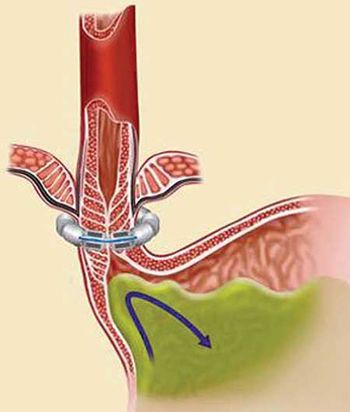
A minimally-invasive, surgically-implanted esophagus band developed at Stony Brook University Hospital effectively reduces symptoms of gastroesophageal reflux disease (GERD).

While there are no medical safety reasons to avoid becoming pregnant after a tummy tuck, there is no definitive way to ensure the results of the procedure will remain intact throughout a new pregnancy.
In 10 randomized controlled studies, patients who chewed gum after elective colorectal surgery had shorter lengths of hospital stay and were less likely to experience complications.
Patients who have experienced hemorrhage and sepsis seem to gain the most benefit from damage control procedures if the surgeon uses careful patient selection.
In his presentation, George Therapondos, MD, a hepatologist at the Ochsner Medical Center, detailed how to manage inpatients with cirrhosis that progresses to liver failure and gastrointestinal bleeding.
Primary prevention measures for upper GI bleeding should include NSAIDs, antiplatelet therapy, and anticoagulants appropriately, while secondary preventive measures should include testing and treating H. pylori and using long-term PPIs when appropriate.

Although 3-year survival and cancer recurrence rates are comparable for patients who have laparoscopic or open surgery at any stage of colon cancer, older patients who undergo a laparoscopic procedure have a significantly less likelihood of being admitted to a nursing home compared to those who have open surgical resection.
Case study presented at CHEST 2013 details the experience of a patient with hepatitis C who, after undergoing liver transplant, died after developing a serious lung infection and other complications.

With 10% of Americans contracting ulcers, pharmacists can be a valuable source of education for patients regarding the causes of peptic ulcer and the pros and cons of available treatments.
Study results show that SIRS on admission and at 72 hours after is associated with a higher incidence of pancreatic necrosis, an important risk factor contributing to death in patients with severe acute pancreatitis.
Two studies at the American College of Gastroenterology's 78th Annual Scientific Meeting analyzed the health outcomes of inflammatory bowel disease in the U.S. and Canada.

Steven P. Levine, MD, says the implications of altering the microbiome may extend beyond C. difficile to mental health, given the new insight into the connection between the gut and mind.

In a clinical review published in Clinical and Experimental Gastroenterology, researchers from Iwate Medical University in Japan evaluated the long-term safety and efficacy of the novel serotonin-receptor agonist ramosetron in patients suffering from diarrhea-predominant irritable bowel syndrome (IBS-D).

Even when it's administered in a low-dose form that resists gastric acid and prevents tablet dissolution in the stomach, aspirin therapy causes peptic ulcer and increases the risk of 30-day mortality resulting from gastrointestinal (GI) disorder progression.

Research findings underscore the importance of testing peptic ulcer patients for H. pylori status.
Study shows gluten alters bowel functions in patients with IBS-D and that removal of gluten from the diet may reduce the frequency of bowel movements.

Recognizing that melatonin secretion from the gastrointestinal (GI) tract improves abdominal pain in irritable bowel syndrome (IBS) but decreases with age, Polish researchers from the Medical University of Lodz aimed to define the effect of administering melatonin in postmenopausal women with different predominating IBS symptoms.
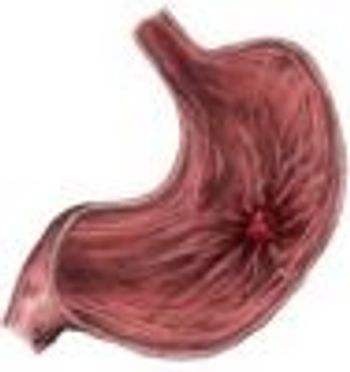
Though it's common medical knowledge that an ulcer eating a hole through a patient's stomach requires immediate surgical treatment as a result of its life-threatening nature, new findings from a team of Danish researchers urge physicians to beat the clock in performing emergency surgery on perforated peptic ulcers (PPU).

A high-potency probiotic supplement that mimics the effect of morphine in the gut may reduce the development of visceral pain in irritable bowel syndrome (IBS).

Transoral incisionless fundoplication (TIF) was shown to be more effective than taking the maximal proton pump inhibitor (PPI) dose in relieving heartburn, regurgitation, and other troublesome symptoms in patients with refractory gastroesophageal reflux disease (GERD).
Esophageal pH monitoring is more cost effective than the long-term use of proton-pump inhibitors (PPIs), since it can help rule out gastroesophageal reflux diseases (GERD) and avoid the unneeded costs associated with prolonged medication therapy.
Andrew J. Muir, MD, MHS, said having more antiviral hepatitis C drugs in the pipeline could spur more people to accept treatment and improve patient outcomes.