



Heart Failure
Latest News
Advertisement
Latest Videos






CME Content






















































Advertisement
More News
Lawrence Eichenfield, MD, reviews major drug approvals and advancement of screening and prevention strategies for the youngest patients with atopic dermatitis.

The advisory committee voted 3-8 against the benefit-risk profile of omecamtiv mecarbil for heart failure with reduced ejection fraction.

At AHA 2022, Dr. Ray discusses the findings from the phase II open-label extension trial and highlights other important trial data for lipidologists.

A deep dive into exciting late-breaking trial data at AHA 2022, differences in chest pain guidelines, and bringing patient voice into clinical research.
A Q&A with Dr. Bonaca highlights new data on rivaroxaban for PAD and the late-breaking science at AHA 2022.
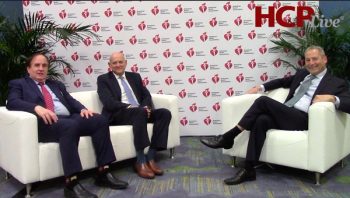
In this episode of The Heart Team, which was recorded on-site at AHA 2022, Scott Solomon, MD, takes hosts Jorge Plutzky, MD, and Michael Farkouh, MD, on a deep dive into his experience as a trialist, use of newer medications, and what might be next for the heart failure community.

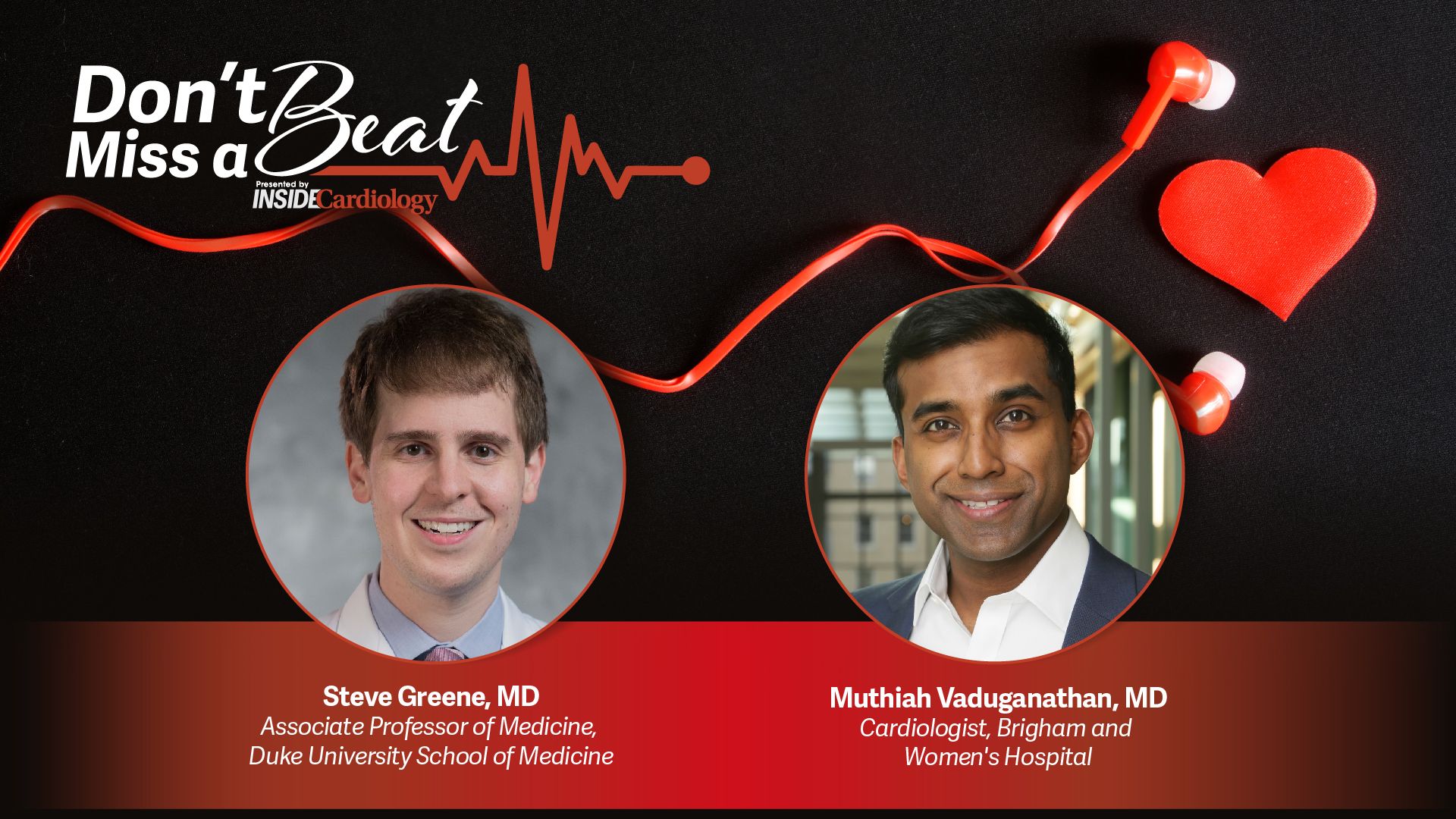
In this episode of Don't Miss a Beat, hosts Muthiah Vaduganathan, MD, MPH, and Stephen Greene, MD, are bringing you insights from the AHA 2022 Scientific Sessions. In the episode, which was recorded on day 2 of the 3-day meeting, our hosts offer listeners perspective on the EMPA-KIDNEY and the TRANSFORM-HF trial, the latter of which Greene served on as an investigator.
A substudy of the PRO-HF study indicates incorporation of KCCQ-12 scores was associated with an improved patient experience and a greater understanding of symptoms.

Results of the TRANSFORM-HF trial presented at AHA 22 indicate there were no significant differences in rate of all-cause mortality or hospitalization with the use of torsemide compared with furosemide in people with heart failure.
Data presented during ASN 2022 shows how heart failure impacts risk factors for renal outcomes of patients with chronic kidney disease.

AI-enabled retinal imaging can accurately predict CVD and death, without the need for blood tests or BP measurement, according to the findings.

Mobile health technology to detect AF led to a high rate of false positives in patients with certain cardiac conditions.

The approval indicates the subcutaneous loop diuretic for the at-home treatment of congestion in adults with NYHA Class II/III chronic heart failure.
The observed reductions in CV mortality in patients treated with dapagliflozin were primarily due to lower rates of HF and sudden death.

An analysis applying data from the DELIVER trial to the Get With The Guidelines-Heart Failure Registry suggests 81% of hospitalized Medicare beneficiaries with HFpEF could be considered candidates for dapagliflozin use under a potential FDA label expansion.

A prespecified analysis of the DELIVER trial presented at HFSA 2022 indicates dapagliflozin provides early benefit in patients with heart failure with preserved ejection fraction, with the effect on the trial's primary end point evident in just 13 days.

In this special edition episode of Don’t Miss a Beat, which was filmed on-site at the HFSA 2022 annual scientific meeting, hosts Muthiah Vaduganathan, MD, MPH, codirector of Center for Cardiometabolic Implementation Science at Brigham and Women's Hospital, and Stephen Greene, MD, assistant professor of medicine at Duke University School of Medicine, take the audience on a deep dive into implementation science at the meeting, the potential for a polypill in heart failure, and other highlights from HFSA 2022.

Key opinion leaders in the cardiometabolic space describe the importance of the introduction of SGLT2 inhibitors for heart failure treatment based on 2022 guidelines.

SGLT2 inhibitors, ARNIs, and MRAs were associated with a significant decrease in hospital admission for heart failure.
This risk also increased with age and was amplified in patients with HCV compared to patients without HCV.

Dr. Thosani discusses the convergence of technology and physiology, treatment advancements, and virtual medicine capabilities in the field of heart arrhythmia.

In this episode of Don’t Miss a Beat, hosts Stephen Greene, MD, and Muthiah Vaduganathan, MD, MPH, provide a recap of the European Society of Cardiology Congress 2022. This recap begins with a discussion on the results of the phase 3 DELIVER trial, in which Vaduganathan served as an investigator, the ADVOR trial, and REVIVED.

These reductions were only observed in short-term follow-up and were driven by early reductions within 12 months of telemedicine intervention.

The mean LDL-C level among US young adults was 104.9 mg/dL In 2015-2020.

A lower SPPB score was associated with greater risk of composite and individual CVD outcomes.
Advertisement
Advertisement
Trending on HCPLive
1
Tilrekimig Meets EASI-75 Goal in Atopic Dermatitis, With Eric Simpson, MD
2
Tips on Optimizing HS Biologics, Combinations, and Surgery
3
FDA Approves Once-Monthly Subcutaneous Olanzapine for Schizophrenia
4
Why "Normal" Ferritin Can Miss Iron Deficiency, With Jacquelyn Powers, MD, MS
5