


Nephrology
Latest News
Advertisement
Latest Videos




CME Content






















































Advertisement
More News

In part 2 of this 5-part series, Lerma and Lala-Trindade discuss the key differences in MoA for nsMRA and MRAs.
In this first of this 5-part series, Lerma and Lala-Trindade discuss the interplay between chronic kidney disease and cardiovascular disease.

Yee discussed research she is conducting into gFSGS and nephrotic syndrome, presented at ASN Kidney Week.
Abdellatif discussed the high prevalence of gout in patients with chronic kidney disease and the importance of screening and early treatment.

In this segment, Barratt reflects on recent updates in the management of IgA nephropathy, with a focus on updates related to atrasentan.
In this segment, Barratt reflects on recent updates in the management of IgA nephropathy, with a focus on felzartamab.
In this segment, Barratt reflects on recent updates in the management of IgA nephropathy, particularly data on long-term use of Nefecon.
In this segment, Barratt reflects on recent updates from the SPARTAN trial examining use of sparsentan as a first-line therapy in IgAN.
In this segment, Barratt reflects on recent updates in the management of IgA nephropathy.

Zand discussed the unmet need for refractory primary FSGS and the importance of investigations specifically in this population.

Complete, 24-month data from the IGNAZ study were presented at the ASN Kidney Week 2024 Meeting.

Katherine Tuttle, MD, joins the podcast for a deep dive into the latest FLOW data from Kidney Week 2024.
Carla Nester, MD, discusses her perspective on the APPEAR-C3G 12-month data from ASN Kidney Week 2024.

The APPEAR-C3G trial’s 12-month data show Novartis’ iptacopan significantly reduced proteinuria in C3G, with sustained renal improvements and stable eGFR.
Hiddo Heerspink, PhD, PharmD, joins the podcast during Kidney Week 2024 to discuss the SMART trial and the potential of semaglutide in people with kidney disease without diabetes.
Neuen, Wadhwani, and Barratt discuss atacicept promise in IgA nephropathy based on phase 2b ORIGIN OLE results, at-home use, and the future of kidney disease care.
New ORIGIN trial data show atacicept may slow kidney decline in IgA nephropathy to rates seen with healthy aging, with notable reductions in Gd-IgA1 and UPCR.

Refardt discussed findings from the largest hyponatremia trial ever conducted, including 2174 participants across 9 European centers.
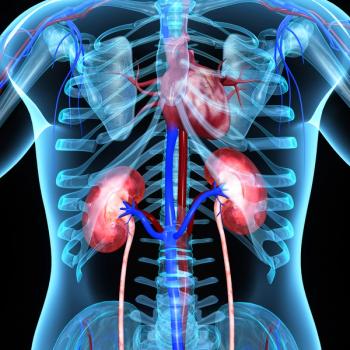
The dapagliflozin group had an average eGFR rate of -2.24 mL/min/1.73 m2 compared to -3.67 mL/min/1.73 m2 in the control group after about 1.5 years of follow-up.

Richard Pratley, MD, discusses how FLOW mortality data informs the use of semaglutide in patients with chronic kidney disease and type 2 diabetes.

Participants receiving semaglutide had an overall hazard ratio of 0.76 in the composite primary outcome of kidney failure, serious eGFR decline, or death compared to placebo.
Carla Nester, MD, provides perspective on the results of the VALIANT trial and how it informs the role of pegcetacoplan in C3G and IC-MPGN .
VALIANT trial data support pegcetacoplan as the first effective therapy for proteinuria, C3c staining, and eGFR stability in C3G and IC-MPGN patients.

Herrington shared the carryover effects observed in the post-trial follow-up of the phase 3 EMPA-KIDNEY trial.
Yee discussed how the data show a benefit in this hard-to-treat population, similarly to the heterogeneous FSGS group.
Advertisement
Advertisement
Trending on HCPLive
1
Tilrekimig Meets EASI-75 Goal in Atopic Dermatitis, With Eric Simpson, MD
2
Tips on Optimizing HS Biologics, Combinations, and Surgery
3
FDA Approves Once-Monthly Subcutaneous Olanzapine for Schizophrenia
4
Why "Normal" Ferritin Can Miss Iron Deficiency, With Jacquelyn Powers, MD, MS
5